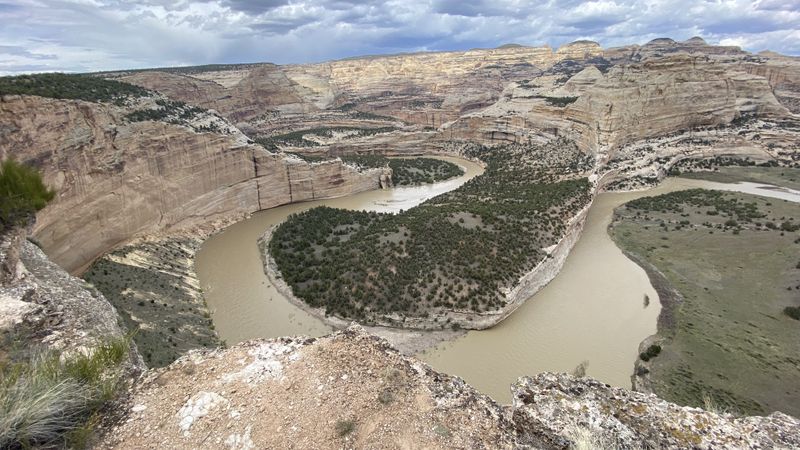
Yampa River
The Yampa is the last undammed major tributary of the Colorado — a fierce snowmelt canyon through Dinosaur National Monument with a short season, a lottery permit, and Warm Springs Rapid. · CO
The Yampa River is the last major free-flowing tributary of the Colorado River — the only significant river in the entire Colorado River Basin that has never been stopped by a major dam. From its headwaters in the Flat Tops Wilderness of northwestern Colorado, the Yampa descends 250 miles through ranch country and the Yampa Valley before entering its defining section: the 46-mile canyon corridor through Dinosaur National Monument. Yampa Canyon is everything that unregulated means in the Colorado Plateau context — a river that runs when the mountains say so, high and cold in May, lower and slower as snowmelt fades, often too low for passage by July. Warm Springs Rapid, reconfigured overnight by a 1965 rockslide, is the most consequential single rapid in the monument and one of the most serious pool-drop rapids in the American West at high water. The Yampa is not the longest or the largest. It is the most itself — a river that still remembers what it is, running without apology on its own schedule through a canyon that the Colorado River conservation movement literally saved from becoming a reservoir in the 1950s.
free-flowing and unregulated — no major dams exist on the Yampa mainstem; flow is entirely snowmelt-dependent from Rocky Mountain headwaters
Yampa River near Maybell, CO
Primary Yampa River gauge for trip planning on Yampa Canyon through Dinosaur National Monument. Located upstream of the canyon, this gauge reflects snowmelt patterns from the Elkhead and Flat Top Mountains and drives permit applicant decision-making for the narrow runnable season.
USGS #09251000Current flow — Yampa River near Maybell, CO
USGSThe Yampa runs on snowmelt from the Flat Tops and surrounding Colorado ranges. Season is typically mid-April through mid-June — approximately 6–8 weeks in a good water year. At the Deerlodge Park gauge (below the Little Snake confluence), most groups target roughly 2,500–12,000 cfs for the classic Yampa experience. Above 12,000 cfs is high water and 20,000+ cfs is flood stage, appropriate for expert teams only. By late June or early July in most years, the river drops below the practical minimum. Check the gauge obsessively in the weeks before your trip — this river will not wait.
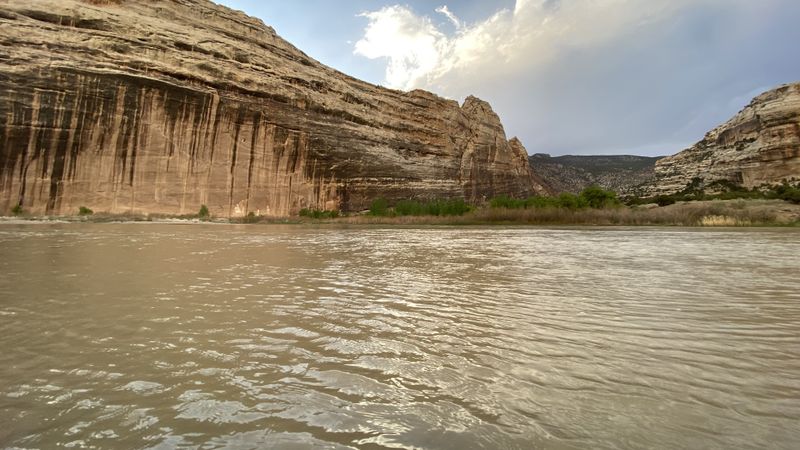
Reading the Rock Record
Rock sequence of Yampa River
↑ Rim
- Browns Park Formation
- Weber Sandstone
- Morgan Formation
- Madison Limestone
- Lodore Formation
↓ River level
The Yampa's free-flowing, unregulated character makes it uniquely important for Colorado River native fish recovery — it delivers warm, silt-laden, seasonally variable flow into the Green River at Echo Park, providing conditions closer to pre-dam baseline than any other major tributary. The Yampa corridor supports breeding populations of Colorado pikeminnow and razorback sucker. Its unregulated status is not incidental to this ecology — it is the mechanism. The defeat of Echo Park Dam in 1955 preserved both the canyon and its ecological function.
Notable Expeditions
- Echo Park Dam Defeat