Rapids
Named whitewater across desert rivers — class, character, and the lines that go through them. Browse by section to plan a trip, or by class to match the day.
By River Section
The rapids you'll meet on a given stretch, mile by mile.
B Section
B Section
Red Creek Rapid
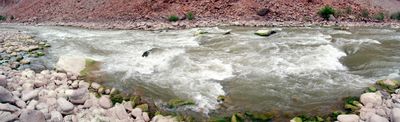
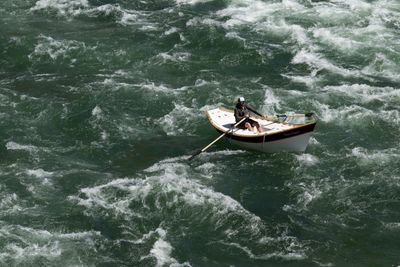
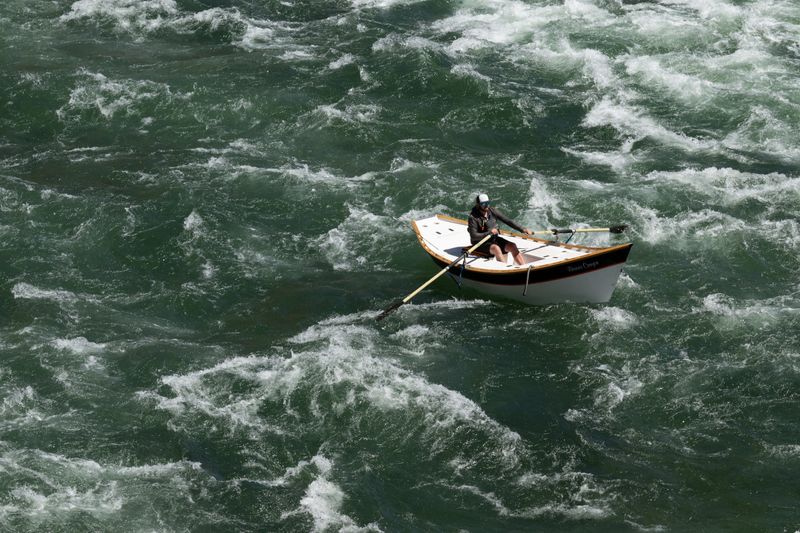
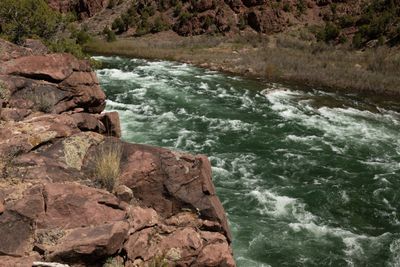
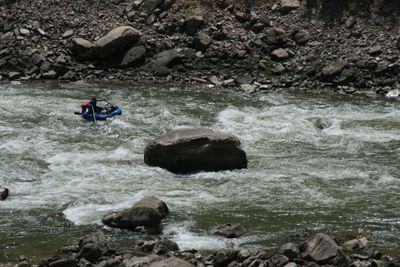
Red Creek Rapid is the only named rapid on the Flaming Gorge tailwater (A and B sections combined). Formed at the mouth of Red Creek on river-right, where the side-canyon debris fan constricts the Green and stacks the ch…
Read moreCataract Canyon
Cataract Canyon
Brown Betty Rapid
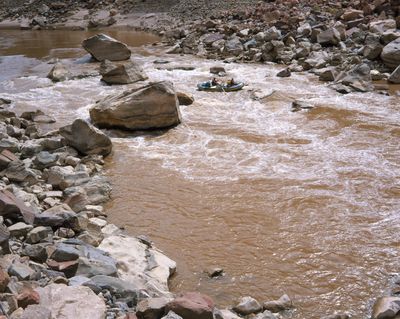
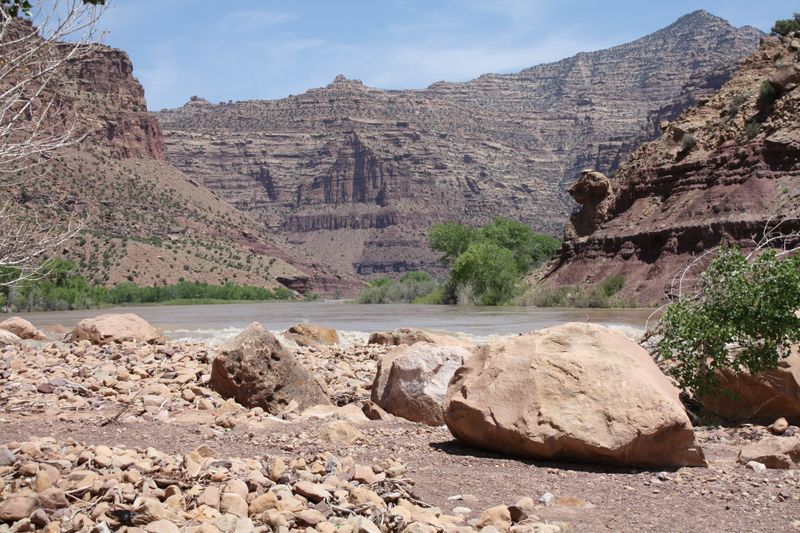
Brown Betty (Rapid 1) is the first named rapid of Cataract Canyon, marking the transition from the flatwater of Meander Canyon through the Confluence into the whitewater corridor. A solid Class III drop at most flows. Be…
Read more
Rapid 2
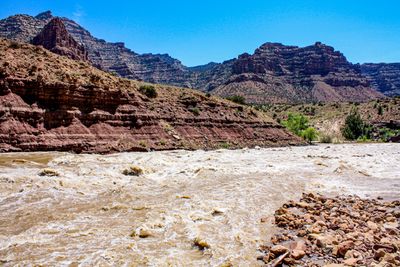
Rapid 2 is an unnamed upper Cataract rapid between Brown Betty (Rapid 1) and Rapid 3. A minor read-and-run drop at moderate flows that blends into the building upper-canyon wave train at higher water. The upper Cataract …
Read more
Rapid 3
Rapid 3 is an unnamed upper Cataract rapid — a fast-moving wave-train drop in the early rapid corridor. Read-and-run Class III at moderate flows. Often used by trips to calibrate crew timing and rigging before reaching t…
Read more
Rapid 4
Rapid 4 is an unnamed upper Cataract rapid immediately above Rapid 5 (mile 210.7). The rapid sits in the upper-canyon rapid corridor and runs as a read-and-run Class III drop at most flows. At high water Rapids 4 and 5 m…
Read more
Rapid 5
Rapid 5 is an unnamed upper Cataract rapid that sits 0.1 mile below Rapid 4. A large beach below the rapid is commonly used by trips pausing before the Rapid 6/7 sequence. Class III at most flows with a defined wave trai…
Read more
Rapid 6
Rapid 6 is one of the upper Cataract rapids, sitting between Rapid 5 (mile 210.7 upstream from Lees Ferry) and Rapid 7 / North Sea (mile 209.5). At moderate flows it is a read-and-run Class III drop; at high water it fee…
Read more
North Sea
North Sea is the lower section of Rapid 7 in Cataract Canyon — the part of the rapid that rolls out through the Toreva Block boulder field below the main drop. Webb/Belnap/Weisheit identify 'North Sea' (singular) as this…
Read more
Rapid 8
Rapid 8 is an unnamed upper Cataract rapid between the Toreva Block boulder field of Rapid 7 / North Sea and Rapid 9. A short read-and-run drop that provides a brief recovery zone between the North Sea and the Tilted Par…
Read more
Rapid 9
Rapid 9 is an unnamed upper Cataract rapid in the Tilted Park section of the canyon. The surrounding geology — sedimentary beds dipping visibly off-horizontal from Paradox-era salt tectonics — is the canyon's most readab…
Read more
Rapid 10
Rapid 10 is an unnamed upper Cataract rapid in the Tilted Park reach. A wave-train drop with a downstream hole that can surprise paddlers who drift too far river-right at certain flows. The surrounding off-horizontal bed…
Read more
Rapid 11
Rapid 11 is an unnamed upper Cataract rapid immediately above Rapid 12. The two rapids are separated by only 0.1 mile and effectively run together at any meaningful flow. Class III- at moderate flows. Runs into Rapid 12 …
Read more
Rapid 12
Rapid 12 is the last named rapid before the Mile Long sequence begins at Rapid 13 (Range Canyon debris flow). Rapids 11 and 12 run together at most flows, and together they mark the end of the 'upper rapids' section of C…
Read more
Mile Long Rapid
Mile Long is one continuous rapid that starts from debris-flow outwash at Range Canyon (Rapid 13) and extends down to the island at Rapid 20 (Ben Hurt). At high water it behaves as a single, sustained pulse of whitewater…
Read more
Rapid 13
Rapid 13 is the upstream end of the Mile Long sequence — the rapid created by the Range Canyon debris-flow outwash entering the Colorado on river-right. The character of the rapid is directly shaped by boulders delivered…
Read more
Rapid 14
Rapid 14 is the second rapid within the Mile Long sequence — the last drop before Capsize (Rapid 15). At moderate flows there is a commonly-used scouting eddy between Rapid 14 and Capsize where groups can land to look at…
Read more
Capsize Rapid
Capsize Rapid (Rapid 15) is one of the signature rapids within the Mile Long Rapid sequence (Rapids 13–19). It is the most technical of the Mile Long rapids and typically requires scouting. A common scouting eddy exists …
Read more
South Seas
South Seas refers to the core of the Mile Long sequence — specifically Rapids 16 through 19 — which become one continuous, choppy wave train at high water. The name echoes the ocean-swell character of the waves through t…
Read more
Rapid 16
Rapid 16 is the first rapid within the South Seas core of Mile Long. At moderate flows it runs as a distinct wave-train drop after Capsize; at high water it becomes the upstream end of the continuous South Seas sequence …
Read more
Rapid 17
Rapid 17 is the second rapid within the South Seas core, sitting immediately above Button Hole (Rapid 18). At high water it is part of the continuous South Seas wave train. Middle of the South Seas core. Limited downstre…
Read more
Button Hole
Button Hole (Rapid 18) is the signature feature within the South Seas core of the Mile Long sequence. The name refers to a large lateral hole on river-right that forms at moderate-to-high flows and catches craft that dri…
Read more
Rapid 19
Rapid 19 is the lower end of the South Seas core and the final rapid of the Mile Long sequence at moderate flows. At lower water, Mile Long ends here and Ben Hurt (Rapid 20) stands as a distinct rapid below. At high wate…
Read more
Ben Hurt Rapid
Ben Hurt Rapid (Rapid 20) is the final warm-up before the Big Drops sequence. The river splits around an island here, and the rapid establishes the tone for what is coming downstream. Class III+ at moderate flows, pushie…
Read more
Big Drops
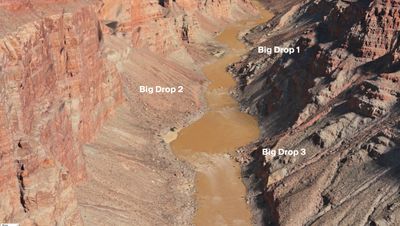
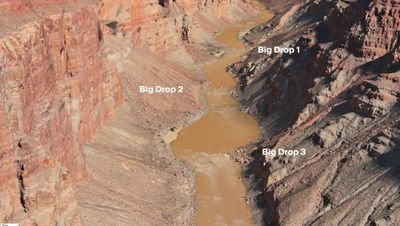
The three-rapid sequence — Big Drop 1, Big Drop 2 (Little Niagara), and Big Drop 3 (with Satan's Gut as the river-left pourover feature inside it) — that defines Cataract Canyon. Consecutive, scoutable, and the focal poi…
Read more
Big Drop 1
Big Drop 1 is the first of Cataract Canyon’s three marquee rapids. It marks the transition from consequential warm-up rapids into the main big-water corridor and is commonly scouted by private groups, especially during s…
High swim consequence
Read more
Big Drop 2
Big Drop 2 is one of Cataract Canyon’s most consequential rapids and is frequently the crux for raft crews. It is known for large breaking features, fast recovery demands, and the potential to flush mistakes into Big Dro…
High swim consequence
Read more
Purgatory
Purgatory is a named eddy — not a distinct numbered rapid — in the Big Drops area of Cataract Canyon. The name is associated with a specific swirly eddy that can pull craft into a hold above or between the Big Drops. The…
Read more
Big Drop 3 / Satan's Gut
Big Drop 3 is Cataract Canyon’s signature rapid and the most commonly cited psychological centerpiece of the canyon. The hydraulic known as Satan's Gut is the defining hazard at many medium and high flows.
Read more
Powell's Pocket Watch
Powell's Pocket Watch (Rapid 24) is the first rapid below the Big Drops sequence — the first recovery-zone rapid after Satan's Gut. Named in reference to an incident during John Wesley Powell's 1869 expedition in which a…
Read more
Repeat
Repeat (Rapid 25) is the middle of a three-rapid recovery sequence (Powell's Pocket Watch → Repeat → Rerun) below the Big Drops. The name pairs with downstream Rerun and reflects the character of the two rapids running t…
Read more
Rerun
Rerun (Rapid 26) is the lower of the Repeat/Rerun pairing — the second of two similar wave-train drops below Powell's Pocket Watch. Downstream of Rerun is Ten Cent Camp on river-left, and below that the river enters the …
Read more
Imperial Rapid
Imperial (Rapid 27 per Webb/Belnap/Weisheit numbering; historically called Rapid 25 in older guides) is the largest rapid below the Big Drops sequence — a long rapid with a sustained wave train. Often overlooked by trips…
Read more
Short Rapid
Short Rapid (Rapid 28) is one of the re-emerged lower Cataract rapids — a drop that has returned to visibility as Lake Powell reservoir levels have dropped. Documented by the Returning Rapids Project after the 2002-2003 …
Read more
The Chute
The Chute (Rapid 29) is one of the significant re-emerged rapids in lower Cataract Canyon. The Returning Rapids Project characterizes it as 'the Hermit of Cataract' at high water — a reference to Hermit Rapid in the Gran…
Read more
Waterhole Canyon Rapid
Waterhole Canyon Rapid (Rapid 30) is a re-emerged rapid at the mouth of Waterhole Canyon on river-right in lower Cataract. Documented by the Returning Rapids Project; photographed at 6,500 cfs. Character is shaped by the…
Read more
Gypsum Canyon Rapid
Gypsum Canyon Rapid sits at the confluence of Gypsum Canyon with the Colorado, traditionally one of the last consequential rapids of Cataract before the river entered historical Glen Canyon (now Lake Powell). The rapid w…
Read more
Desolation Canyon
Desolation Canyon
Wild Horse Rapid
Wild Horse Rapid is one of the first named rapids below Sand Wash — a Class II drop that introduces the Desolation rapid sequence. Most trips run on sight.
Read more
Steer Ridge Rapid
Steer Ridge Rapid is a mid-canyon Class II-III drop in Desolation Canyon. Named for the prominent ridge formation above, the rapid features a boulder-strewn channel with straightforward lines at most flows.
Read more
Surprise Rapid
Surprise Rapid sits between Funnel Falls and Skull — a Class III wave train that, as its name implies, catches some groups off guard right before they reach the crux of Westwater. Short and relatively clean at most flows…
Read more
Calf Canyon Rapid
Calf Canyon Rapid is a Class II drop in upper Desolation Canyon, named for the Calf Canyon side drainage. Read-and-run at most flows.
Read more
Three Fords Rapid
Three Fords Rapid is one of the biggest whitewater features of Desolation Canyon — a Class III near the lower end of the canyon that takes its name from three distinct rocky drops historically forded on foot at low water…
Read more
Wire Fence Rapid
Wire Fence Rapid sits in middle-to-lower Desolation Canyon, downstream of Joe Hutch / Cow Swim. Takes its name from the Wire Fence Canyon side drainage. Class III-.
Read more
Coal Creek Rapid

Swasey's Rapid
Swasey's Rapid is the signature whitewater of Gray Canyon, a Class III drop near the take-out at Swasey's Beach. It is the last significant rapid before the river flattens approaching the town of Green River, Utah.
Read more
Grand Canyon
Grand Canyon
House Rock Rapid
House Rock Rapid at mile 17 is an early and important psychological marker for Grand Canyon groups — the first significant Class IV of the trip, arriving just as teams are settling into canyon life. The rapid's name come…
Read more
Hance Rapid
Hance Rapid at mile 76.5 marks the transition from Marble Canyon into the Inner Gorge — the most technical and consequential whitewater zone in the Grand Canyon. One of the longest and most complex rapids in the canyon, …
High swim consequence
Read more
Horn Creek Rapid
Horn Creek Rapid is one of the Inner Gorge's most feared rapids — a short, explosive Class V where the consequences of an error are among the most severe in the canyon. The rapid is compact but extremely powerful, with a…
High swim consequence
Read more
Hermit Rapid
Hermit Rapid offers one of the most spectacular wave trains in the entire Grand Canyon — nine massive standing waves in a straight corridor that make it the paradigmatic Grand Canyon big-water thrill. Unlike some Inner G…
Read more
Crystal Rapid
Crystal Rapid is one of the Grand Canyon's most consequential Class V rapids — created largely by a massive 1966 debris flow from Crystal Creek that deposited enormous boulders into the Colorado. The rapid fundamentally …
High swim consequence
Read more
Lava Falls
Lava Falls is the most famous and most feared rapid in the Grand Canyon — one of the most powerful commercially run rapids in the world. At mile 179.5, it is the climactic challenge of any Grand Canyon descent. Created b…
Read more
Gray Canyon
Gray Canyon
Florence Creek Rapid
Florence Creek Rapid is an early Class II-III drop in Gray Canyon, formed where Florence Creek enters the Green River. The side canyon deposits boulders into the channel, creating a rocky but readable rapid.
Read more
Coal Creek Rapid

Swasey's Rapid
Swasey's Rapid is the signature whitewater of Gray Canyon, a Class III drop near the take-out at Swasey's Beach. It is the last significant rapid before the river flattens approaching the town of Green River, Utah.
Read more
Lodore Canyon
Lodore Canyon
Disaster Falls
Disaster Falls is one of the early significant challenges in Lodore Canyon, encountered within the first few miles of entering the Gates of Lodore. The rapid is divided into upper and lower drops separated by a pool, all…
Read more
Hell's Half Mile
Hell's Half Mile is the crux rapid of Lodore Canyon and one of the most significant challenges in the entire Dinosaur National Monument river system. The rapid extends through a long boulder-choked corridor with multiple…
Read more
Split Mountain
Split Mountain
Inglesby Rapid
Inglesby Rapid is the fourth and final major rapid of Split Mountain Canyon, typically encountered after lunch on a day trip. Class III- to III+.
Read more
Moonshine Rapid
Moonshine Rapid is one of the two primary whitewater challenges in Split Mountain Canyon — a compact but significant Class III–IV drop with a powerful wave train and limited scouting real estate.
Read more
Schoolboy Rapid
Schoolboy Rapid is the third major rapid in Split Mountain Canyon, between SOB and Inglesby. Class III- to III+ depending on flow.
Read more
SOB Rapid
SOB Rapid (also known as Sobe) is the second significant whitewater feature in Split Mountain Canyon, coming near the lower section of the canyon. It provides the closing challenge before the takeout and shares the techn…
Read more
Westwater Canyon
Westwater Canyon
Little Wild Horse Rapid
Little Wild Horse is the warm-up rapid of Westwater Canyon — a Class II riffle in the upper flatwater above the main gorge. It establishes the pattern of the trip and is generally run on sight.
Read more
Little Dolores Rapid
Little Dolores Rapid at mile 7.8 is a two-part rapid with a center-right hole that marks the approach to the main Westwater gorge. Not a major hazard but a clear indication that the character of the canyon is about to sh…
Read more
Marble Canyon Rapid
Marble Canyon Rapid at mile 8.9 delivers a fun wave train down the right side and marks the entry into the deep gorge. The last read-and-run rapid before the core sequence of Staircase, Big Hummer, Funnel Falls, Surprise…
Read more
Staircase Rapid
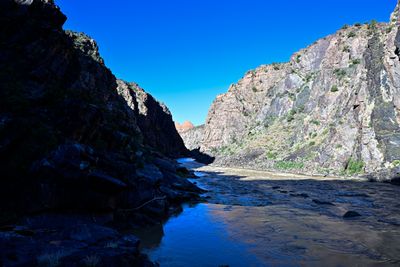
Staircase is a series of deep, trough-like waves — a stepped progression that gives the rapid its name. Part of the compressed main-gorge sequence of rapids that occur in quick succession within ~2 miles.
Read more
Big Hummer Rapid
Big Hummer delivers a wild splash and a substantial hole that guides must maneuver through or around. One of the compressed main-gorge rapids just above Funnel Falls.
Read more
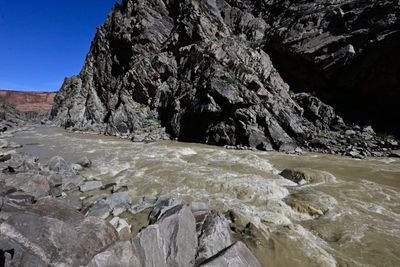
Funnel Falls
Funnel Falls is the first rapid of the Westwater inner gorge — the entry into the continuous Class III–IV sequence that defines the heart of the run. The Precambrian schist walls narrow here and funnel the river into a c…
Read more
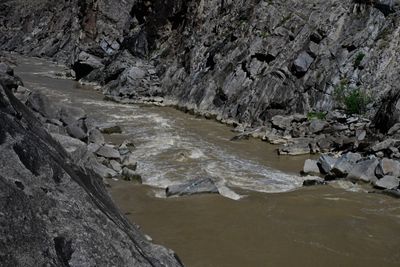
Surprise Rapid
Surprise Rapid sits between Funnel Falls and Skull — a Class III wave train that, as its name implies, catches some groups off guard right before they reach the crux of Westwater. Short and relatively clean at most flows…
Read more
Skull Rapid
Skull Rapid is the most consequential rapid in Westwater Canyon and the crux of the run. A large boulder in the center of the channel splits the river; the preferred line runs to the right of the rock. The real hazard is…
Read more
Bowling Alley Rapid
Bowling Alley sits immediately below Skull Rapid, in the decompression zone where groups are still processing the main crux. A technical Class III line threads through the boulder garden — groups that flipped in Skull ca…
Read more
Sock-It-To-Me
Sock-It-To-Me is one of Westwater Canyon's most significant rapids — a classic Colorado River pool-drop where the canyon narrows dramatically through ancient Precambrian basement rock. The rapid features a powerful entry…
High swim consequence
Read more
Last Chance Rapid
Last Chance is the final named rapid of Westwater — a large rock splits the channel, and boaters pick a side for the run. Below Last Chance, the river opens into ~5 miles of riffles to the Cisco take-out.
Read more
Whirlpool Canyon
Whirlpool Canyon
Greasy Pliers Rapid
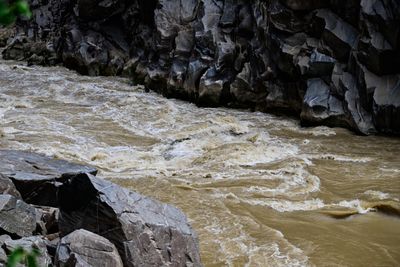
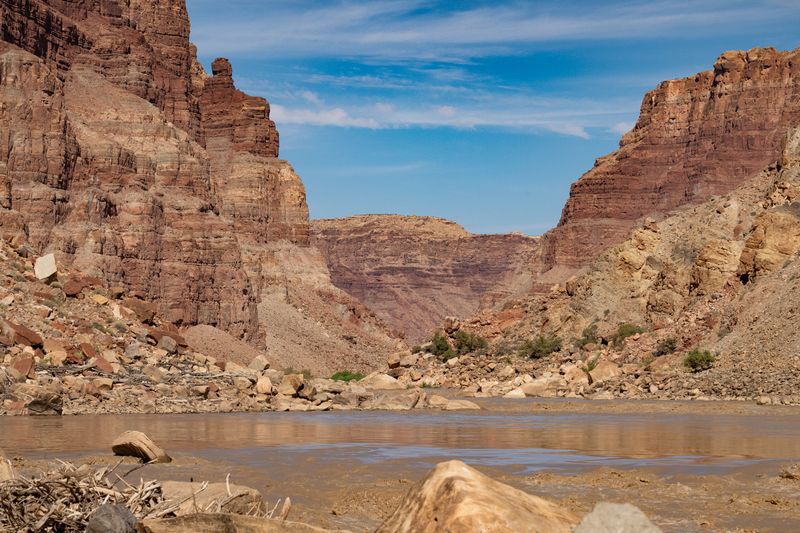
Greasy Pliers is the signature named rapid of Whirlpool Canyon — a splashy Class II–III read-and-run between Echo Park and Rainbow Park / Island Park. The rapid is the main whitewater between the Yampa confluence (Echo P…
Read more
Yampa Canyon
Yampa Canyon
Tepee
Tepee Rapid is one of the significant early drops in Yampa Canyon — named for the distinctive tepee-shaped rock formations visible from the river. It provides the first real technical challenge of the Yampa trip and esta…
Read moreWarm Springs Rapid
Warm Springs Rapid is the defining challenge of Yampa Canyon and one of the most flow-sensitive and consequential rapids in the entire Colorado Plateau river system. The rapid was created by a 1965 rockslide from Warm Sp…
High swim consequence
Read moreBy Class
Match the day to the difficulty.
Class I–II Beginner
Light whitewater for paddlers building muscle memory.
Class I–II Beginner
Agate Rapid
Agate Rapid at mile 101.1, first of the six “Gem Rapids” (Agate, Sapphire, Turquoise, Emerald, Ruby, Serpentine) — a sequence of Class II–IV rapids named after semi-precious stones in mile order 101–107.
Read moreBelknap Falls
Belknap Falls is a named rapid in upper-middle Desolation Canyon, likely named for the Belknap family — authors of the canonical Westwater Books river guide series. Class II+ at most flows.
Read moreCalf Canyon Rapid
Calf Canyon Rapid is a Class II drop in upper Desolation Canyon, named for the Calf Canyon side drainage. Read-and-run at most flows.
Read moreCoal Creek Rapid
Eight-Foot Rapid
Eight-Foot Rapid at mile 17 of the San Juan from Sand Island — the most technical of the upper-reach Class II rapids on the Sand Island to Mexican Hat run. Scout from the left at higher flows.
Read moreEmerald Rapid
Emerald Rapid at mile 104.5, fourth of the Gem Rapids. Class II+.
Read moreFour-Foot Rapid
Four-Foot Rapid at mile 11.5 of the San Juan from Sand Island — one of the first two named Class II rapids of the Sand Island to Mexican Hat run. Scout from the right at higher flows; the drop is a named marker as much a…
Read moreGreasy Pliers Rapid
Greasy Pliers is the signature named rapid of Whirlpool Canyon — a splashy Class II–III read-and-run between Echo Park and Rainbow Park / Island Park. The rapid is the main whitewater between the Yampa confluence (Echo P…
Read moreGypsum Creek Rapid
Gypsum Creek Rapid at mile 27.98 of the San Juan — just downstream of Mexican Hat. Class II, named for the Gypsum Creek side drainage.
Read moreHavasu Creek Rapid
Havasu Creek Rapid at mile 157.3, at the famous Havasu Creek confluence. Class II+. The rapid is minor; the stop is one of the iconic beach-days of any Grand Canyon trip — turquoise water, cascades, and access to Havasu …
Read moreJack Creek Rapid
Jack Creek Rapid is an early Class II drop in upper Desolation Canyon, formed where Jack Creek enters the Green River. A straightforward rapid that introduces the canyon's whitewater character.
Read moreLedge Rapid
Ledge Rapid at mile 19.88 of the San Juan from Sand Island is one of the first significant rapids on the commonly-run Sand Island to Mexican Hat float. A big shelf on river-left is often too shallow for rafts, forcing bo…
Read moreLittle Wild Horse Rapid
Little Wild Horse is the warm-up rapid of Westwater Canyon — a Class II riffle in the upper flatwater above the main gorge. It establishes the pattern of the trip and is generally run on sight.
Read moreMatkatamiba Rapid
Matkatamiba Rapid at mile 148.4 — a minor riffle but a major stop. Matkatamiba Canyon is one of the most beloved slot-canyon hikes in the Grand Canyon; the rapid itself is Class II.
Read moreMontezuma Creek
Montezuma Creek Rapid is a notable riffle near the confluence of Montezuma Creek with the San Juan River — the largest natural tributary of the San Juan in the lower canyon. The rapid is Class I–II and named for the anci…
Read moreNankoweap Rapid
Nankoweap Rapid at mile 52.4 — a mild Class II–II+ rapid just above the famous Nankoweap camp and granary site. The rapid itself is minor; the location is iconic.
Read moreNational Rapid
National Rapid at mile 167.0, at the National Canyon confluence. Class II. A minor rapid; the side canyon is a classic layover hike.
Read moreNefertiti Rapid
Rapid 2
Rapid 2 is an unnamed upper Cataract rapid between Brown Betty (Rapid 1) and Rapid 3. A minor read-and-run drop at moderate flows that blends into the building upper-canyon wave train at higher water. The upper Cataract …
Read moreRattlesnake Rapid
Rattlesnake Rapid is a named Class II rapid in Gray Canyon, below the Desolation/Gray transition. Read-and-run at most flows.
Read moreRoss Rapid
Ross Rapid at mile 52.6 of the San Juan (mile 25.7 from Mexican Hat). The river curves right around a sandy bottom; watch for the big pile of rocks at the bottom. Class II+.
Read moreSlickhorn
Slickhorn Rapid is located at the mouth of Slickhorn Canyon — one of the most spectacular side canyons accessible from the San Juan River. The rapid is formed by debris washed in from the canyon drainage and delivers the…
Read moreTurquoise Rapid
Turquoise Rapid at mile 102.6, third of the Gem Rapids. Class II+.
Read moreWhitmore Rapid
Whitmore Rapid at mile 188.3, Class II+. Below Lava Falls in the lower canyon. The Whitmore Wash side canyon has helicopter exchange access for trip swap-outs.
Read moreWild Horse Rapid
Wild Horse Rapid is one of the first named rapids below Sand Wash — a Class II drop that introduces the Desolation rapid sequence. Most trips run on sight.
Read moreClass III Intermediate
The middle of the bell curve. Where most river days live.
Class III Intermediate
Anderson Hole
Anderson Hole is a named rapid on the Yampa River in Dinosaur National Monument. The hole feature can be scouted from river-right. Minor compared to Warm Springs but named on most published river guides.
Read more
Badger Creek Rapid
Badger Creek Rapid at mile 7.9 is the first named rapid below Lees Ferry — the opening act of Marble Canyon and most Grand Canyon trips. The rapid is formed by debris fans from Badger Creek on river-left. Class III at mo…
Read more
Ben Hurt Rapid
Ben Hurt Rapid (Rapid 20) is the final warm-up before the Big Drops sequence. The river splits around an island here, and the rapid establishes the tone for what is coming downstream. Class III+ at moderate flows, pushie…
Read more
Big Hummer Rapid
Big Hummer delivers a wild splash and a substantial hole that guides must maneuver through or around. One of the compressed main-gorge rapids just above Funnel Falls.
Read more
Big Joe
Big Joe is the second-most significant rapid in Yampa Canyon, positioned approximately halfway through the section and downstream of Tepee. Named for the massive boulder that defines the left side of the channel, Big Joe…
High swim consequence
Read more
Boucher Rapid
Boucher Rapid at mile 97.1, between Hermit and Crystal. Class III+/IV. Named for Louis Boucher, a 19th-century hermit who built trails and a homestead in the side canyon. A brief decompression between two Class V rapids.
Read more
Bowling Alley Rapid
Bowling Alley sits immediately below Skull Rapid, in the decompression zone where groups are still processing the main crux. A technical Class III line threads through the boulder garden — groups that flipped in Skull ca…
Read more
Brown Betty Rapid
Brown Betty (Rapid 1) is the first named rapid of Cataract Canyon, marking the transition from the flatwater of Meander Canyon through the Confluence into the whitewater corridor. A solid Class III drop at most flows. Be…
Read more
Capsize Rapid
Capsize Rapid (Rapid 15) is one of the signature rapids within the Mile Long Rapid sequence (Rapids 13–19). It is the most technical of the Mile Long rapids and typically requires scouting. A common scouting eddy exists …
Read more
Chandler Falls
Chandler Falls is a Class III- rapid in middle Desolation Canyon, named for the Chandler family who homesteaded in the area in the early 20th century.
Read more
Cow Swim Rapid
Joe Hutch / Cow Swim Rapid at mile 54.3 is one of the biggest rapids in Desolation Canyon. A 2008 debris slide from Joe Hutch Canyon on river-right dramatically changed the rapid character — what had been a moderate Clas…
Read more
Five Springs Rapid
Five Springs Rapid is named for the springs that emerge from the canyon walls here. A Class III- rapid typically run on Day 2 of a Yampa trip, between Big Joe and Warm Springs.
Read more
Florence Creek Rapid
Florence Creek Rapid is an early Class II-III drop in Gray Canyon, formed where Florence Creek enters the Green River. The side canyon deposits boulders into the channel, creating a rocky but readable rapid.
Read more
Government Rapid
Government Rapid at mile 63.7 of the San Juan (mile 36.8 from Mexican Hat) — the most technical rapid of the Lower San Juan run. The rapid is littered with boulders requiring careful navigation. Class III. Camping below …
Read more
Gypsum Canyon Rapid
Gypsum Canyon Rapid sits at the confluence of Gypsum Canyon with the Colorado, traditionally one of the last consequential rapids of Cataract before the river entered historical Glen Canyon (now Lake Powell). The rapid w…
Read more
Imperial Rapid
Imperial (Rapid 27 per Webb/Belnap/Weisheit numbering; historically called Rapid 25 in older guides) is the largest rapid below the Big Drops sequence — a long rapid with a sustained wave train. Often overlooked by trips…
Read more
Inglesby Rapid
Inglesby Rapid is the fourth and final major rapid of Split Mountain Canyon, typically encountered after lunch on a day trip. Class III- to III+.
Read more
Kanab Rapid
Kanab Rapid at mile 144.0, at the Kanab Creek confluence. Class III. Named for the Kanab Creek side canyon — a major drainage from southern Utah with significant flash-flood potential.
Read more
Last Chance Rapid
Last Chance is the final named rapid of Westwater — a large rock splits the channel, and boaters pick a side for the run. Below Last Chance, the river opens into ~5 miles of riffles to the Cisco take-out.
Read more
Little Dolores Rapid
Little Dolores Rapid at mile 7.8 is a two-part rapid with a center-right hole that marks the approach to the main Westwater gorge. Not a major hazard but a clear indication that the character of the canyon is about to sh…
Read more
Little Joe Rapid
Little Joe is a Class III- rapid on the Yampa River in Dinosaur National Monument, typically run before Big Joe on Day 2 of most trips. Often paired with Five Springs for the day’s warm-up whitewater.
Read more
Marble Canyon Rapid
Marble Canyon Rapid at mile 8.9 delivers a fun wave train down the right side and marks the entry into the deep gorge. The last read-and-run rapid before the core sequence of Staircase, Big Hummer, Funnel Falls, Surprise…
Read more
Moonshine Rapid
Moonshine Rapid is one of the two primary whitewater challenges in Split Mountain Canyon — a compact but significant Class III–IV drop with a powerful wave train and limited scouting real estate.
Read more
Nevills Rapid
Nevills Rapid at mile 75.8, named for Norman Nevills — founder of the first commercial Grand Canyon river company in 1938. Class III–IV. Immediately upstream of Hance.
Read more
North Canyon Rapid
North Canyon Rapid at mile 20.7 is the first Class III–III+ rapid of Marble Canyon after the Redwall limestone begins. Named for the North Canyon side drainage on river-right.
Read more
North Sea
North Sea is the lower section of Rapid 7 in Cataract Canyon — the part of the rapid that rolls out through the Toreva Block boulder field below the main drop. Webb/Belnap/Weisheit identify 'North Sea' (singular) as this…
Read more
Powell's Pocket Watch
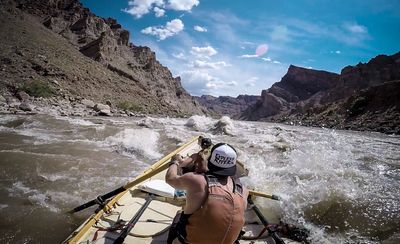
Powell's Pocket Watch (Rapid 24) is the first rapid below the Big Drops sequence — the first recovery-zone rapid after Satan's Gut. Named in reference to an incident during John Wesley Powell's 1869 expedition in which a…
Read more
President Harding Rapid
President Harding Rapid at mile 44.0, named after news of President Harding’s 1923 death reached a USGS survey party camped here. Class III. A mid-Marble Canyon landmark.
Read more
Rapid 10
Rapid 10 is an unnamed upper Cataract rapid in the Tilted Park reach. A wave-train drop with a downstream hole that can surprise paddlers who drift too far river-right at certain flows. The surrounding off-horizontal bed…
Read more
Rapid 11
Rapid 11 is an unnamed upper Cataract rapid immediately above Rapid 12. The two rapids are separated by only 0.1 mile and effectively run together at any meaningful flow. Class III- at moderate flows. Runs into Rapid 12 …
Read more
Rapid 12
Rapid 12 is the last named rapid before the Mile Long sequence begins at Rapid 13 (Range Canyon debris flow). Rapids 11 and 12 run together at most flows, and together they mark the end of the 'upper rapids' section of C…
Read more
Rapid 13
Rapid 13 is the upstream end of the Mile Long sequence — the rapid created by the Range Canyon debris-flow outwash entering the Colorado on river-right. The character of the rapid is directly shaped by boulders delivered…
Read more
Rapid 14
Rapid 14 is the second rapid within the Mile Long sequence — the last drop before Capsize (Rapid 15). At moderate flows there is a commonly-used scouting eddy between Rapid 14 and Capsize where groups can land to look at…
Read more
Rapid 16
Rapid 16 is the first rapid within the South Seas core of Mile Long. At moderate flows it runs as a distinct wave-train drop after Capsize; at high water it becomes the upstream end of the continuous South Seas sequence …
Read more
Rapid 17
Rapid 17 is the second rapid within the South Seas core, sitting immediately above Button Hole (Rapid 18). At high water it is part of the continuous South Seas wave train. Middle of the South Seas core. Limited downstre…
Read more
Rapid 19
Rapid 19 is the lower end of the South Seas core and the final rapid of the Mile Long sequence at moderate flows. At lower water, Mile Long ends here and Ben Hurt (Rapid 20) stands as a distinct rapid below. At high wate…
Read more
Rapid 3
Rapid 3 is an unnamed upper Cataract rapid — a fast-moving wave-train drop in the early rapid corridor. Read-and-run Class III at moderate flows. Often used by trips to calibrate crew timing and rigging before reaching t…
Read more
Rapid 4
Rapid 4 is an unnamed upper Cataract rapid immediately above Rapid 5 (mile 210.7). The rapid sits in the upper-canyon rapid corridor and runs as a read-and-run Class III drop at most flows. At high water Rapids 4 and 5 m…
Read more
Rapid 5
Rapid 5 is an unnamed upper Cataract rapid that sits 0.1 mile below Rapid 4. A large beach below the rapid is commonly used by trips pausing before the Rapid 6/7 sequence. Class III at most flows with a defined wave trai…
Read more
Rapid 6
Rapid 6 is one of the upper Cataract rapids, sitting between Rapid 5 (mile 210.7 upstream from Lees Ferry) and Rapid 7 / North Sea (mile 209.5). At moderate flows it is a read-and-run Class III drop; at high water it fee…
Read more
Rapid 8
Rapid 8 is an unnamed upper Cataract rapid between the Toreva Block boulder field of Rapid 7 / North Sea and Rapid 9. A short read-and-run drop that provides a brief recovery zone between the North Sea and the Tilted Par…
Read more
Rapid 9
Rapid 9 is an unnamed upper Cataract rapid in the Tilted Park section of the canyon. The surrounding geology — sedimentary beds dipping visibly off-horizontal from Paradox-era salt tectonics — is the canyon's most readab…
Read more
Repeat
Repeat (Rapid 25) is the middle of a three-rapid recovery sequence (Powell's Pocket Watch → Repeat → Rerun) below the Big Drops. The name pairs with downstream Rerun and reflects the character of the two rapids running t…
Read more
Rerun
Rerun (Rapid 26) is the lower of the Repeat/Rerun pairing — the second of two similar wave-train drops below Powell's Pocket Watch. Downstream of Rerun is Ten Cent Camp on river-left, and below that the river enters the …
Read more
Schoolboy Rapid
Schoolboy Rapid is the third major rapid in Split Mountain Canyon, between SOB and Inglesby. Class III- to III+ depending on flow.
Read more
Short Rapid
Short Rapid (Rapid 28) is one of the re-emerged lower Cataract rapids — a drop that has returned to visibility as Lake Powell reservoir levels have dropped. Documented by the Returning Rapids Project after the 2002-2003 …
Read more
Soap Creek Rapid
Soap Creek Rapid at mile 11.2 is the second significant rapid of Marble Canyon — often the first full-on wave-train experience of a Grand Canyon trip. Debris from Soap Creek on river-right narrows the channel and builds …
Read more
SOB Rapid
SOB Rapid (also known as Sobe) is the second significant whitewater feature in Split Mountain Canyon, coming near the lower section of the canyon. It provides the closing challenge before the takeout and shares the techn…
Read more
Sock-It-To-Me
Sock-It-To-Me is one of Westwater Canyon's most significant rapids — a classic Colorado River pool-drop where the canyon narrows dramatically through ancient Precambrian basement rock. The rapid features a powerful entry…
High swim consequence
Read more
Staircase Rapid
Staircase is a series of deep, trough-like waves — a stepped progression that gives the rapid its name. Part of the compressed main-gorge sequence of rapids that occur in quick succession within ~2 miles.
Read more
Steer Ridge Rapid
Steer Ridge Rapid is a mid-canyon Class II-III drop in Desolation Canyon. Named for the prominent ridge formation above, the rapid features a boulder-strewn channel with straightforward lines at most flows.
Read more
Surprise Rapid
Surprise Rapid sits between Funnel Falls and Skull — a Class III wave train that, as its name implies, catches some groups off guard right before they reach the crux of Westwater. Short and relatively clean at most flows…
Read more
Swasey's Rapid
Swasey's Rapid is the signature whitewater of Gray Canyon, a Class III drop near the take-out at Swasey's Beach. It is the last significant rapid before the river flattens approaching the town of Green River, Utah.
Read more
Tanner Rapid
Tanner Rapid at mile 69.0 marks the beginning of the Upper Granite Gorge approach. Class III. Named for Seth Tanner, a 19th-century Mormon pioneer who established trails into the canyon here.
Read more
Tapeats Rapid
Tapeats Rapid at mile 134.3, named for Tapeats Creek side drainage — the access for the Thunder River and Deer Creek hikes. Class III+. A clean wave train.
Read more
Tepee
Tepee Rapid is one of the significant early drops in Yampa Canyon — named for the distinctive tepee-shaped rock formations visible from the river. It provides the first real technical challenge of the Yampa trip and esta…
Read more
The Chute
The Chute (Rapid 29) is one of the significant re-emerged rapids in lower Cataract Canyon. The Returning Rapids Project characterizes it as 'the Hermit of Cataract' at high water — a reference to Hermit Rapid in the Gran…
Read more
Three Fords Rapid
Three Fords Rapid is one of the biggest whitewater features of Desolation Canyon — a Class III near the lower end of the canyon that takes its name from three distinct rocky drops historically forded on foot at low water…
Read more
Waterhole Canyon Rapid
Waterhole Canyon Rapid (Rapid 30) is a re-emerged rapid at the mouth of Waterhole Canyon on river-right in lower Cataract. Documented by the Returning Rapids Project; photographed at 6,500 cfs. Character is shaped by the…
Read more
Wire Fence Rapid
Wire Fence Rapid sits in middle-to-lower Desolation Canyon, downstream of Joe Hutch / Cow Swim. Takes its name from the Wire Fence Canyon side drainage. Class III-.
Read more
Class IV Advanced
Real consequence. Scout, set safety, run with intention.
Class IV Advanced
Bedrock Rapid
Bedrock Rapid at mile 131.1 — Class IV/V with the signature hazard of a midstream bedrock island splitting the channel. The left channel is the preferred line; the right channel leads to a dangerous undercut. One of the …
Read more
Big Drop 1
Big Drop 1 is the first of Cataract Canyon’s three marquee rapids. It marks the transition from consequential warm-up rapids into the main big-water corridor and is commonly scouted by private groups, especially during s…
High swim consequence
Read more
Big Drop 2
Big Drop 2 is one of Cataract Canyon’s most consequential rapids and is frequently the crux for raft crews. It is known for large breaking features, fast recovery demands, and the potential to flush mistakes into Big Dro…
High swim consequence
Read more
Big Drops
The three-rapid sequence — Big Drop 1, Big Drop 2 (Little Niagara), and Big Drop 3 (with Satan's Gut as the river-left pourover feature inside it) — that defines Cataract Canyon. Consecutive, scoutable, and the focal poi…
Read more
Button Hole
Button Hole (Rapid 18) is the signature feature within the South Seas core of the Mile Long sequence. The name refers to a large lateral hole on river-right that forms at moderate-to-high flows and catches craft that dri…
Read more
Deubendorff Rapid
Deubendorff Rapid at mile 132.3, named for Seymour Deubendorff of the 1909 Stone expedition who flipped here. Class IV/V. Large breaking waves with strong laterals.
Read more
Disaster Falls
Disaster Falls is one of the early significant challenges in Lodore Canyon, encountered within the first few miles of entering the Gates of Lodore. The rapid is divided into upper and lower drops separated by a pool, all…
Read more
Georgie’s Rapid
Georgie’s Rapid at mile 24.4, named for Georgie White Clark — the pioneering female river guide who ran Grand Canyon commercial trips starting in the 1950s. Class III+ to V depending on flow. Part of the 24-26 Mile rapid…
Read more
Grapevine Rapid
Grapevine Rapid at mile 82.1, the third and final major rapid before Phantom Ranch. Class IV/V. Large breaking waves with a strong hole at some flows. A final test before the psychological rest of Bright Angel.
Read more
Hansbrough-Richards Rapid
Hansbrough-Richards Rapid at mile 25.1, named for Peter Hansbrough and Henry Richards of the 1889 Stanton survey expedition who drowned here. Class III+/IV. A sobering historical marker within Marble Canyon.
Read more
Hell's Half Mile
Hell's Half Mile is the crux rapid of Lodore Canyon and one of the most significant challenges in the entire Dinosaur National Monument river system. The rapid extends through a long boulder-choked corridor with multiple…
Read more
Hermit Rapid
Hermit Rapid offers one of the most spectacular wave trains in the entire Grand Canyon — nine massive standing waves in a straight corridor that make it the paradigmatic Grand Canyon big-water thrill. Unlike some Inner G…
Read more
House Rock Rapid
House Rock Rapid at mile 17 is an early and important psychological marker for Grand Canyon groups — the first significant Class IV of the trip, arriving just as teams are settling into canyon life. The rapid's name come…
Read more
Kwagunt Rapid
Kwagunt Rapid at mile 56.3, one of the larger rapids in the Marble Canyon reach before the Little Colorado confluence. Class III+/IV, named for the Kwagunt Creek side drainage.
Read more
Mile Long Rapid
Mile Long is one continuous rapid that starts from debris-flow outwash at Range Canyon (Rapid 13) and extends down to the island at Rapid 20 (Ben Hurt). At high water it behaves as a single, sustained pulse of whitewater…
Read more
Ruby Rapid
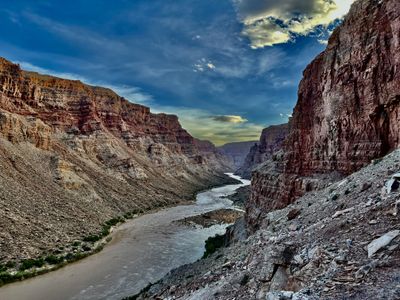
Ruby Rapid at mile 105.2, fifth of the Gem Rapids. Class IV with strong hydraulics.
Read more
Sapphire Rapid
Sapphire Rapid at mile 101.8, the largest of the Gem Rapids. Class IV. Substantial wave train.
Read more
Serpentine Rapid
Serpentine Rapid at mile 106.5, last and one of the largest Gem Rapids. Class IV/V with long, winding wave trains.
Read more
Skull Rapid
Skull Rapid is the most consequential rapid in Westwater Canyon and the crux of the run. A large boulder in the center of the channel splits the river; the preferred line runs to the right of the rock. The real hazard is…
Read more
Sockdolager Rapid
Sockdolager Rapid at mile 79.1, the second major rapid of the Upper Granite Gorge after Hance. Class IV/V. The name is 19th-century slang for a decisive blow — the rapid delivers one. Large wave train with potentially fl…
Read more
South Seas
South Seas refers to the core of the Mile Long sequence — specifically Rapids 16 through 19 — which become one continuous, choppy wave train at high water. The name echoes the ocean-swell character of the waves through t…
Read more
Triplet Falls
Triplet Falls at mile 10.8 is one of the three Class IV rapids of Lodore (alongside Upper Disaster Falls and Hell’s Half Mile). The rapid is a long left-handed turn ending with a large set of waves and holes on river-lef…
Read more
Tuna Creek Rapid
Tuna Creek Rapid at mile 99.7, immediately downstream of Crystal. Class IV. Often overlooked in the trip-planning psychology because of Crystal’s dominance, but a substantial rapid in its own right.
Read more
Unkar Rapid
Unkar Rapid at mile 72.6 is the opening rapid of the Upper Granite Gorge whitewater sequence and the entry point into Grand Canyon's big-water character. Built by debris from Unkar Creek on river-left, the rapid features…
High swim consequence
Read more
Walthenberg Rapid
Walthenberg Rapid at mile 112.8, a significant mid-canyon Class III+/IV between Shinumo and Forster. Named for the Walthenberg Canyon side drainage.
Read more
Class V Expert
Max-difficulty whitewater. Specialized skill required.
Class V Expert
Big Drop 3 / Satan's Gut
Big Drop 3 is Cataract Canyon’s signature rapid and the most commonly cited psychological centerpiece of the canyon. The hydraulic known as Satan's Gut is the defining hazard at many medium and high flows.
Read more
Crystal Rapid
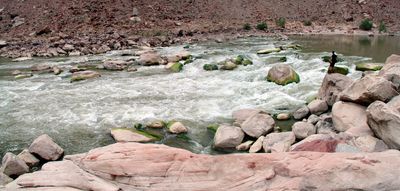
Crystal Rapid is one of the Grand Canyon's most consequential Class V rapids — created largely by a massive 1966 debris flow from Crystal Creek that deposited enormous boulders into the Colorado. The rapid fundamentally …
High swim consequence
Read more
Granite Rapid
Granite Rapid at mile 93.9, the first of the three famous Upper Granite Gorge Class V rapids (Granite–Hermit–Crystal). Named for the Granite Narrows where the canyon constricts. Very large wave train, strong laterals, co…
Read more
Hance Rapid
Hance Rapid at mile 76.5 marks the transition from Marble Canyon into the Inner Gorge — the most technical and consequential whitewater zone in the Grand Canyon. One of the longest and most complex rapids in the canyon, …
High swim consequence
Read more
Horn Creek Rapid
Horn Creek Rapid is one of the Inner Gorge's most feared rapids — a short, explosive Class V where the consequences of an error are among the most severe in the canyon. The rapid is compact but extremely powerful, with a…
High swim consequence
Read more
Lava Falls
Lava Falls is the most famous and most feared rapid in the Grand Canyon — one of the most powerful commercially run rapids in the world. At mile 179.5, it is the climactic challenge of any Grand Canyon descent. Created b…
Read more
Upset Rapid
Upset Rapid at mile 150.2, Class IV/V — the major rapid of the middle Grand Canyon. Named because several early survey parties flipped here. A steep drop with a large hole at the bottom. Often scouted.
Read more
Warm Springs Rapid
Warm Springs Rapid is the defining challenge of Yampa Canyon and one of the most flow-sensitive and consequential rapids in the entire Colorado Plateau river system. The rapid was created by a 1965 rockslide from Warm Sp…
High swim consequence
Read more
All Rapids A–Z
Show all 121 rapids
- Agate Rapid
- Anderson Hole
- Badger Creek Rapid
- Bedrock Rapid
- Belknap Falls
- Ben Hurt Rapid
- Big Drop 1
- Big Drop 2
- Big Drop 3 / Satan's Gut
- Big Drops
- Big Hummer Rapid
- Big Joe
- Boucher Rapid
- Bowling Alley Rapid
- Brown Betty Rapid
- Button Hole
- Calf Canyon Rapid
- Capsize Rapid
- Chandler Falls
- Coal Creek Rapid
- Cow Swim Rapid
- Crystal Rapid
- Deubendorff Rapid
- Disaster Falls
- Eight-Foot Rapid
- Emerald Rapid
- Five Springs Rapid
- Florence Creek Rapid
- Four-Foot Rapid
- Funnel Falls
- Georgie’s Rapid
- Government Rapid
- Granite Rapid
- Grapevine Rapid
- Greasy Pliers Rapid
- Gypsum Canyon Rapid
- Gypsum Creek Rapid
- Hance Rapid
- Hansbrough-Richards Rapid
- Havasu Creek Rapid
- Hell's Half Mile
- Hermit Rapid
- Horn Creek Rapid
- House Rock Rapid
- Imperial Rapid
- Inglesby Rapid
- Jack Creek Rapid
- Kanab Rapid
- Kwagunt Rapid
- Last Chance Rapid
- Lava Falls
- Ledge Rapid
- Little Dolores Rapid
- Little Joe Rapid
- Little Wild Horse Rapid
- Marble Canyon Rapid
- Matkatamiba Rapid
- Mile Long Rapid
- Montezuma Creek
- Moonshine Rapid
- Nankoweap Rapid
- National Rapid
- Nefertiti Rapid
- Nevills Rapid
- North Canyon Rapid
- North Sea
- Powell's Pocket Watch
- President Harding Rapid
- Purgatory
- Rapid 10
- Rapid 11
- Rapid 12
- Rapid 13
- Rapid 14
- Rapid 16
- Rapid 17
- Rapid 19
- Rapid 2
- Rapid 3
- Rapid 4
- Rapid 5
- Rapid 6
- Rapid 8
- Rapid 9
- Rattlesnake Rapid
- Red Creek Rapid
- Repeat
- Rerun
- Ross Rapid
- Ruby Rapid
- Sapphire Rapid
- Schoolboy Rapid
- Serpentine Rapid
- Short Rapid
- Skull Rapid
- Slickhorn
- Soap Creek Rapid
- SOB Rapid
- Sock-It-To-Me
- Sockdolager Rapid
- South Seas
- Staircase Rapid
- Steer Ridge Rapid
- Surprise Rapid
- Swasey's Rapid
- Tanner Rapid
- Tapeats Rapid
- Tepee
- The Chute
- Three Fords Rapid
- Triplet Falls
- Tuna Creek Rapid
- Turquoise Rapid
- Unkar Rapid
- Upset Rapid
- Walthenberg Rapid
- Warm Springs Rapid
- Waterhole Canyon Rapid
- Whitmore Rapid
- Wild Horse Rapid
- Wire Fence Rapid