The Reading List
Books that shape the science, history, and stories behind canyon country and the rivers that cut it — grouped into collections you can browse on a long afternoon.
Canyon Country & Desert Philosophy
Writers who named what the desert is for.
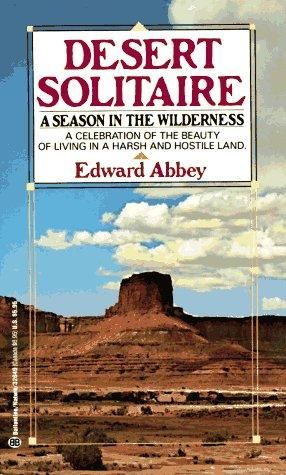
Abbey sat in the Arches ranger trailer and decided the desert was worth arguing with. Leopold walked his Wisconsin farm and figured out that land is a community you belong to, not a commodity you own. Fifty years apart, both writers invented a thing — the desert land ethic — that every writer since has inherited, extended, or sharpened tools against.
This is the shelf where that tradition lives. Abbey’s Desert Solitaire is the voice-shaper: irreverent, reverent, funny, angry. The Monkey Wrench Gang is the same man in novelist mode, still angry, now with characters. Leopold’s A Sand County Almanac is the quieter cousin — ethical rather than sarcastic, but no less insistent that the way we’ve been using land is wrong.
Then the canyon-country specialists. Craig Childs walks slot canyons until he finds the water, and The Secret Knowledge of Water is the book about that walking. David Roberts, writing as a reporter rather than a poet, put together House of Rain and Finding Everett Ruess — the first a Puebloan detective story, the second a young-man-vanished mystery that doubles as an Abbey precursor.
Jim Stiles ran The Canyon Country Zephyr out of Moab for thirty years and collected the argument in the anthology on this shelf. Reisner’s Cadillac Desert is the policy book beneath all of it — the water-politics explanation for why the places these writers loved are under the pressure they’re under.
Read Abbey first if you want to be entertained into the ethic. Read Leopold if you want to arrive at it soberly. Read Reisner last if you want the ethic to have teeth.
Canyon Country & Desert Philosophy
Desert Solitaire
Edward Abbey's classic portrait of canyon country, solitude, and wilderness, influential to the identity and mythology of the Colorado Plateau.
Read more
A Sand County Almanac
A foundational work of conservation ethics whose land ethic strongly influences how people think about wilderness, stewardship, and place.
Read more
The Monkey Wrench Gang
A gang of desert outlaws wage a reckless, irreverent war against the machines carving up the American Southwest.
Read more
The Secret Knowledge of Water
Craig Childs explores the hidden water sources and desert hydrology of the American Southwest, revealing how water shapes and sustains life in the most arid landscapes on Earth.
Read more
House of Rain
Craig Childs traces the routes of the ancient Anasazi across the Colorado Plateau, uncovering evidence of a lost civilization's migrations through canyon country.
Read more
Finding Everett Ruess
The story of Everett Ruess, whose disappearance in canyon country became one of the most compelling legends of desert exploration.
Read more
The Canyon Country Zephyr Anthology
A collection representing the voice, arguments, stories, and culture of canyon country, especially around Moab and the desert Southwest.
Read more
The Hopi Survival Kit
Thomas Mails's compilation of Hopi elder teachings, prophecy, and warnings — including the centrality of water, the dangers of living beyond the land's limits, and the moral stakes embedded in the Colorado Plateau's future. A difficult, earnest transmission of Hopi cosmological thought that gives human and spiritual weight to the canyon country DM operates in.
Read more
Cadillac Desert
A foundational book on Western water development, dams, irrigation politics, and the long struggle over the Colorado River and the arid American West.
Read more
Rivers & First Descents
The Colorado, the Green, and the people who ran them first.
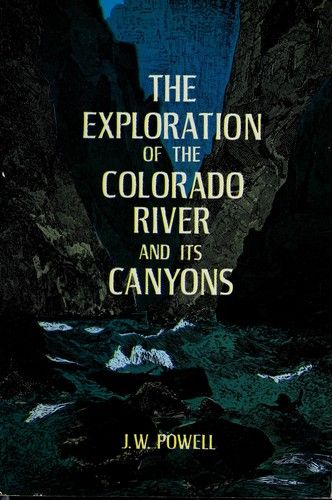
Powell went down the Colorado in 1869 with one arm, nine men, and four wooden boats. Six men finished. The journal he kept is the oldest book on this shelf. Everything else here is either retelling that trip, continuing it, or arguing with it.
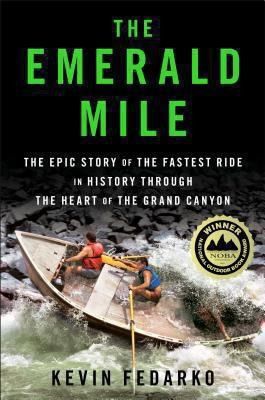
Down the Great Unknown is Edward Dolnick’s journalism-quality retelling — the history book that lets you read Powell’s account with context. The Emerald Mile is Fedarko’s dory-at-peak-flood epic: three boatmen, 36 hours, 277 miles, the fastest run through the Grand Canyon. It reads like a thriller because the water was making one.
Then the regional archive. If We Had a Boat and Sunk Without a Sound are both Glen Canyon books — one celebratory, one elegiac. The Very Hard Way and Westwater Lost and Found are the boatman oral histories. Cataract Canyon History and The Last River Run are the dam-era ledger. River of Contraries is the compiled argument about water policy, rivers, and loss.
Boatman’s Quarterly Review Anthology is the crown. Thirty years of field notes, trip reports, gear dispatches, and death notices — the working publication of the Grand Canyon river community collected into one heavy book.
Start with Powell to understand where the lens came from. End with the Anthology to understand what people did with it.
Rivers & First Descents
The Exploration of the Colorado River
Powell's original account of the first scientific expedition through the Grand Canyon, documenting the geology, natural history, and challenges of navigating the unknown Colorado River.
Read more
Down the Great Unknown
The dramatic story of John Wesley Powell's first expedition through the Grand Canyon and the birth of river exploration in the American West.
Read more
The Emerald Mile
The thrilling story of the dory daredevils who set a speed record through the Grand Canyon at the height of the legendary flood of 1983 — and of the river that made it possible.
Read more
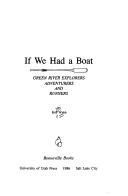
If We Had a Boat
A river-running memoir by Roy Webb capturing the spirit, humor, and culture of Western river expeditions and the people who chase moving water through canyon country.
Read more
Sunk Without a Sound
The story of Norman Nevills and the birth of commercial river running in the Colorado River basin.
Read more
The Very Hard Way
Brad Dimock's exhaustive biography of Bert Loper — gold prospector, early Colorado River boatman, and one of the great stubborn characters of Western river history — who died in Grand Canyon at 79, alone in his boat in a rapid, on the river he refused to leave. The definitive account of the Colorado River's pioneer running era.
Read more
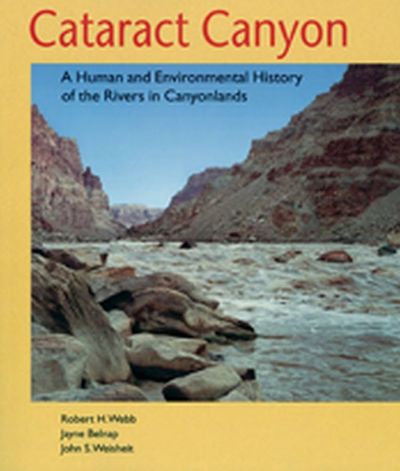
Cataract Canyon
An in-depth environmental and human history of Cataract Canyon and the rivers of Canyonlands, exploring Indigenous presence, exploration, dam impacts, river ecology, and the evolution of modern river running.
Read more
The Last River Run
The story of the final free-flowing run of Glen Canyon before Lake Powell filled the canyon, capturing a vanished landscape and the culture it held.
Read more
Westwater Lost and Found
A story centered on the legendary Westwater Canyon stretch of the Colorado River, blending river-running culture, history, and storytelling from one of the most iconic whitewater sections in the Southwest.
Read more
River of Contraries
A sweeping history of the Colorado River and its complex relationship with Western culture and landscape.
Read more
Boatman's Quarterly Review Anthology
A collection of essays and stories from the legendary Boatman's Quarterly Review publication, documenting the culture, lore, and voices of Grand Canyon river guides.
Read more
Geology & Deep Time
How the canyons got here, and how rivers do what they do.
Most rafters eventually notice the rock. The good ones learn to read it. This shelf is the reading instruction.
McPhee twice. Annals of the Former World is the Pulitzer-winning 700-page cross-section of the continent — four separate books about one road trip from New York to Nevada, stopping everywhere an interstate cuts a useful outcrop. The Control of Nature is the shorter, meaner sibling: three case studies of civilizations pretending they can boss rivers around.
Then the regional and technical. Canyon Country is the accessible Colorado Plateau primer. The Colorado Plateau: A Geologic History is the textbook upgrade. Grand Canyon: Monument to an Ancient River is the argument that the canyon is younger than we used to think — and the evidence gets interesting.
The hydraulics shelf: Fluvial Processes in Geomorphology, River Mechanics, Introduction to Physical Hydrology. These are the books that explain why an eddy has a return line, why a hole on the Green does that particular thing, why sediment gets loaded and dropped where it does. Dense. Worth it.
Geology of Utah’s Rivers is the field guide you’d actually carry.
Read McPhee to want to know. Read the technical shelf after you’ve been on the water enough times to have the questions ready.
Geology & Deep Time
Annals of the Former World
A landmark work of narrative geology that helps readers understand deep time, tectonics, and the geological forces that shaped North America, including the context needed to appreciate the Colorado Plateau.
Read more
The Control of Nature
Three deeply reported narratives about humanity's attempts to stop rivers, lava, and debris flows — and what the land does in return. A masterwork of geological journalism that asks whether nature can ever truly be controlled.
Read more
Canyon Country
An accessible introduction to the rock layers, canyon formation, and landscapes of the Colorado Plateau and canyon country.
Read more
The Colorado Plateau
A key geological reference for understanding the uplift, stratigraphy, tectonics, and erosional history of the Colorado Plateau.
Read more
The Grand Canyon: Monument to an Ancient River
A clear geological explanation of the formation of the Grand Canyon and the deep-time processes that shaped the Colorado River.
Read more
Fluvial Processes in Geomorphology
A foundational scientific text on river geomorphology, covering sediment transport, channel form, fluvial dynamics, and the physical processes that shape river systems.
Read more
River Mechanics
A rigorous graduate-level treatment of river hydraulics and sediment transport, covering flow resistance, bedforms, channel stability, and the physical mechanics that govern river behavior.
Read more
Introduction to Physical Hydrology
A rigorous, university-level introduction to physical hydrology covering the full water cycle — precipitation, evapotranspiration, infiltration, groundwater, runoff generation, and streamflow — with quantitative methods throughout. The scientific foundation for understanding how rivers work at the watershed scale, from snowpack in the Rockies to baseflow in canyon rivers.
Read more
Geology of Utah's Rivers
A geological exploration of Utah’s major river systems explaining how tectonics, sedimentation, and erosion shaped the canyon landscapes of the Colorado Plateau and surrounding regions.
Read more
Ancient & Living Southwest
Indigenous voices, continuous traditions, the plateau before and after.
The plateau has been occupied for ten thousand years. The rafters got here last week. This shelf is the correction.
Ancient Peoples of the American Southwest is the archaeology overview — Ancestral Puebloan, Mogollon, Hohokam, the sequence and the spread. Roberts’s House of Rain is the journalistic deep-dive into one of the unsolved questions: where the Puebloans went when they left the Four Corners in the thirteenth century. The Puebloan Past and Present of the Colorado Plateau is the academic companion.
Then the living traditions. The Diné Reader is Navajo voices, contemporary. The Hopi Survival Kit is prophecy and practice. Where the Two Came to Their Father is a Navajo origin ceremony transcribed by Jeff King and Maud Oakes — one of the earliest English-language records of the form, and still among the most reverent.
This is the shelf that changes how you read every canyon wall for the rest of your river trips. The petroglyphs are not ancient graffiti. They are the oldest continuous record on this continent.
Ancient & Living Southwest
Ancient Peoples of the American Southwest
Stephen Plog's lucid, well-illustrated synthesis of the three great pre-Columbian cultures of the American Southwest — Ancestral Puebloan, Hohokam, and Mogollon — tracing their rise, interaction, and transformation across nearly two millennia. One of the most accessible single-volume overviews of the archaeology of the Four Corners and surrounding region.
Read more
House of Rain
Craig Childs traces the routes of the ancient Anasazi across the Colorado Plateau, uncovering evidence of a lost civilization's migrations through canyon country.
Read more
The Diné Reader
The first comprehensive anthology of Navajo (Diné) literature — poetry, fiction, memoir, and essay by Diné writers spanning the 20th and 21st centuries. Essential for any editorial voice writing about the canyon country and Colorado Plateau that is home to the Navajo Nation — a reminder that this land has a rich, living literary tradition in English and Navajo.
Read more
The Hopi Survival Kit
Thomas Mails's compilation of Hopi elder teachings, prophecy, and warnings — including the centrality of water, the dangers of living beyond the land's limits, and the moral stakes embedded in the Colorado Plateau's future. A difficult, earnest transmission of Hopi cosmological thought that gives human and spiritual weight to the canyon country DM operates in.
Read more
Where the Two Came to Their Father
A Navajo war ceremonial given by Haske Naabah (Jeff King), recorded and painted by Maud Oakes, with mythological commentary by Joseph Campbell — one of the foundational Bollingen Series documents transmitting the Twin Hero myth cycle and the cosmological geography embedded in Navajo ceremony. A primary-source encounter with the spiritual landscape of the canyon country.
Read more
The Puebloan Past and Present of the Colorado Plateau
A scholarly regional survey of Ancestral Puebloan occupation across the Colorado Plateau — covering architecture, land use, migration, and the deep continuity between ancient and living Pueblo peoples. Note: exact bibliographic identity of this volume is uncertain; treat as representative of the University of Utah Press Colorado Plateau archaeology series.
Read more
River Craft & Practice
Manuals and guides for the water itself.
A short shelf. Four books that teach you how to do the thing.
River Runners’ Guide to Utah and Adjacent Areas is the old-school regional manual — mile-by-mile annotations for everything from the Yampa to the San Juan. The Colorado River in Grand Canyon is the equivalent for the big ditch: every rapid, every mile, every camp.
Raft Book is the comprehensive how-to — rigging, rowing, repair, river reading. How to Read Water is Tristan Gooley’s broader primer on the physics of moving water — why the current does what it does, what the surface is telling you.
If you only buy one, buy the regional guide for your water. If you buy two, add How to Read Water. If you’re serious, all four.
River Craft & Practice
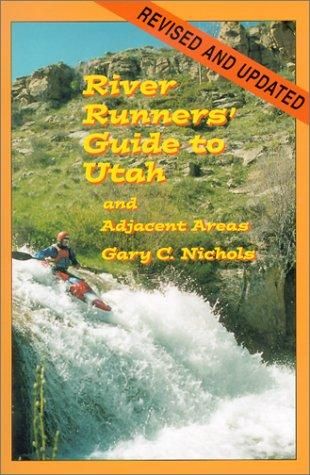
River Runners' Guide to Utah and Adjacent Areas
A comprehensive guidebook to whitewater rivers in Utah and neighboring regions, covering river access, rapids, flow considerations, trip logistics, and historical context for river runners.
Read more
The Colorado River in Grand Canyon
A classic guide to the Colorado River through Grand Canyon with geology, ecology, and river running notes.
Read more
The Raft Book
A humorous yet highly informative illustrated guide to river running and raft handling.
Read more
How to Read Water
A guide to understanding the subtle clues in water movement—from puddles and rivers to oceans—teaching readers how currents, waves, surface textures, and patterns reveal information about wind, depth, obstacles, and landscape.
Read more
Voice, Essay & Comedy
What to read when the trip ends and the writing starts.
You get off the water, you open a beer, and the question is what to read. This shelf is the answer.
David Foster Wallace twice — A Supposedly Fun Thing I’ll Never Do Again for the cruise-ship footnotes-as-weapon essay, Consider the Lobster for the title piece on boiling things alive. Sedaris twice — Barrel Fever early and Me Talk Pretty One Day peak. Chuck Klosterman twice, for the pop-culture-as-serious-inquiry thing he does better than anyone.
Then the comedians-as-writers. Norm Macdonald’s Based on a True Story — unclassifiable, maybe a novel, maybe a memoir, definitely funny. Carlin’s Napalm and Silly Putty. Lenny Bruce’s How to Talk Dirty and Influence People. Steve Martin’s Born Standing Up — the only one of these that’s actually soft and kind, which is the point.
Judd Apatow’s Sick in the Head is comedians interviewing comedians about the craft. Roth’s Portnoy’s Complaint is here because it invented a kind of comedic voice that all the above inherited.
Read these when your river brain needs a different kind of workout. They also make excellent floor-of-the-tent reading when it’s raining and you’re not going anywhere.
Voice, Essay & Comedy
A Supposedly Fun Thing I'll Never Do Again
Seven essays that include a devastatingly funny account of a luxury cruise ship, a meditation on tennis and perfectionism, and a dispatch from the Illinois State Fair — all united by Wallace's relentless self-awareness, his footnote-addicted brain, and his genuine anxiety about what American leisure and entertainment are doing to us.
Read more
Consider the Lobster
Wallace's second essay collection ranges from a piece on the Maine Lobster Festival (which turns into a moral inquiry into whether lobsters feel pain) to the 2000 McCain campaign to Kafka's humor to the Adult Video News Awards — each essay a demonstration that any subject, taken seriously enough, becomes a window into something large.
Read more
Barrel Fever
Sedaris's debut collection mixes caustic personal essays with dark short fiction, introducing his signature voice: self-lacerating, absurdly specific, socially horrified, and funnier than it has any right to be. The fiction pieces in particular show a writer willing to go somewhere genuinely uncomfortable.
Read more
Me Talk Pretty One Day
Sedaris at the height of his powers — the first half set in America (art school, siblings, odd jobs), the second in France attempting to learn the language and failing spectacularly. A masterclass in building a deeply funny, warmly human persona from the raw material of one's own inadequacy.
Read more
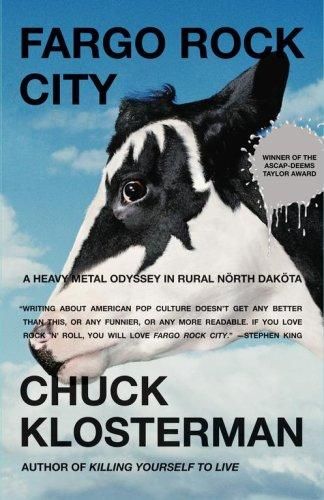
Fargo Rock City
Klosterman's debut makes a deeply earnest case for heavy metal as the defining cultural experience of growing up isolated and rural in the 1980s — arguing that the music wasn't escapism but identity formation, and that what looks like bad taste from the outside can be the most honest thing about a person.
Read more
Sex, Drugs, and Cocoa Puffs
Klosterman's breakthrough uses cereal, soccer, The Sims, and Pamela Anderson as serious philosophical raw material — arguing that what a culture throws away tells you more about it than what it keeps. A manifesto for treating low culture with the same rigor you'd give to high culture.
Read more
Based on a True Story
Macdonald's 'memoir' that is simultaneously a novel, a meditation on death, and a serious philosophical inquiry into the difference between a story and the truth. One of the strangest books a comedian has produced — structured around the joke as the only honest response to mortality, and the lie as the only honest form of autobiography.
Read more
Napalm & Silly Putty
Carlin's written comedy at full force — short, vicious observations on language, consumer culture, bureaucratic absurdity, and the self-seriousness of people who could use a hard look in the mirror. The page format lets the ideas land harder than the stage versions; nothing is softened.
Read more
How to Talk Dirty and Influence People
Lenny Bruce's autobiography — part confessional, part comedy manifesto, part indictment of American hypocrisy. Written while he was being prosecuted for obscenity, it reads as both a life story and an argument about what language, truth, and comedy are actually for.
Read more
Born Standing Up
Martin's precise, unsentimental account of a decade of grinding craft — playing near-empty clubs, developing a deliberately absurdist act, and surviving the long ambiguous middle before everything worked. A memoir about obsessive mastery that happens to be about comedy, useful as a model for writing about any discipline that requires years of invisible apprenticeship.
Read more
Sick in the Head
Thirty years of Apatow's interviews with comedians — from a teenage Apatow with a tape recorder interviewing Carlin and Seinfeld, to career-peak conversations with Louis C.K., Lena Dunham, and others. A book about obsession, apprenticeship, and the specific compulsion that drives people to be funny for a living.
Read more
Portnoy's Complaint
One long confessional monologue delivered to a silent psychiatrist — furious, brilliantly funny, and pathologically self-aware. Roth's narrator understands exactly what is wrong with him and is completely helpless to change it, which turns out to be the funniest and most honest thing a character can do.
Read more
Fiction & The Long Shelf
Novels, memoirs, and road books that belong in the boat.
The cooler-load shelf. The ones you bring when the trip is long enough to actually finish a novel.
Lonesome Dove is the big one — 900 pages of cattle drive, which is exactly the right size for a seven-day layover. One Flew Over the Cuckoo’s Nest is Kesey’s. Even Cowgirls Get the Blues is Robbins’s take on the American West done weird. The Dog Stars is Heller’s post-apocalyptic flying-book that reads faster than its premise suggests. The River Why is the Gierach-adjacent fly-fishing novel that’s actually a philosophy book.
Then the long-road memoirs. Pirsig’s Zen and the Art of Motorcycle Maintenance. Steinbeck’s Travels with Charley. Krakauer’s Into the Wild. Bryson twice — A Walk in the Woods and In a Sunburned Country. Hunter S. Thompson’s Fear and Loathing in Las Vegas for when you want the travel memoir to stop making sense. Coupland’s Generation X as period document. Manson’s Subtle Art of Not Giving a F*ck if you need a reset between books. Michael Lewis’s Liar’s Poker because money stories travel well. And Abbey’s Monkey Wrench Gang shows up here again because it earns two shelves.
This is the shelf you load into the dry box. Pick three. Finish one.
Fiction & The Long Shelf
Lonesome Dove
McMurtry's Pulitzer Prize-winning epic follows a cattle drive from Texas to Montana — a vast, unsparing novel about loyalty, geography as fate, and the distance between the myth of the frontier and its actual grinding reality. The definitive American Western: enormous in scope, intimate in its attention to character.
Read more
One Flew Over the Cuckoo's Nest
Narrated by the half-Native, half-hallucinating Chief Bromden, Kesey's novel pits the anarchic energy of Randle McMurphy against the totalizing logic of Nurse Ratched and the institution she runs. An extended meditation on power, freedom, sanity, and what it costs to refuse to be managed.
Read more
The Dog Stars
Heller's debut novel follows a pilot and his dog surviving a pandemic in the Colorado Rockies, patrolling their territory in a beat-up Cessna — a grief novel disguised as survival fiction, written in a prose style so spare and fragmented it reads like a field log from the end of the world. Heller is also a serious whitewater kayaker and the author of The River (2019).
Read more
The River Why
Duncan's debut novel follows a young fly fisherman who retreats to a cabin in the Oregon Cascades and discovers that rivers are not a pastime but a way of life — a theology, a comedy, and a love affair. One of the great river novels in American literature: lyrical, funny, and deeply spiritual about moving water.
Read more
Even Cowgirls Get the Blues
Sissy Hankshaw, born with outsized thumbs and an otherworldly gift for hitchhiking, travels through the American West in search of something the novel refuses to name tidily. Robbins's maximally digressive, spiritually curious, deliberately irreverent novel treats the West as a philosophical space rather than a backdrop.
Read more
Generation X
Three friends retreat to the California desert to swap apocryphal stories and escape the soul-crushing logic of careerism and brand culture. Coupland's debut coined 'McJob' and gave a generation its name — a portrait of people who chose smallness and experience over scale and status.
Read more
Zen and the Art of Motorcycle Maintenance
A father and son ride motorcycles from Minnesota to California while Pirsig excavates the ruins of his own mind — specifically, a prior self who pursued the concept of 'Quality' to the point of madness. The most influential meditation on craft, attention, and the relationship between the traveler and the machine in American letters.
Read more
Into the Wild
Krakauer's account of Christopher McCandless, who abandoned his possessions and walked alone into the Alaskan wilderness in 1992 — a book that invites strong reactions and remains essential for anyone thinking seriously about the philosophy and ethics of wilderness pursuit, the romance of escape, and the difference between preparation and surrender.
Read more
A Walk in the Woods
Bryson's hilariously honest account of attempting the Appalachian Trail with a wildly unprepared friend — a masterclass in writing about wilderness without pretension: self-deprecating, genuinely funny, laced throughout with natural history, conservation history, and a real love for the American backcountry.
Read more
In a Sunburned Country
Bryson travels across Australia — a continent that is vast, arid, geologically ancient, and quietly full of things that will kill you — with his signature mix of warm humor, deep curiosity, and barely contained awe at the scale of the place. A model for writing about extreme landscapes without losing the comic thread.
Read more
Travels with Charley
Steinbeck's account of driving across America with his standard poodle Charley in a custom pickup camper — elegiac, quietly political, full of American loneliness and open-road mythology. One of the great road-trip books: honest about age and uncertainty, clear-eyed about a country in transition.
Read more
Fear and Loathing in Las Vegas
Thompson's hallucinatory account of a road trip through the Nevada desert — part journalism, part novel, entirely its own category. The founding document of gonzo journalism: total immersion in the subject, paranoid clarity about American culture, and the desert Southwest rendered as a fever dream that is somehow more accurate than straight reporting.
Read more
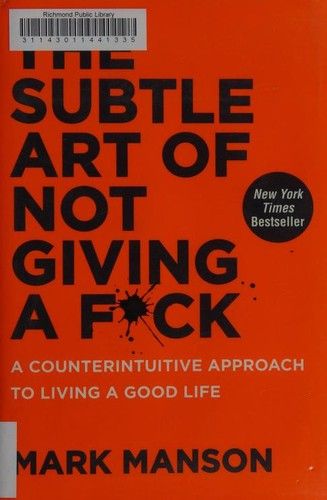
The Subtle Art of Not Giving a F*ck
A rejection of toxic positivity disguised as a self-help book — Manson argues that meaningful life requires choosing what to care about deliberately, not optimizing everything. More philosophically honest than the title suggests, it draws on Stoic and existentialist thought to make a case for values-driven suffering.
Read more
Where the Old West Stayed Young
A historical portrait of the ranching and outlaw culture of Browns Park and the remote canyons of the Colorado Plateau, illuminating how geography shaped the final stronghold of the old frontier.
Read more
Liar's Poker
Michael Lewis's first-person account of his years at Salomon Brothers during the 1980s bond trading boom — a world of staggering excess, ritualized absurdity, and the slow realization that none of it means anything. A masterclass in using financial culture as a lens on human nature.
Read more
The Monkey Wrench Gang
A gang of desert outlaws wage a reckless, irreverent war against the machines carving up the American Southwest.
Read more
All Books A–Z
Show all 65 titles
- A Sand County Almanac 1949
- A Supposedly Fun Thing I'll Never Do Again 1997
- A Walk in the Woods 1998
- Ancient Peoples of the American Southwest 1997
- Annals of the Former World 1998
- Barrel Fever 1994
- Based on a True Story 2016
- Boatman's Quarterly Review Anthology 2000
- Born Standing Up 2007
- Cadillac Desert 1986
- Canyon Country 1989
- Cataract Canyon 2007
- Consider the Lobster 2005
- Desert Solitaire 1968
- Down the Great Unknown 2002
- Even Cowgirls Get the Blues 1976
- Fargo Rock City 2001
- Fear and Loathing in Las Vegas 1971
- Finding Everett Ruess 2011
- Fluvial Processes in Geomorphology 1964
- Generation X 1991
- Geology of Utah's Rivers 2016
- House of Rain 2007
- How to Read Water 2016
- How to Talk Dirty and Influence People 1965
- If We Had a Boat 1986
- In a Sunburned Country 2000
- Into the Wild 1996
- Introduction to Physical Hydrology 2010
- Liar's Poker 1989
- Lonesome Dove 1985
- Me Talk Pretty One Day 2000
- Napalm & Silly Putty 2001
- One Flew Over the Cuckoo's Nest 1962
- Portnoy's Complaint 1969
- River Mechanics 2002
- River of Contraries 2010
- River Runners' Guide to Utah and Adjacent Areas 2009
- RiverMaps Guide to the Colorado & Green Rivers in the Canyonlands of Utah & Colorado 2016
- Sex, Drugs, and Cocoa Puffs 2003
- Sick in the Head 2015
- Sunk Without a Sound 2001
- The Canyon Country Zephyr Anthology 2010
- The Colorado Plateau 1983
- The Colorado River in Grand Canyon 1987
- The Control of Nature 1989
- The Diné Reader 2021
- The Dog Stars 2012
- The Emerald Mile 2013
- The Exploration of the Colorado River 1875
- The Grand Canyon: Monument to an Ancient River 2012
- The Hopi Survival Kit 1997
- The Last River Run 2001
- The Monkey Wrench Gang 1975
- The Puebloan Past and Present of the Colorado Plateau 2000
- The Raft Book 1996
- The River Why 1983
- The Secret Knowledge of Water 2000
- The Subtle Art of Not Giving a F*ck 2016
- The Very Hard Way 2007
- Travels with Charley 1962
- Westwater Lost and Found 2001
- Where the Old West Stayed Young 1962
- Where the Two Came to Their Father 1943
- Zen and the Art of Motorcycle Maintenance 1974