An accessible introduction to the rock layers, canyon formation, and landscapes of the Colorado Plateau and canyon country.
If McPhee is where you go for the grand tour of North American geology, Baars is where you go for canyon country specifically. Donald Baars spent most of his career on the Colorado Plateau and he wrote this book — short, clear, illustrated, field-trip friendly — for people who wanted to actually understand the rock walls they were camping under. It's not literary. It's not going to reorganize your sense of deep time. It's a guide, and in guide form it is close to perfect.
What Baars does that nobody else quite pulls off at this level of accessibility is teach you the layers as a system. Chinle. Wingate. Kayenta. Navajo. Carmel. Entrada. Morrison. Dakota. Mancos. These are words you've heard thrown around in guidebooks. Baars tells you what each one is, where in the column it sits, what it looks like in cross-section, and why a given canyon cut looks the way it does because of which members are sitting on top of which others. You finish the book and you can, with not much effort, start naming layers from memory on the river.
This is the book I hand to people who come back from a Westwater or a Cataract run and say, OK, now tell me what I was looking at. Baars is the answer. He won't make you a geologist. He'll make you a literate visitor — someone who can read a cliff the way you'd read a page, with a sense of what's on top, what's underneath, what's faulted, and what's been cut through by the river you were just on.
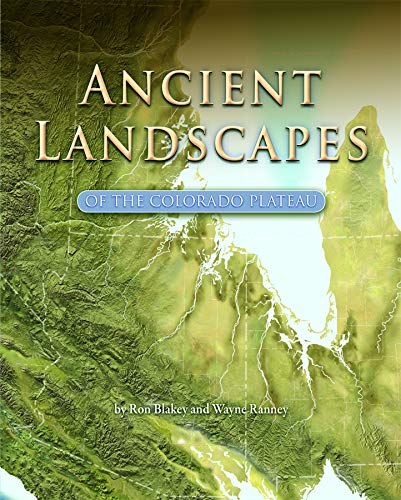
The book is a little dated. The tectonic framework section has been updated by subsequent work, and the cultural pages at the back have some language that hasn't aged gracefully. That said, the core — the stratigraphy, the canyon formation, the correlation of layers across the plateau — is still the clearest introduction I've found. Pair it with Ancient Landscapes of the Colorado Plateau if you want the visual reconstructions, and you've basically got the undergraduate course for this region in two volumes.
Throw it in the dry box. Pull it out after a hike. Read the chapter on the layer you just climbed through. That's the use case the book was built for, and it holds up three decades after it was written. A week in canyon country with this book in the kit teaches you more of the rock than a semester in a lecture hall.