A rigorous, university-level introduction to physical hydrology covering the full water cycle — precipitation, evapotranspiration, infiltration, groundwater, runoff generation, and streamflow — with quantitative methods throughout. The scientific foundation for understanding how rivers work at the watershed scale, from snowpack in the Rockies to baseflow in canyon rivers.
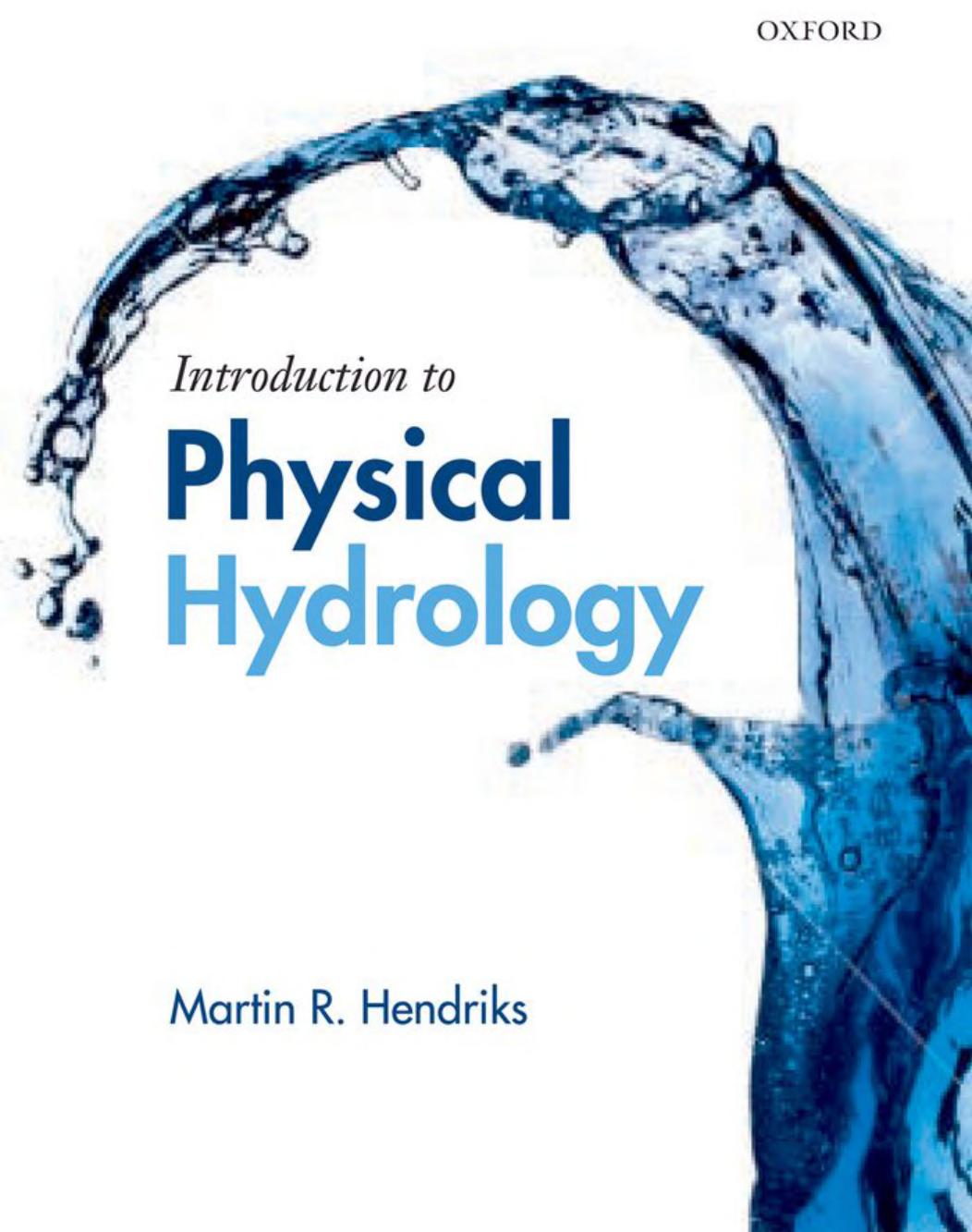
Hendriks's textbook is where you go when you want to stop guessing and start knowing. Introduction to Physical Hydrology is exactly what it says on the cover — a university-level introduction to the full water cycle, written by a researcher who has spent his career on how water moves through a watershed. Precipitation, evapotranspiration, infiltration, groundwater, runoff generation, streamflow. Every chapter a layer. Read it with a notebook and you have, at the end of it, an actual mental model of what a watershed is doing from the moment a snowflake lands on a high ridge to the moment the water reaches your gauge a hundred miles downstream.
The book is a textbook. There are equations. There are diagrams with seven labeled compartments. But Hendriks is a good teacher, and he's written the book so that the equations are there when you need them and out of the way when you don't. Most chapters can be read twice — once for the prose and the framework, once for the math. The first reading gets you most of what a river-running reader needs. The second reading is there when a specific question comes up and you realize you actually need to understand, say, the Penman-Monteith equation or why a groundwater recession curve has the specific shape it has.
I bring this book up when somebody on the river starts asking real questions about where the water is coming from. Why is the Green turning silty on day three when it was clear on day one. Why does the Yampa spike this time of year and the Green not. What is the actual lag between snowpack peak and peak flow in this particular basin. Those questions have answers, and the answers are in here. Hendriks gives you the framework. Your local river data gives you the specifics. Together you can actually reason about what's happening.
The book is not written for river people specifically. It's written for earth-science undergraduates. But the translation is easy once you know it's there — the hydrologic framework applies to any basin, and the chapters on runoff generation and streamflow are directly relevant to anybody who cares about what their gauge is going to read three days from now. This is the book the hydrologist on your crew is thinking with, whether she knows she's thinking with it or not.
Read it in sections. Don't try to do the whole book at once. Pick the chapter that answers a question you actually have — flood frequency, snowmelt runoff, baseflow — and work through that chapter carefully. The knowledge compounds, and by the third or fourth section you have earned yourself a genuine working literacy about what rivers are doing and why.