Skip to content
Book

Cadillac Desert

The American West and Its Disappearing Water

Cover of Cadillac Desert

A foundational book on Western water development, dams, irrigation politics, and the long struggle over the Colorado River and the arid American West.

Here's how Cadillac Desert opens. John Wesley Powell stands in front of Congress and says the arid West cannot support the population and the agriculture being planned for it. Congress listens politely and does the exact opposite. Everything the book has to say for the next four hundred pages is the working-out of that one moment — the dams they built anyway, the rivers they plumbed anyway, the cities they grew anyway, and the bill that is now coming due with serious interest.

Reisner isn't a neutral observer and he doesn't pretend to be. He spent years inside the Bureau of Reclamation's paper trail, and the book reads like a reporter who's been through the files and isn't going to soften the findings. Hoover Dam. Glen Canyon. The All-American Canal. The California Aqueduct. The Central Arizona Project. The names of western infrastructure told as a sequence of political choices, engineering gambles, and money loops that together dewatered the Colorado, drowned canyons that shouldn't have been drowned, and pointed the whole region at water math that doesn't work.

If you run rivers in the West, this is the political geology underneath every launch you've ever done. Lake Powell is in here. Flaming Gorge. The Central Utah Project. The plumbing under Moab. Why the Green runs clear below Flaming Gorge, why it doesn't run wild below it. Reisner explains why your put-in is where it is, why your take-out is where it is, and why the hydrograph you're fighting is the hydrograph some committee chose in 1952.

The book is more than thirty years old and it hasn't aged a day. Everything it predicted about overallocation and reservoir decline and political unwillingness to face basic arithmetic — all of it has been happening in plain sight since the early 2000s. The bathtub ring on Lake Powell is a monument to a specific decision. The Colorado Compact's divorce from actual flow reality is a monument to a different one. Reisner names those decisions. Naming them, on the record, is what the book's really for.

Read it the week before you launch on the Green, the Colorado, anything downstream of a big western dam. You'll run the rapids differently. You'll camp differently. You'll look at the silt line on the canyon wall and the line on the reservoir and you'll understand that both of them are recent, and both of them are political choices.
Details

Genre
Water History, Environmental History, Western History
Subjects
water politics, dam history, western development
Geography
American West, Colorado River Basin
Tags
ISBN
0670199273
Story DNA Themes, moods, voice signals
Themes
western water politics, dam building, resource exploitation, human ambition
Moods
critical, analytical, revealing
Motifs
dams, water diversion, canals, bureaucracy
Voice
journalistic, investigative, clear
Story function
historical-context, policy-frame, warning
Setting
reservoir shorelines, concrete dams, irrigation canals, dry basins
Why this book What it influences, what it teaches
Influence
knowledge, philosophy, cultural-context
Knowledge
Western water law, dam construction history, Bureau of Reclamation, Colorado River politics, irrigation and agriculture
Concepts
Colorado River Compact, Bureau of Reclamation, water overallocation, Glen Canyon Dam controversy, hydraulic civilization
Use cases
framing the ethics of dam construction on the Colorado River, contextualizing Glen Canyon Dam within broader Western water politics, writing about water scarcity and the unsustainable hydraulic ambitions of the 20th century American West, providing historical weight to descriptions of diminished river flows below Lake Powell, grounding any discussion of water rights, the Colorado River Compact, or Bureau of Reclamation history
Related books
The Control of Nature

The Control of Nature

John McPhee · 1989

Three deeply reported narratives about humanity's attempts to stop rivers, lava, and debris flows — and what the land does in return. A masterwork of geological journalism that asks whether nature can ever truly be controlled.

tone storytelling philosophy knowledge
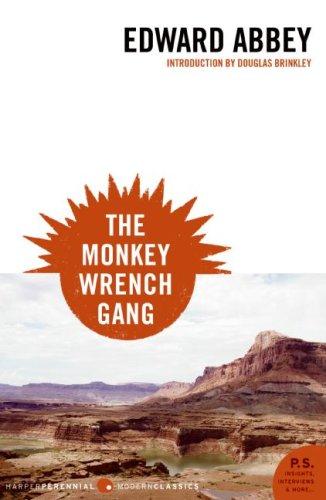
The Monkey Wrench Gang

The Monkey Wrench Gang

Edward Abbey · 1975

A gang of desert outlaws wage a reckless, irreverent war against the machines carving up the American Southwest.

tone philosophy cultural context
River of Contraries

River of Contraries

Don Lago · 2010

A sweeping history of the Colorado River and its complex relationship with Western culture and landscape.

knowledge cultural context philosophy
The Last River Run

The Last River Run

Todd Balf · 2001

The story of the final free-flowing run of Glen Canyon before Lake Powell filled the canyon, capturing a vanished landscape and the culture it held.

storytelling philosophy cultural context
A Sand County Almanac

A Sand County Almanac

Aldo Leopold · 1949

A foundational work of conservation ethics whose land ethic strongly influences how people think about wilderness, stewardship, and place.

philosophy tone
Annals of the Former World

Annals of the Former World

John McPhee · 1998

A landmark work of narrative geology that helps readers understand deep time, tectonics, and the geological forces that shaped North America, including the context needed to appreciate the Colorado Plateau.

tone storytelling knowledge philosophy

Connected in the graph

  • river/colorado-river
  • theme/water-policy
  • theme/dam-history
  • theme/water-scarcity
  • region/american-west
  • river-section/glen-canyon
  • subject/conservation
  • river/yampa-river
  • region/dinosaur-national-monument
  • river/escalante-river
  • river/colorado-river
Verified 2026-04-15 · Sources: open-library · Confidence: partial