Lava Falls
Also known as: Vulcan Rapid
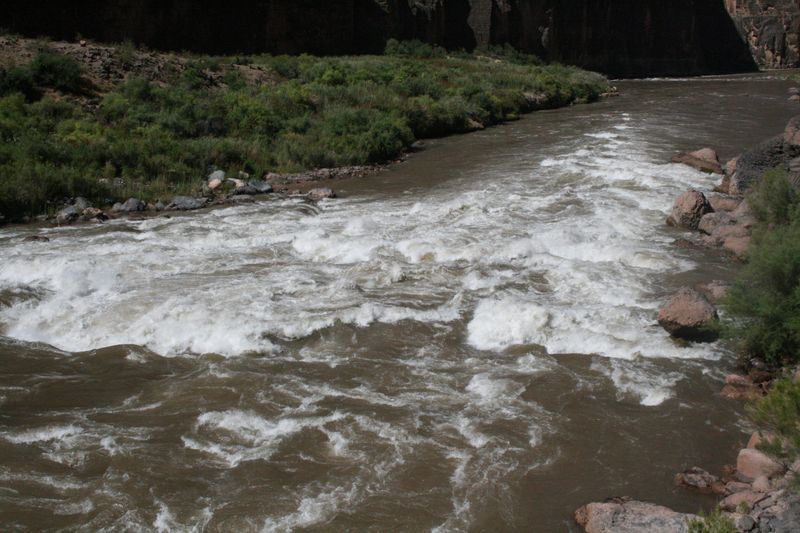
Lava Falls is the most famous and most feared rapid in the Grand Canyon — one of the most powerful commercially run rapids in the world. At mile 179.5, it is the climactic challenge of any Grand Canyon descent. Created by a lava flow debris fan that constricts the river into a short, violent drop. Class X on the old Grand Canyon scale — Class V–VI on standard scale — at high water.
Difficulty
Class V at most runnable flows. At very high flows (above 40,000 cfs) escalates to VI conditions. Multiple distinct lines exist with dramatically different consequences — the route choice determines the experience. Virtually all groups scout extensively.
The water
Character: short violent volcanic debris drop.
Features: V-wave at entry (the 'entry V'); Left run; Right run via the 'ledge hole route'; multiple large hydraulics throughout; powerful tailwaves.
Hazards: right ledge hole extremely retentive and dangerous at many flows; Left run features massive left-side wave requiring precise entry; V-wave at entry can deflect boats into hazardous positions; violent tailwaves.
How it changes with flow
Low water: Below 8,000 cfs lava features are more exposed. Some routes become shallower. V-wave entry more defined.
Medium: Classic Lava Falls at 8,000–25,000 cfs. Both Left and Right runs have established lines. Still extremely powerful.
High water: Above 30,000 cfs Lava Falls becomes one of the most powerful whitewater features in North America. Many groups portage. Consequences are extreme.
Scouting
Extensive scouting from river right is standard for all groups. One of the most carefully studied rapids in American whitewater. Portage is possible river right but involves scrambling over lava boulders. Allow significant time.
Swim consequences
Potentially fatal. Lava Falls has been the site of significant fatalities. The rapid is short but extremely violent. Emergency helicopter access is possible but the gorge walls complicate rescue significantly.