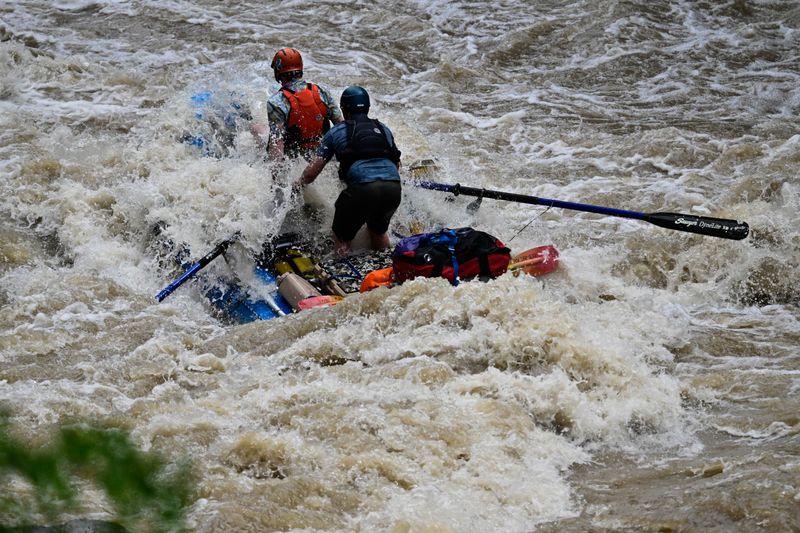
Choosing a rafting outfitter on the Colorado River in Utah is not primarily about finding the cheapest trip or the most polished website. It's about finding a company whose guides know the river, whose safety standards are real, and whose trip style matches what you actually want from the experience. This guide explains what to look for, what to ask, and how to evaluate your options before you commit.
What Permits and Licensing Actually Mean
Every commercial outfitter operating on Utah's Colorado River sections must hold a permit from the relevant land management agency: the National Park Service for Cataract Canyon and Canyonlands sections, and the Bureau of Land Management for Westwater Canyon.
These commercial use authorization (CUA) permits are not easy to obtain. They require proof of insurance, demonstrated compliance with agency regulations, and periodic renewal. An outfitter with a current NPS or BLM permit has cleared a regulatory bar that weeds out fly-by-night operations.
What to verify: Ask any outfitter to confirm which agencies have permitted them for the specific river section you want to run. A reputable company will answer this without hesitation and often lists their permit numbers on their website.
Guide Qualifications: What Matters
The most important thing a rafting company provides is its guides. Gear can be rented; river knowledge takes years to build.
What good guides have:
- Wilderness First Responder (WFR) or Wilderness First Aid (WFA): Standard minimum for river guides on multi-day trips. WFR (80+ hour course) is the higher bar. In a remote canyon, your guide may be the only medical resource available for days.
- Swiftwater Rescue Technician (SRT) certification: Especially important for Westwater and Cataract Canyon guides. SRT training covers swimmer extraction, rope rescue, and pinned boat scenarios.
- American Canoe Association (ACA) certification: Not universal in the industry but a strong indicator of formal technical training. Look for Level 4 or Level 5 certification for whitewater sections.
- River-specific experience: Years of experience on the specific river matters more than generic certifications. A guide with 50 Cataract Canyon trips knows the Big Drop sequence at every flow level. That knowledge is not transferable from a different river.
Questions to ask:
- What certifications do your guides hold?
- How many years of experience does the lead guide on this trip have?
- What is your guide-to-guest ratio?
A standard guide-to-guest ratio for whitewater sections is 1:4 to 1:6. Flatwater multi-day trips may have higher ratios (1:6 to 1:10) with a larger support crew.
Trip Types: Oar vs. Paddle vs. Motorized
Outfitters offer different trip styles that fundamentally change the experience.
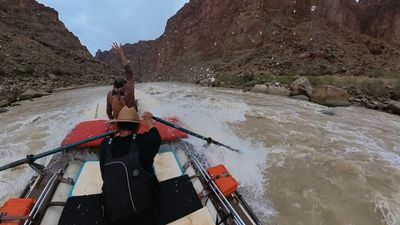
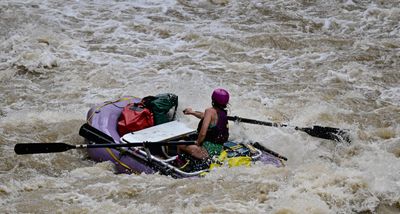
Oar raft trips: The guide rows a large raft (typically 14–18 feet) carrying gear and guests. Guests don't have to paddle — they ride and experience the canyon. Oar trips move at a natural river pace, cover 10–20 miles per day, and feel more like an expedition. This is the most common format for Cataract Canyon and Labyrinth Canyon multi-day trips.
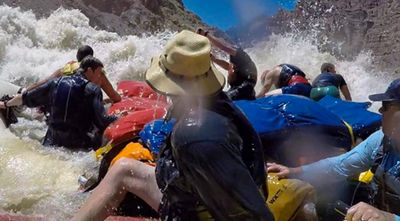
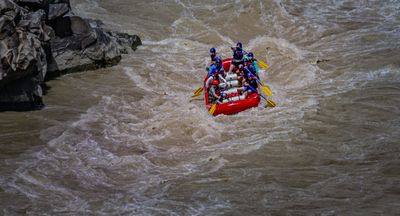
Paddle raft trips: Guests actively paddle a smaller raft (typically 12–16 feet) under guide direction. More physically engaging, a better option for those who want to be active participants in running rapids. Common on Westwater Canyon day trips.
Hybrid paddle/oar trips: A gear boat plus paddle rafts — guests paddle and the guide manages the supply raft. Gives guests the active experience while keeping logistics organized.
Motorized trips: Available on some Cataract Canyon itineraries. Cover more distance per day, shorten the overall trip by 1–2 days. Less immersive but useful for guests with limited time. The NPS restricts motorized use in some Canyonlands sections — verify before booking.
Which is right for you: If you want to paddle and be active, ask for a paddle-assist or hybrid trip. If you want to focus on the canyon experience without managing a boat, an oar trip is the right call.
What's Included vs. Extra
Trip pricing across outfitters is not apples-to-apples. Before comparing prices, understand exactly what's in each package.
Usually included:
- Guide fees
- All watercraft (rafts, paddles, oars)
- Group camping equipment (tents, kitchen, groover system)
- All meals from arrival to departure
- Shuttle coordination
- NPS/BLM permit fees (confirm this — some outfitters charge permit fees separately)
- PFDs and helmets (on whitewater sections)
Usually not included:
- Personal sleeping bag and pad (some outfitters rent these; ask)
- Personal dry bag (often available to rent for $15–30/day)
- Gratuity (15–20% of trip cost is standard; some companies build it in)
- Transportation to/from the put-in city
- Alcoholic beverages on some trips
- Travel insurance
Always ask for a complete inclusion/exclusion list before booking.
Price Ranges by Section
| Section | Trip Type | Price Per Person |
|---|---|---|
| Green River Labyrinth | Day trip | $75–150 |
| Green River Labyrinth | 4–6 day guided | $1,200–1,800 |
| Westwater Canyon | 1-day guided | $250–450 |
| Westwater Canyon | 2-day overnight guided | $400–600 |
| Cataract Canyon | 5–7 day oar | $1,500–2,500 |
| Cataract Canyon | 5–7 day motorized | $1,400–2,200 |
Premium outfitters with experienced guides, higher guide-to-guest ratios, and better food operations will be at the top of these ranges. That premium is usually worth it for a 6-day Cataract Canyon trip.
Red Flags to Watch For
Not every outfitter operating in Utah is equally rigorous. Watch for:
- No clear guide certification information: A company that can't tell you what certifications their guides hold is hiding something.
- No cancellation policy: Good outfitters have clear, written policies for weather delays, low flow cancellations, and personal cancellations. If there's nothing in writing, don't book.
- Unusually low prices: A Cataract Canyon trip offered at $800 per person is not a deal — it's a signal that something is being cut: guide quality, gear quality, or food.
- No permit numbers listed: Legitimate outfitters know their permit numbers and will share them.
- Vague answers to direct questions: Ask about guide certifications and watch the response. Evasion is a signal.
DIY vs. Guided: The Real Tradeoff
For the Colorado River's whitewater sections, the DIY vs. guided decision comes down to one question: do you have the skills to safely manage the crux rapids?
For Westwater Canyon, that crux is Skull Rapid (Class IV). For Cataract Canyon, it's the Big Drop sequence (Class IV). Both are runnable by experienced self-guided paddlers. Both have put inexperienced paddlers in serious trouble.
If your group has solid multi-day Class III–IV whitewater experience, good swiftwater rescue skills, and proper gear, self-guided is a legitimate option that costs significantly less. If anyone in your group is new to moving water, the right answer is a guided trip with a licensed outfitter. The canyon is not the place to learn whitewater skills.
For the Green River (Labyrinth Canyon), the DIY calculus is different — it's flatwater, and a self-guided trip is realistic for capable campers with no whitewater background. The cost savings are real, and the logistics are manageable.