Colorado River Rafting in Utah: Complete Section Guide
The Colorado River drops through three distinctly different canyon environments in Utah — each with its own character, permit system, difficulty level, and ideal traveler. Whether you want a single-day whitewater hit or a week-long expedition through the desert, there's a Colorado River trip that fits. This guide compares all three major Utah sections and helps you pick the right one.
Overview of Utah's Colorado River Sections
The Colorado enters Utah from Colorado, runs through the canyon country around Moab, and eventually backs into Lake Powell. Along that stretch, three sections define the Utah rafting experience:
- Westwater Canyon — 17 miles, Class III–IV, 1–2 days, near the Colorado–Utah border
- Stillwater Canyon — ~65 miles, flatwater, 4–6 days, inside Canyonlands National Park
- Cataract Canyon — ~14 miles of whitewater following the Green River Confluence, Class III–V, 5–7 days total
Most multi-day trips from Moab combine Stillwater and Cataract as a single expedition, floating flatwater for 2–3 days before entering the whitewater canyon.
Westwater Canyon
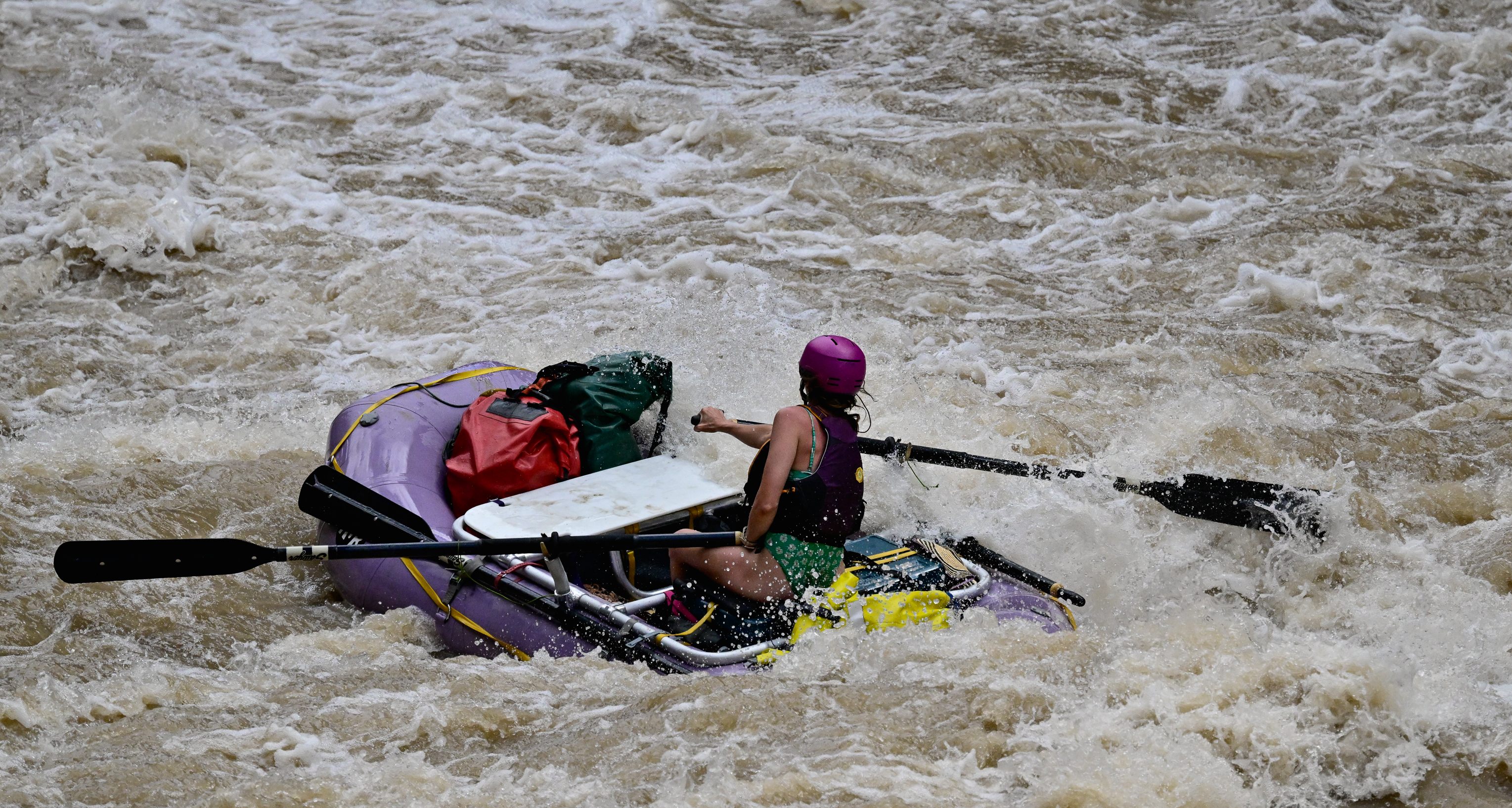
Westwater Canyon is Utah's short-but-serious whitewater option. The 17-mile run through black granite walls near the Colorado–Utah border packs serious Class III–IV rapids into a single day or comfortable overnight.
Put-in: Westwater Ranger Station, off I-70 near Mack, Colorado. Take-out: Cisco, Utah. Difficulty: Class III–IV. Skull Rapid is the crux — a long, technical Class IV at moderate flows that demands precise boat control. Permits: Recreation.gov, first-come basis (not a lottery). Peak demand is March through May, and dates fill quickly when the booking window opens — set an alarm. A limited number of walk-up permits are available at the ranger station for unclaimed slots. Season: March–September. Spring (April–May) offers the best flows. Summer runs are possible but water can be warm and flows lower. Trip length: 1 day for groups moving quickly; overnight to enjoy the canyon walls and campsites.
Westwater is the most accessible Utah river trip for experienced paddlers who can't commit to a full week. It's also an excellent first step before tackling Cataract.
Stillwater Canyon
Stillwater Canyon connects Green River, Utah, to the Confluence of the Green and Colorado Rivers. It's entirely flatwater — 65 miles of towering sandstone walls, side canyon exploration, and solitude.
Put-in: Mineral Bottom on the Green River. (The Colorado-side flatwater approach to Cataract — Meander Canyon from Potash boat ramp near Moab — is a separate corridor.) Take-out: Spanish Bottom, at the top of Cataract Canyon. Difficulty: Flatwater. No rapids. Suitable for canoes, kayaks, and rafts. Permits: Canyonlands National Park river permits. Less competitive than Cataract, but still required for overnight trips. Season: March–October. Avoid July and August unless you're prepared for extreme heat. Trip length: 4–6 days at a relaxed pace. Often combined with Cataract for a full expedition.
Most paddlers float Stillwater as the approach to Cataract Canyon. If you're not ready for Cataract's rapids, take out at Spanish Bottom and arrange a jetboat shuttle back upstream.
Cataract Canyon
Cataract is the destination — a 14-mile whitewater canyon that sits at the end of a multi-day expedition through some of Utah's quietest backcountry. Getting there takes two or three days of flatwater paddling. What awaits is the Colorado River's most serious whitewater in Utah.
Put-in: Potash boat ramp near Moab (Colorado-side, Meander Canyon approach) or Mineral Bottom (Green-side, Stillwater approach). Both meet at the Confluence above Cataract. Take-out: North Wash. The old Hite ramp is no longer usable at current Lake Powell levels. Difficulty: Class III–IV at moderate flows; solid big-water Class IV through high water (15,000–50,000 cfs); Class V only at flood-stage flows above ~50,000 cfs, which occurs in rare big-snow runoff years. Permits: Canyonlands National Park, issued through recreation.gov on a seasonal-release basis. There is no lottery. Gauges: Watch Potash (USGS 09185600) for Colorado-side launches and Mineral Bottom (USGS 09328920) for Green-side launches; sum the two for the combined flow at the Big Drops. Below the rapids, Gypsum Canyon (USGS 09328960) reads the post-Big-Drops flow. Season: April–September. Peak flows in May–June. High-water trips are for experienced paddlers only. Trip length: ~100 miles total, 5–7 days. Two or three days of flatwater approach — Meander Canyon (Colorado) or Stillwater Canyon (Green) — followed by Cataract's whitewater and the slow Narrow Canyon run-out into Lake Powell. Highlight: The Big Drop sequence — three major rapids in quick succession, including Big Drop 3 (with Satan's Gut as the river-left pourover feature). Class IV through most of the runnable range; flood-stage flows above ~50,000 cfs push it into Class V territory.
Permit Comparison
| Section | Agency | System | Lead Time |
|---|---|---|---|
| Westwater | BLM | Recreation.gov first-come | Rolling two-month window, released 8 a.m. MT daily; spring dates fill fast |
| Stillwater | NPS (Canyonlands) | Recreation.gov seasonal release | Check recreation.gov for release dates |
| Cataract | NPS (Canyonlands) | Recreation.gov seasonal release | Book at release |
Choosing the Right Section
Go to Westwater if: You have 1–2 days, whitewater experience, and want a tight canyon with challenging rapids without a week-long commitment.
Go to Stillwater if: You're new to desert river travel, want flatwater solitude, or are using it as the approach leg of a Cataract expedition.
Go to Cataract if: You have multi-day experience, solid swiftwater skills (or a good guided outfitter), and want the full Utah canyon river experience — quiet days on glassy water followed by the canyon's signature rapids.
For most paddlers planning their first Colorado River trip in Utah, the full 100-mile run — flatwater approach (Meander or Stillwater) plus Cataract plus Narrow Canyon — is the definitive experience. Plan for 6–7 days, watch recreation.gov for the spring release window, and treat the whole canyon as one continuous journey.