Skip to content
Book

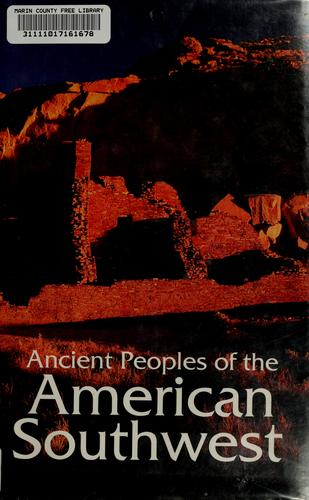
Ancient Peoples of the American Southwest

Cover of Ancient Peoples of the American Southwest

Stephen Plog's lucid, well-illustrated synthesis of the three great pre-Columbian cultures of the American Southwest — Ancestral Puebloan, Hohokam, and Mogollon — tracing their rise, interaction, and transformation across nearly two millennia. One of the most accessible single-volume overviews of the archaeology of the Four Corners and surrounding region.

If you've hiked through canyon country and wondered who was here before — really who, not the postcard version, not a romanticized outline — this is the book. Stephen Plog is an archaeologist at Virginia who spent his career working the Ancestral Puebloan world, and this is his synthesis. One volume. Under three hundred pages. It covers the whole Southwest: Ancestral Puebloan, Hohokam, Mogollon. Rise, peak, transformation, movement. Not collapse. He's very specific about that word and why it's wrong.

What makes the book useful — really useful, not just interesting — is that it's calibrated for a non-specialist without being dumbed down. You finish it and you can actually read the landscape differently. The granary you pass on the ledge makes sense. The shallow depression in the sand is a pit house, and here's what that means about the family that lived there. The roads at Chaco. The long-distance trade in macaw feathers and marine shell. The difference between what looks like ruin and what is actually a place people left with care, because they had decided to go somewhere else.

I pull this one out when somebody at camp starts speculating about why the Puebloans disappeared. Short version from Plog: they didn't. They moved. The Hopi and Zuni and modern Pueblo communities are direct descendants of the people who built the cliff houses, and the way we talk about the archaeology of the Southwest has a lot of racism baked into it that Plog quietly, consistently, dismantles. That reframe matters when you're floating past a petroglyph panel or climbing to a cliff dwelling.

The other thing the book gives you is a real sense of scale. Chaco wasn't a village. It was the center of something continental — trade networks running from central Mexico to the Great Basin. The canyon we casually flag as an interesting stop on the way to somewhere else is, in actual historical terms, one of the most significant urban landscapes North America has ever produced. Plog makes that case without hyperbole, which makes it hit harder, and he does it in the kind of measured sentences that let you trust the argument.

Read it before your next trip through Canyonlands, Glen Canyon country, or the Escalante. The land doesn't change, but your ability to read it does, and once that switch flips, every trip after this one is better for it. Every granary, every panel, every ledge-line of abandoned settlement starts reading as evidence of a culture that knew this desert in ways we are still catching up to.

Details

Genre
Archaeology, Anthropology, Native American History
Subjects
Ancestral Puebloan culture, Hohokam culture, Mogollon culture, prehistoric Southwest, ceramic analysis, trade networks
Geography
American Southwest, Four Corners, Colorado Plateau, Arizona, New Mexico, Utah, Colorado
Tags
ISBN
9780500021163
Story DNA Themes, moods, voice signals
Themes
cultural complexity before European contact, adaptation to extreme aridity, trade, exchange, and long-distance connection, the Southwest as a coherent cultural region
Moods
clear, accessible, revelatory, scholarly without being opaque
Motifs
ceramic traditions as cultural fingerprints, water management as civilization-building, kiva as social infrastructure, turquoise trade routes
Voice
clear academic prose, evidence-led, synthetic without oversimplifying
Story function
knowledge-foundation, cultural-context, historical-context, scale-setter
Setting
Chaco Canyon great houses, Hohokam irrigation canals in the Sonoran Desert, Mimbres painted bowls, cliff dwellings at Mesa Verde
Why this book What it influences, what it teaches
Influence
knowledge, cultural-context
Knowledge
Ancestral Puebloan archaeology, Hohokam irrigation systems, Mogollon ceramic traditions, Chaco regional system, prehistoric trade networks in the Southwest
Concepts
the Three Cultures framework for understanding prehistoric Southwest, Chaco as a regional integrating system, ceramic seriation as archaeological dating method, the concept of aggregation — communities consolidating under environmental stress
Use cases
writing a cultural backstory section for any DM river trip that passes through the Colorado Plateau — framing the canyon walls as a landscape that sustained complex societies for over a thousand years, distinguishing between Ancestral Puebloan, Hohokam, and Mogollon contexts when writing about specific geographic areas (e.g., Hohokam for lower desert corridors vs. Ancestral Puebloan for canyon country), grounding expedition planning pages for the San Juan River, Glen Canyon, or Escalante corridors with accurate pre-Columbian cultural context, providing the archaeological scaffolding for respectful, informed descriptions of ruins, petroglyphs, and granaries visible from river or trail, framing the concept of long-term human adaptation to aridity — relevant to any DM content discussing water scarcity or climate on the plateau
Related books
The Puebloan Past and Present of the Colorado Plateau

The Puebloan Past and Present of the Colorado Plateau

Unknown · 2000

A scholarly regional survey of Ancestral Puebloan occupation across the Colorado Plateau — covering architecture, land use, migration, and the deep continuity between ancient and living Pueblo peoples. Note: exact bibliographic identity of this volume is uncertain; treat as representative of the University of Utah Press Colorado Plateau archaeology series.

knowledge cultural context
House of Rain

House of Rain

Craig Childs · 2007

Craig Childs traces the routes of the ancient Anasazi across the Colorado Plateau, uncovering evidence of a lost civilization's migrations through canyon country.

storytelling cultural context philosophy
Where the Two Came to Their Father

Where the Two Came to Their Father

Jeff King, Maud Oakes, Joseph Campbell · 1943

A Navajo war ceremonial given by Haske Naabah (Jeff King), recorded and painted by Maud Oakes, with mythological commentary by Joseph Campbell — one of the foundational Bollingen Series documents transmitting the Twin Hero myth cycle and the cosmological geography embedded in Navajo ceremony. A primary-source encounter with the spiritual landscape of the canyon country.

cultural context storytelling philosophy
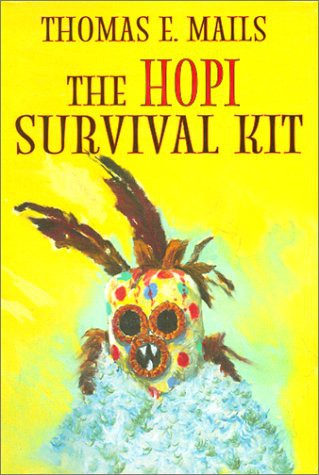
The Hopi Survival Kit

The Hopi Survival Kit

Thomas E. Mails · 1997

Thomas Mails's compilation of Hopi elder teachings, prophecy, and warnings — including the centrality of water, the dangers of living beyond the land's limits, and the moral stakes embedded in the Colorado Plateau's future. A difficult, earnest transmission of Hopi cosmological thought that gives human and spiritual weight to the canyon country DM operates in.

cultural context philosophy
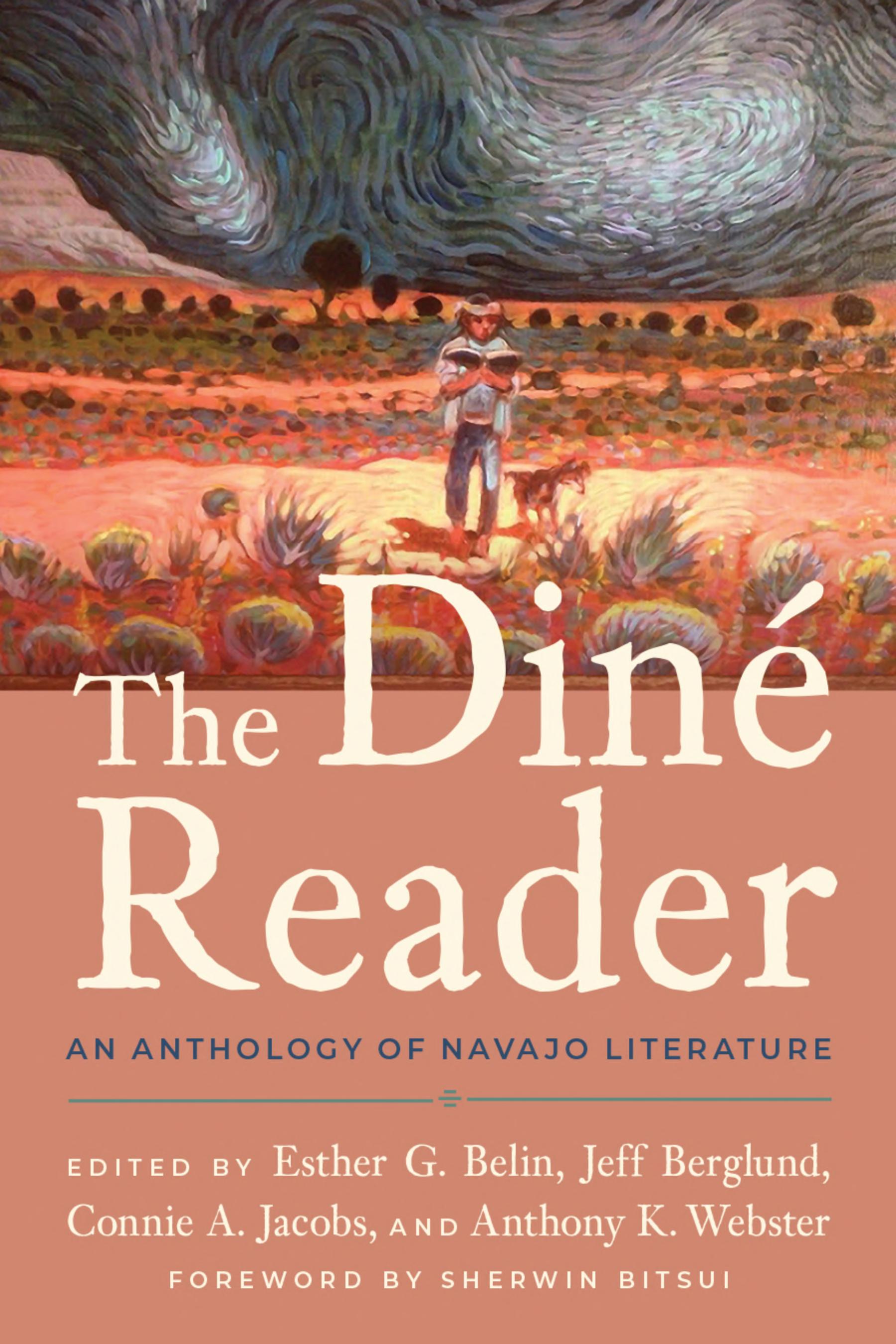
The Diné Reader

The Diné Reader

Esther G. Belin, Jeff Berglund, Connie A. Jacobs, Anthony K. Webster · 2021

The first comprehensive anthology of Navajo (Diné) literature — poetry, fiction, memoir, and essay by Diné writers spanning the 20th and 21st centuries. Essential for any editorial voice writing about the canyon country and Colorado Plateau that is home to the Navajo Nation — a reminder that this land has a rich, living literary tradition in English and Navajo.

cultural context storytelling tone
The Colorado Plateau

The Colorado Plateau

Donald L. Baars · 1983

A key geological reference for understanding the uplift, stratigraphy, tectonics, and erosional history of the Colorado Plateau.

knowledge

Connected in the graph

  • theme/ancestral-puebloan
  • subject/archaeology
  • subject/indigenous-history
  • region/colorado-plateau
  • region/four-corners
  • river/san-juan-river
Verified 2026-04-15 · Sources: open-library, google-books · Confidence: verified