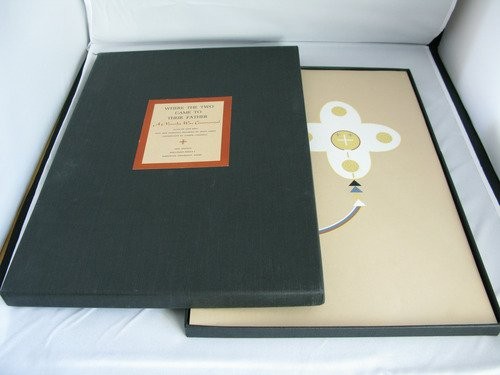
A Navajo war ceremonial given by Haske Naabah (Jeff King), recorded and painted by Maud Oakes, with mythological commentary by Joseph Campbell — one of the foundational Bollingen Series documents transmitting the Twin Hero myth cycle and the cosmological geography embedded in Navajo ceremony. A primary-source encounter with the spiritual landscape of the canyon country.
Where the Two Came to Their Father is one of the most unusual books on the Desert Maritime shelf. It is a 1943 Bollingen Series volume that records a Navajo war ceremonial — given by the Diné singer Jeff King, painted by Maud Oakes, and annotated by Joseph Campbell — and it is both a working text of a ceremonial sequence and an early twentieth-century anthropological document about the sacred geography of the canyon country. It is out of print, difficult to find, and worth the effort of locating a copy.
The ceremonial itself is about the journey of the Twin Heroes of Navajo tradition to their father the Sun — a journey that moves across a specific, identifiable geography in the Four Corners region. The cliffs, the canyons, the rivers, the specific landforms of the Colorado Plateau are not backdrop in this ceremony. They are the route. The Twins travel through named places, confront named beings at those places, and earn the powers they eventually bring back. The landscape is inseparable from the narrative, and vice versa.
I bring this book up rarely and carefully. It is not a book for browsing. It is a working ceremonial text that was made available to a non-Native audience under specific historical conditions, and its status remains contested. Contemporary Diné people have disagreed publicly about whether it should have been published at all. Any reader approaching the text should know that, and should weigh their reading against the ongoing debate.
That said, for anybody who is trying to understand how the canyon country reads from the inside of a Diné cosmological frame, this book is a specific and rare resource. The Oakes paintings alone — reproductions of sandpainting drypaintings made for the ceremony — are the kind of visual material most outsiders never see. Campbell's commentary, read with the skepticism a post-Campbell generation has earned about his universalizing instincts, provides useful cross-references to other ceremonial traditions even where the cross-references overreach.
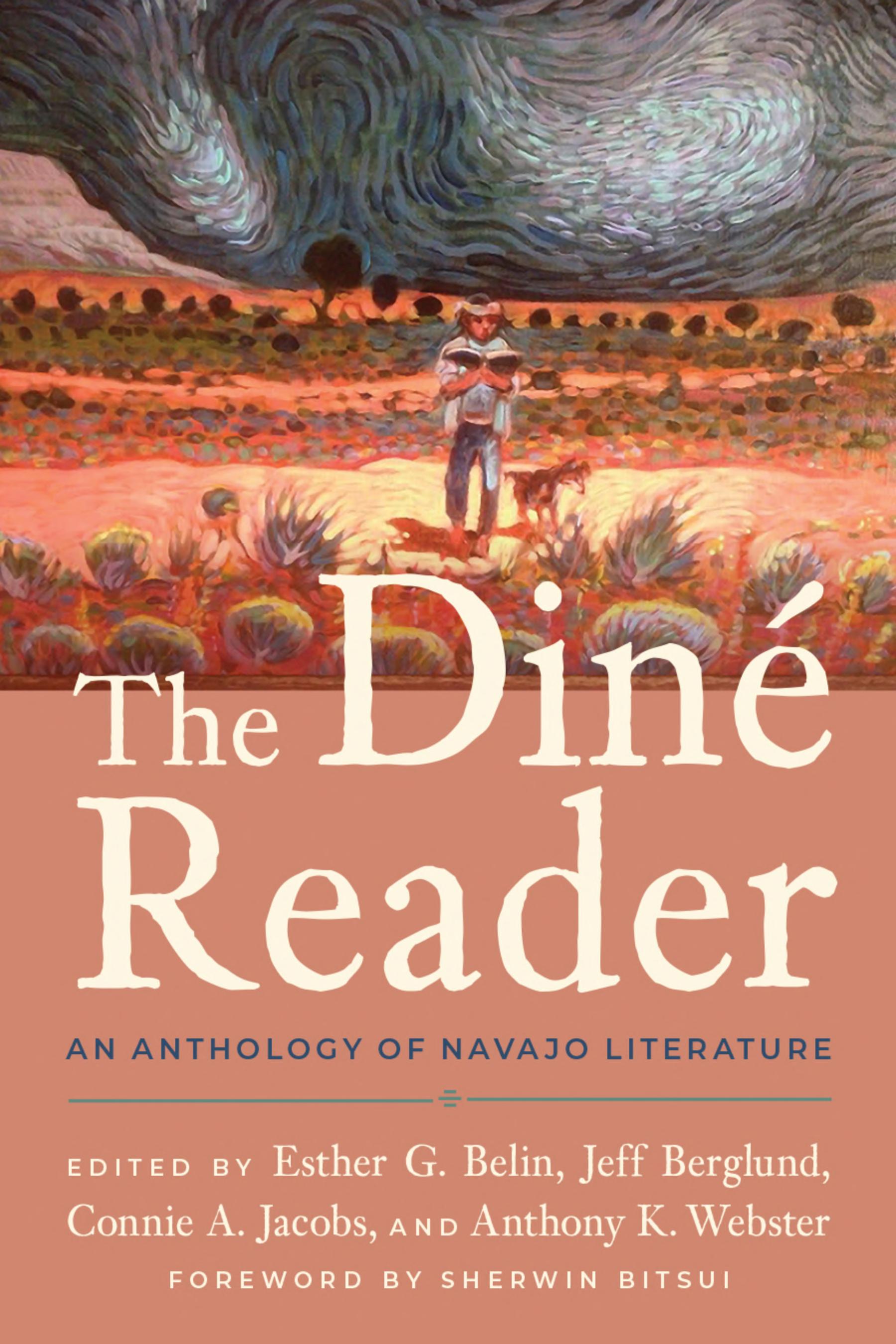
Read it with care. Read it alongside contemporary Diné writing — Luci Tapahonso, Laura Tohe, and the anthology The Diné Reader are all necessary companions — rather than as a standalone account. The book is a mid-century artifact with specific limitations, and those limitations do not cancel out its value as a rare record of a ceremonial sequence, but a reader who approaches it without the companion literature is going to miss most of what there is to see, and that would be a real loss for anybody genuinely trying to understand the sacred geography of the land they are traveling through.