Skip to content
Book

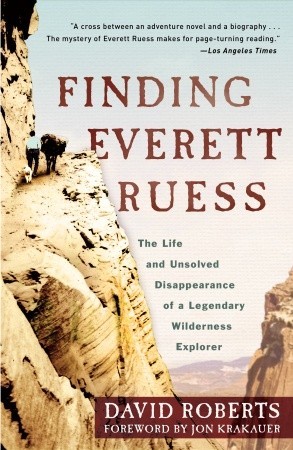
Finding Everett Ruess

The Life and Unsolved Disappearance of a Legendary Wilderness Explorer

Cover of Finding Everett Ruess

The story of Everett Ruess, whose disappearance in canyon country became one of the most compelling legends of desert exploration.

If you've spent any time in Escalante country, you've heard the Everett Ruess story. Twenty-year-old kid from Los Angeles, obsessed with the desert, vanishes into the canyons south of Escalante in 1934 with two burros and a pocket notebook. The burros turn up. The kid never does. And the legend of Everett Ruess has been a small, specific religion among canyon wanderers ever since. David Roberts's book is the one that tries to separate the person from the myth, and it's the book you should actually read if you care about either.

Roberts is a climber, a writer, and a researcher with the patience to spend years chasing down the evidence — letters, journals, trail logs, interviews with old-timers in remote Utah towns, eventually a forensic investigation into bone fragments that got fingered, briefly, as possibly Everett's. The book moves between biography and detective story, and Roberts is honest about when the trail goes cold. He doesn't manufacture a resolution. What he does is pull the real Everett out of the smoke — a gifted young writer and artist, yes, and also a kid who was harder on his family than the legend lets on, who made some genuinely reckless decisions, and whose disappearance had more possible explanations than the romantic one.

I hand this book to people the first time they camp in the Escalante, because the myth is thick down there and it's useful to have the real version in your head. Everett the canyon mystic, the one whose last letter signed off with Nemo, is a better campfire story if you also know about Everett the difficult son, Everett the provocative homesexual letter-writer, Everett the naive kid from California who probably, most likely, just fell. The two versions don't cancel each other out. They make the story bigger.

The book is also a quiet meditation on why young people disappear into deserts. Roberts has spent his life around that impulse. He takes it seriously as a psychology without either sentimentalizing it or clinically flattening it. By the end you understand not just what happened to Everett Ruess, as far as anyone can, but why any of us are still telling the story eighty-plus years later. The canyon holds onto him because it holds onto that version of young wilderness hunger — the kind that feels, on certain afternoons in certain washes, like a thing still alive in the rock.

Read it before you solo in Escalante. Carry a notebook. Keep the burros tied up better than he did.
Details

Genre
Biography, Exploration, Desert Literature
Subjects
exploration, desert mythology, biography
Geography
Utah, Escalante, Colorado Plateau
Tags
ISBN
9780307591760
Story DNA Themes, moods, voice signals
Themes
desert solitude and obsession, the myth of the wanderer, disappearance as legend, youth and wilderness, the canyon as destination and trap
Moods
haunted, searching, lyrical, melancholic
Motifs
NEMO carved in stone, the missing young man, desert as calling, solitude as both gift and danger, the Escalante as mystery landscape
Voice
biographical inquiry, place-driven, romantic, searching
Story function
myth-builder, cultural-context, philosophical-anchor, character-pressure
Setting
Escalante River canyon country, canyon narrows and slickrock camps, burro trails on desert mesa, the Hole-in-the-Rock country, camp inscriptions carved in sandstone
Why this book What it influences, what it teaches
Influence
storytelling, cultural-context, tone
Knowledge
Escalante River history, desert exploration mythology, canyon country biography, Utah backcountry
Concepts
Everett Ruess's disappearance, Davis Gulch as mystery site, the tradition of solo desert wandering, the Escalante as mythological landscape
Use cases
writing about the Escalante River canyon system and its mythology of solitude and disappearance, framing the appeal of remote canyon travel for those drawn to solitude over comfort, contextualizing the romantic tradition of solo desert wandering in Southwest exploration culture, adding mythological weight to content about the Escalante drainage, Davis Gulch, or Hole-in-the-Rock area
Related books
Desert Solitaire

Desert Solitaire

Edward Abbey · 1968

Edward Abbey's classic portrait of canyon country, solitude, and wilderness, influential to the identity and mythology of the Colorado Plateau.

tone philosophy
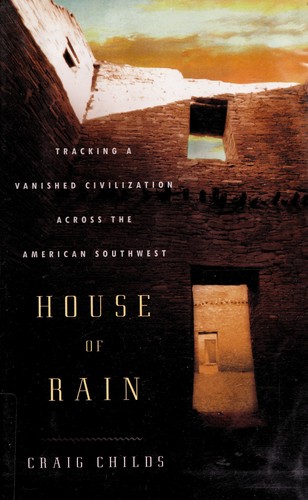
House of Rain

House of Rain

Craig Childs · 2007

Craig Childs traces the routes of the ancient Anasazi across the Colorado Plateau, uncovering evidence of a lost civilization's migrations through canyon country.

storytelling cultural context philosophy
The Secret Knowledge of Water

The Secret Knowledge of Water

Craig Childs · 2000

Craig Childs explores the hidden water sources and desert hydrology of the American Southwest, revealing how water shapes and sustains life in the most arid landscapes on Earth.

tone philosophy knowledge
Into the Wild

Into the Wild

Jon Krakauer · 1996

Krakauer's account of Christopher McCandless, who abandoned his possessions and walked alone into the Alaskan wilderness in 1992 — a book that invites strong reactions and remains essential for anyone thinking seriously about the philosophy and ethics of wilderness pursuit, the romance of escape, and the difference between preparation and surrender.

storytelling philosophy cultural context
The Canyon Country Zephyr Anthology

The Canyon Country Zephyr Anthology

Multiple Authors · 2010

A collection representing the voice, arguments, stories, and culture of canyon country, especially around Moab and the desert Southwest.

cultural context tone philosophy
The Puebloan Past and Present of the Colorado Plateau

The Puebloan Past and Present of the Colorado Plateau

Unknown · 2000

A scholarly regional survey of Ancestral Puebloan occupation across the Colorado Plateau — covering architecture, land use, migration, and the deep continuity between ancient and living Pueblo peoples. Note: exact bibliographic identity of this volume is uncertain; treat as representative of the University of Utah Press Colorado Plateau archaeology series.

knowledge cultural context

Connected in the graph

  • theme/desert-solitude
  • theme/desert-philosophy
  • region/colorado-plateau
  • region/glen-canyon
  • river-section/glen-canyon
  • subject/indigenous-history
  • river/escalante-river
  • region/grand-staircase-escalante-national-monument
  • region/colorado-plateau
Verified 2026-04-15 · Sources: open-library · Confidence: partial