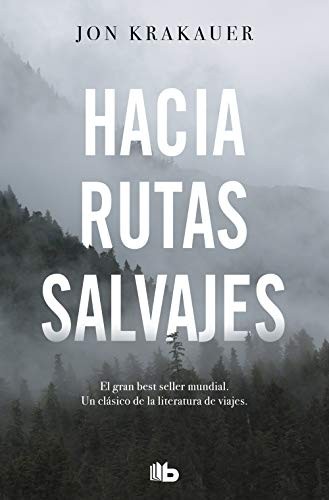
Krakauer's account of Christopher McCandless, who abandoned his possessions and walked alone into the Alaskan wilderness in 1992 — a book that invites strong reactions and remains essential for anyone thinking seriously about the philosophy and ethics of wilderness pursuit, the romance of escape, and the difference between preparation and surrender.
You've either read Into the Wild or you've argued about it. There is no middle. Krakauer's book — expanded from his Outside magazine piece — tells the story of Christopher McCandless, who abandoned his family and his possessions and his name, spent two years moving around the American West, and eventually walked into the Alaska wilderness alone in April 1992. Four months later his body was found in an abandoned bus on the Stampede Trail. Krakauer tries to figure out what actually happened, and in the process he writes a book that has stayed in print for thirty years because the argument it provokes has not gone away.
The argument is about what we owe the wilderness in terms of preparation, humility, and skill. McCandless walked into the Alaska bush with a ten-pound bag of rice, a twenty-two, and an inadequate map. Opinions on what killed him vary — starvation, a misidentified plant, simple bad luck — but the deeper question is whether the romantic gesture of the trip should be forgiven its logistical naivete because the gesture itself was sincere. Krakauer, who knows his own youthful bush trips were one decision away from the same outcome, is honest about how close the line actually runs. That honesty is the book's real contribution.
I bring this book up on the river whenever the conversation turns to what we require of newer trip members. The McCandless question is always sitting in that conversation even when nobody names it. How do you evaluate somebody who wants to run the trip but hasn't done the homework? How forgiving can a river be, really, to somebody who shows up with a good attitude and insufficient skill? Krakauer's answer is careful and ambivalent, which is the right answer. The wilderness doesn't grade on effort.
The other thing the book does, and the reason it has outlasted the immediate news cycle, is that Krakauer treats McCandless with a specific kind of literary seriousness. He reads his journals. He talks to everyone McCandless met on the road. He reconstructs a young man's psychology without condescending to it. That generosity is why the book cuts. McCandless isn't an idiot in Krakauer's telling. He's a kid with genuine gifts who misjudged, and the misjudgment killed him, and we all know people who have been closer to that edge than they admit.
Read it before your next solo trip. Take the book's argument seriously. The wilderness is not a proving ground for attitude. It is a working environment that exists on its own terms, and every launch is a small negotiation with that fact.