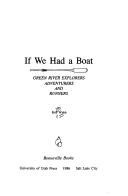
A river-running memoir by Roy Webb capturing the spirit, humor, and culture of Western river expeditions and the people who chase moving water through canyon country.
Roy Webb's book is a gift to anybody who spends their life on western rivers and wants to understand where the culture they're inside of actually came from. If We Had a Boat is Webb's memoir, written by a guy who was a river-running historian and a serious boater both, and it reads like sitting next to the best storyteller at a very long party. You get the first-person stuff — his own trips, his own crew, the specific idiots he loved — and you get the historian's angle, which is that every Green and Colorado river trip anyone does today is riding on top of a century of previous trips, most of them weirder and more dangerous than the one you're planning.
The stories are good. The book is at its best when Webb is just telling you what happened — the 1963 trip, the early commercial days, the characters who were running rivers when the running involved wooden boats and no permits and a lot of things that would not be legal now. He is not romanticizing. He was there. Which means when he describes something absurd, it reads as fondly exasperated rather than retrospectively cleaned up, and the book has a texture of lived experience that you can feel.
I bring this up when somebody new to the river scene is trying to figure out why the culture is the way it is. Why boaters have their own vocabulary, their own jokes, their own weird hierarchies. Webb's book traces it. You can see the lineage: the NPS rangers, the commercial guides, the private dirtbags, the river historians. All different tribes, all in the same canyon, all arguing. That is the actual texture of the community, and Webb captures it without pretending the arguments don't happen.
The humor is specifically river humor, which is a particular thing. Dry. Understated. Willing to let a disaster tell itself. If you've been on enough trips to have your own stash of these stories, Webb's will feel familiar. If you haven't, the book is a short course in the rhythm of how river people talk about river people. It's the kind of book you'd want to hand to a partner who's never quite understood why you keep disappearing downriver.
Read it after your first Green or Colorado trip, not before. The names and places land harder once you've been on the water. And when you're done, you will understand a little better what you've actually joined.