Skip to content
Book

The River Why

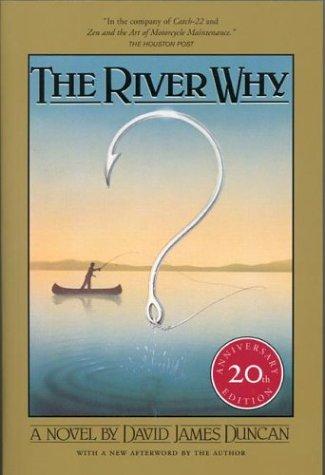
Cover of The River Why

Duncan's debut novel follows a young fly fisherman who retreats to a cabin in the Oregon Cascades and discovers that rivers are not a pastime but a way of life — a theology, a comedy, and a love affair. One of the great river novels in American literature: lyrical, funny, and deeply spiritual about moving water.

David James Duncan's first novel, and one of the great fly-fishing books even though it is only incidentally a fly-fishing book. Gus Orviston, the narrator, is a young Oregon man raised by two warring parents — a bait-fishing mother and a fly-fishing father — who moves to a remote cabin on a coastal river to devote himself to what he thinks is going to be pure angling practice. What he gets instead is a slow-motion spiritual breakdown, a love affair, and an education in what the river can actually teach a person who is willing to stay in one spot long enough to learn.

The book's central move is that Duncan treats obsession seriously. Gus is fishing obsessively, and the obsession is presented neither as a character flaw nor as a joke. It is presented as a genuine spiritual discipline that just happens to use fish as the material. Which is what obsession actually is for most people who have one. It is not a hobby turned cancerous. It is the narrow door that a certain kind of person finds on their way to the thing they are actually looking for. Duncan gets that right.

I bring this book up at the river when somebody is trying to explain to a non-river-person why they keep disappearing downstream for weeks at a time. The River Why is the book that does the explaining. Duncan has Gus work through the question of why rivers — specifically, not just water generally, specifically rivers — do what they do to certain people. The answer is long and not tidy, but it is the most honest version of the answer I have seen in print. If you have spent a decade of weekends figuring out one piece of water, Duncan is writing about you.

The prose is specific to the Pacific Northwest. The rivers are Oregon rivers. The rain is Oregon rain. The philosophy is the specific kind of counterculture mysticism that came out of Oregon in the seventies and eighties, which may or may not be your register. If it works for you, the book is going to feel like a particular friend speaking directly. If it doesn't work for you, the book is going to read as self-consciously lyrical in places, and the plot will not quite carry you through. Both responses are legitimate.

Read it in winter when you cannot get to the water. Duncan's book is a good substitute for actual river time — not a replacement, but a kind of maintenance dose for the obsession, keeping the practice alive in your head until the season opens and you can return to doing the real thing.
Details

Genre
Fiction, Nature Writing, Coming-of-Age
Subjects
fly fishing, river life, solitude, obsession, identity, Oregon Cascades
Geography
Oregon, Pacific Northwest, Cascade Range
Tags
ISBN
9780316261210

Where to buy

Some links are affiliate — we may earn a commission at no cost to you. See merchants.

Story DNA Themes, moods, voice signals
Themes
obsession as identity, rivers as spiritual practice, solitude as transformation, the comedy of devotion, what water teaches
Moods
reverent, comic, lyrical, quietly ecstatic, melancholic at the edges
Motifs
the act of fishing as meditation, water as mirror and teacher, the river that refuses to be understood, the person who organizes their life around moving water
Voice
first-person and deeply inhabited, jokes that land in the middle of serious feeling, sentences that stretch long before breaking, reverence without solemnity
Story function
voice-model, philosophical-anchor, myth-builder, humor-anchor
Setting
a specific river bend as the whole world, rain-soaked Pacific Northwest, the interior landscape of a person who loves water too much
Why this book What it influences, what it teaches
Influence
tone, storytelling, philosophy
Knowledge
river ecology, angling culture, Oregon natural history, wilderness solitude, the psychology of place-devotion
Concepts
rivers as vocation not recreation, the comedy embedded in serious devotion, water literacy as spiritual practice
Use cases
Opening a river section description with the particular pull a stretch of water exerts on people who keep coming back, Writing about the culture of river guides and their almost irrational devotion to a specific canyon or run, Trip reports that earn their philosophical moments by grounding them in specific, comic, embodied experience, Capturing the emotional register of someone on day 6 of a long float — past novelty, into something deeper, Writing gear essays that acknowledge obsession without embarrassment
Related books
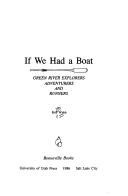
If We Had a Boat

If We Had a Boat

Roy Webb · 1986

A river-running memoir by Roy Webb capturing the spirit, humor, and culture of Western river expeditions and the people who chase moving water through canyon country.

tone storytelling cultural context
Boatman's Quarterly Review Anthology

Boatman's Quarterly Review Anthology

Multiple Authors · 2000

A collection of essays and stories from the legendary Boatman's Quarterly Review publication, documenting the culture, lore, and voices of Grand Canyon river guides.

tone storytelling cultural context
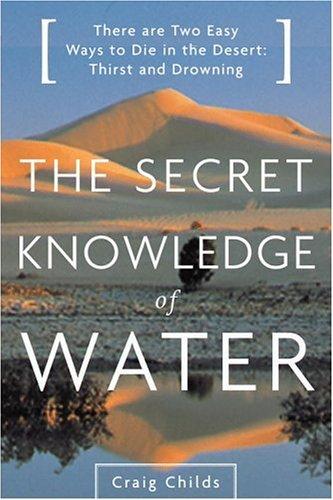
The Secret Knowledge of Water

The Secret Knowledge of Water

Craig Childs · 2000

Craig Childs explores the hidden water sources and desert hydrology of the American Southwest, revealing how water shapes and sustains life in the most arid landscapes on Earth.

tone philosophy knowledge
The Dog Stars

The Dog Stars

Peter Heller · 2012

Heller's debut novel follows a pilot and his dog surviving a pandemic in the Colorado Rockies, patrolling their territory in a beat-up Cessna — a grief novel disguised as survival fiction, written in a prose style so spare and fragmented it reads like a field log from the end of the world. Heller is also a serious whitewater kayaker and the author of The River (2019).

tone storytelling philosophy
Zen and the Art of Motorcycle Maintenance

Zen and the Art of Motorcycle Maintenance

Robert M. Pirsig · 1974

A father and son ride motorcycles from Minnesota to California while Pirsig excavates the ruins of his own mind — specifically, a prior self who pursued the concept of 'Quality' to the point of madness. The most influential meditation on craft, attention, and the relationship between the traveler and the machine in American letters.

philosophy tone cultural context knowledge
Desert Solitaire

Desert Solitaire

Edward Abbey · 1968

Edward Abbey's classic portrait of canyon country, solitude, and wilderness, influential to the identity and mythology of the Colorado Plateau.

tone philosophy

Connected in the graph

  • theme/river-culture
  • theme/desert-solitude
  • theme/craft-and-mastery
  • theme/desert-philosophy
  • theme/outdoor-voice
  • subject/river-running
Verified 2026-04-15 · Sources: open-library · Confidence: partial