The story of Norman Nevills and the birth of commercial river running in the Colorado River basin.
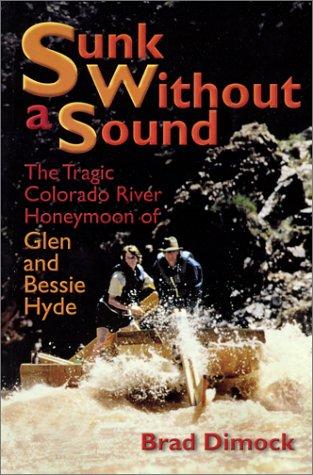
Brad Dimock has spent his life on the Colorado — as a guide, a boatbuilder, a historian — and Sunk Without a Sound is his deep biographical dive into Norman Nevills and the birth of commercial river running in the Colorado River basin. Nevills is the pivotal figure nobody outside the river community knows. He was the first person to run Grand Canyon commercially, he built his own boats, he led the first all-woman descent of the Grand Canyon, and he died in a plane crash in 1949 at the height of what would have been an even longer career. Dimock tells the story in the kind of granular, research-heavy way that only somebody who knows the community intimately can pull off.
The book is not a tidy biography. Nevills was complicated — charismatic, self-promoting, hard on his crews, genuinely innovative, and not beloved by some of the people who worked for him. Dimock does not smooth the edges. What you get is a fuller portrait of the first commercial boatman — the prototype for every commercial outfit that came after — as a specific person with specific failings and specific gifts, rather than a river-history saint. That balance is rare in this literature, and it is what makes the book durable.
I bring this up when somebody starts asking how commercial Grand Canyon trips became the industry they are today. The answer, to a larger extent than most people realize, traces directly back to Nevills. The boats. The route. The logistics. The whole idea that paying passengers could be safely taken down the canyon — that was an idea Nevills pushed, against significant skepticism, until it worked. Everything downstream of that decision, including the current permit structure and the entire private-versus-commercial argument, is the working-out of what Nevills started.
Dimock's research is the other reason to read. He has talked to everybody still alive who knew Nevills. He has dug through the archives. He has cross-referenced journal entries, passenger logs, Park Service correspondence. The citations are thorough. If you want to know what the first few decades of commercial running in Grand Canyon actually looked like — not the mythologized version, the real day-by-day — this is the book.
Read it before your next Grand Canyon trip, commercial or private. The river downstream of Lees Ferry has been run, at this point, by hundreds of thousands of people. Nevills was one of the first. Knowing his story makes the route read differently, and the history on the canyon walls feels less abstract once you know who moved through that stretch when nobody else was doing it.