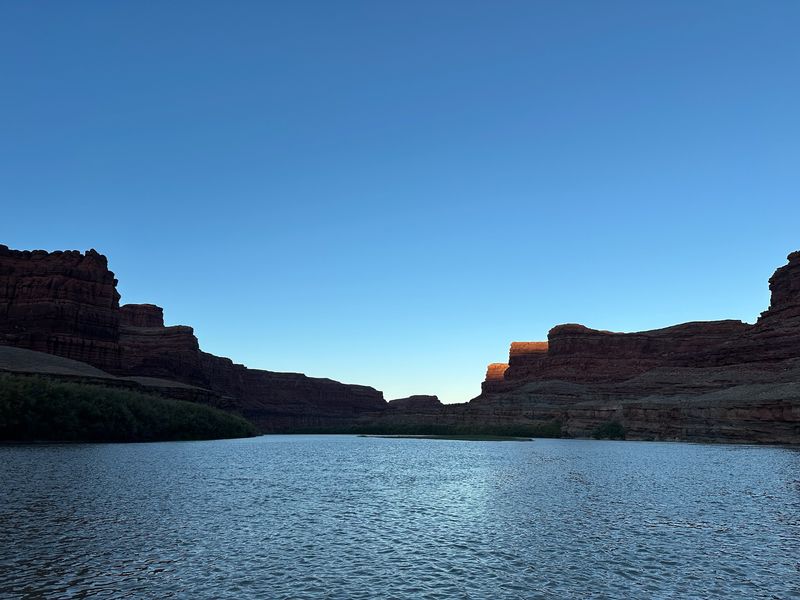
Cataract CanyonOctober 2025
A two-person October 2025 run at 6,790 cfs with Lake Powell at 3,544 feet — low-water Cataract in the shoulder season, cold nights, five-day pace. The Big Drops ran technical and bony; the lower canyon exposed sediment shelves that didn't match any guidebook.
Day 1
4,510 cfs (USGS daily mean)
Day 1
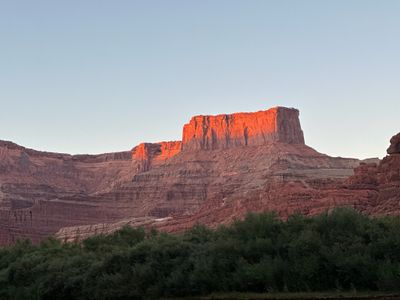
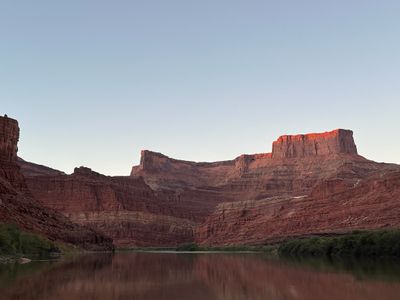
The last band of sun holds on the butte cap while the benches below have already gone flat and cold.
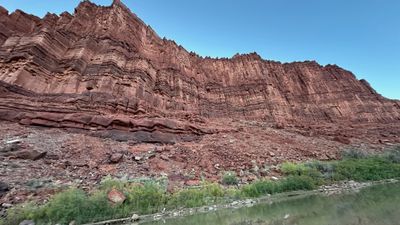
Wall-and-talus geometry from boat level — the bench of broken rock between the cliff base and the water.
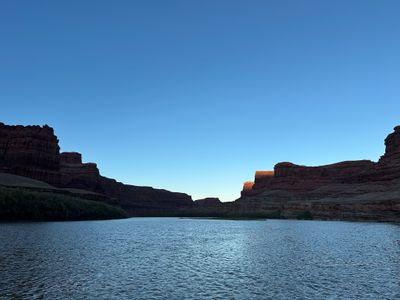
Almost all of the corridor is in shade; one rim block is still catching sun.
Light narrowing to the caprock — the whole lower canyon already gone to shadow.
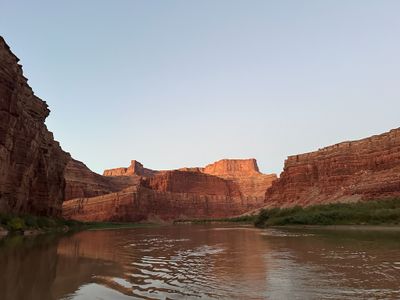
Downstream toward the light, the near wall standing dark on river left.
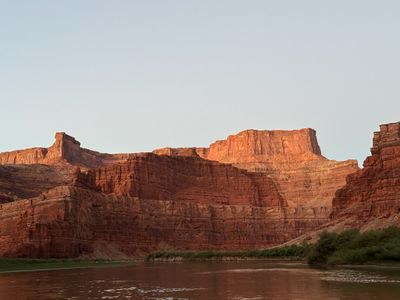
Full wall in warm light — ledge, slope, ledge, all the way up to the butte.
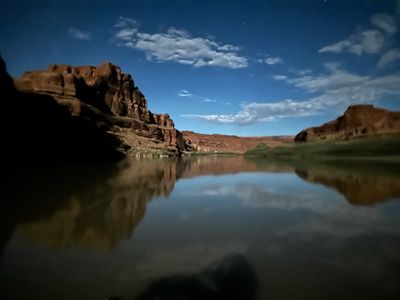
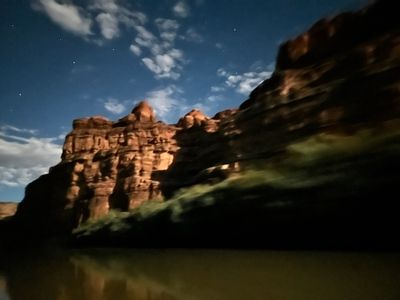
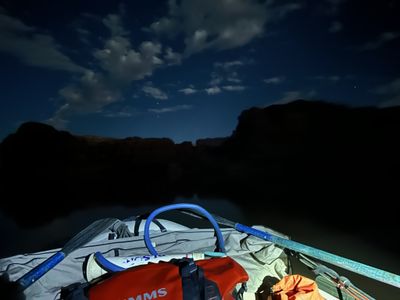
Moonlight bright enough to read the clouds, and water flat enough to double them.
Handheld at night — the wall is legible, the edges are not.
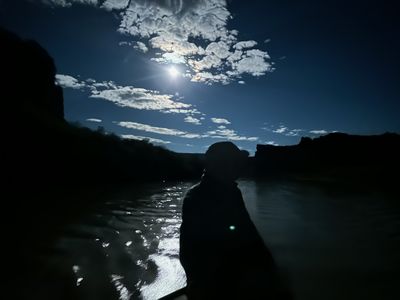
Rowing by moonlight, running lights down to one glow stick.
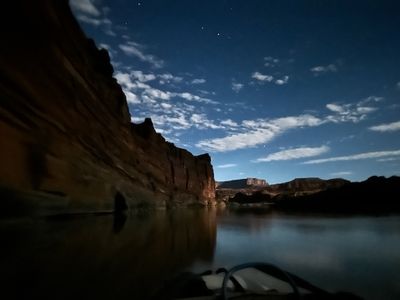
Wall, sky, and water all lit by the same moon — the boat just barely in it.
Nothing left but the skyline and the clouds working over it.
The whole rig in the frame: oars stowed, dry bags strapped, canyon going by in the dark.
A raised arm somewhere in the middle of a moonlit float; the shutter never had a chance.
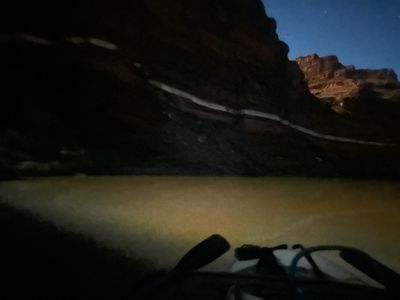
A light-colored band in the wall picks up the moon while everything under it stays black.
Day 2
4,350 cfs (USGS daily mean)
Day 2
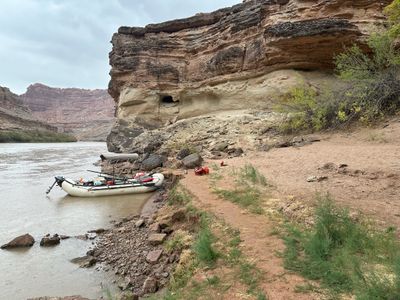
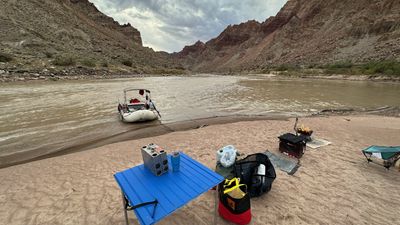
Cove camp in the morning — the rig still tied off under the undercut wall, weather already sitting gray on the canyon.
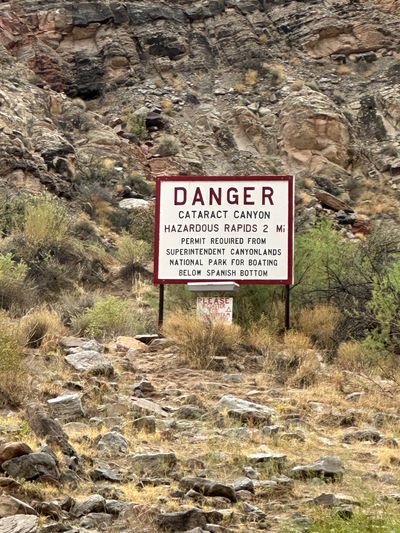
The old warning sign above the river — two miles of notice, and a register box nobody has repainted in a while.
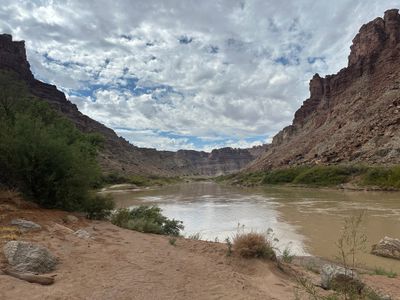
Looking downstream from the sign — open water, and the walls starting to gather in.
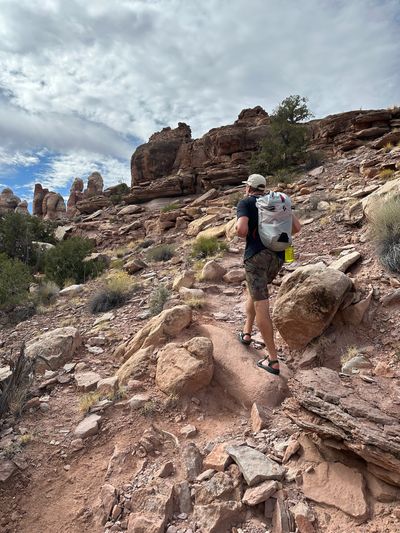
Starting up from the river — first steep pitch of the climb, spires already showing over the ledge.
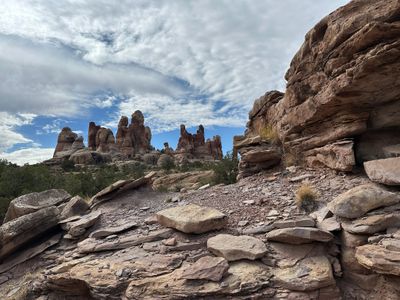
The spires opening up over the ledges on the way in.
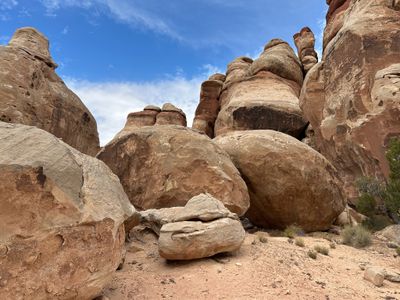
Inside the rock — rounded blocks and banded columns pressing in on the route.
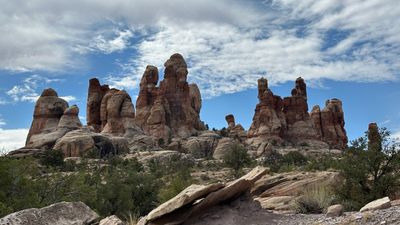
The whole stand of spires from the bench, laid out end to end.
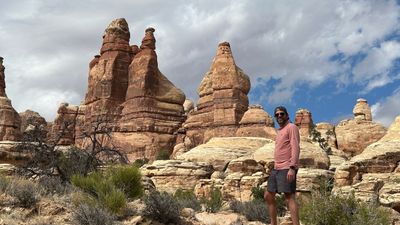
The other half of the two-person crew, up among the spires for scale.
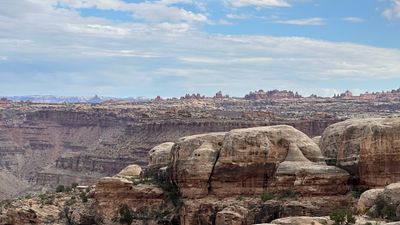
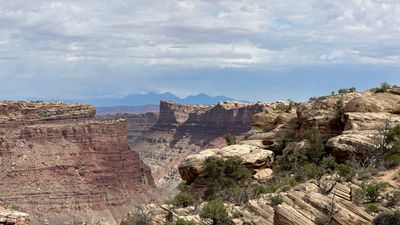
Across the gorge to the far rim — a whole skyline of towers stacked on the horizon.
Distant peaks past the rim, weather building over the high country while the canyon stays dry.
Kitchen up, fire pan lit, boat on the line — lower camp settling in under a gray sky.
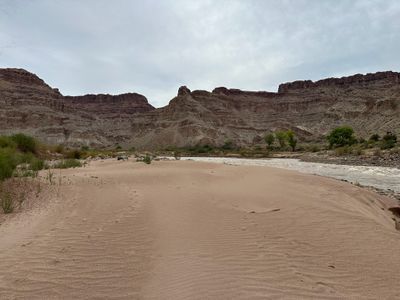
The lower camp bar — a lot of exposed sand, a lot of river, and weather sitting on the canyon.
Day 3
4,410 cfs (USGS daily mean)
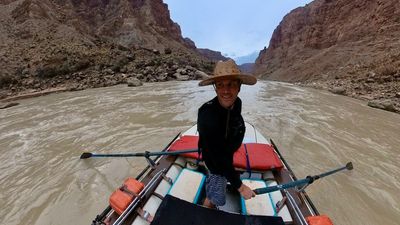
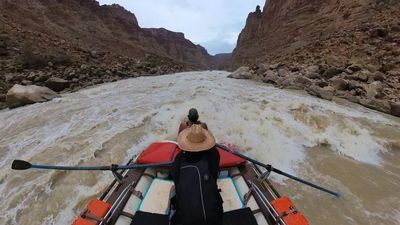
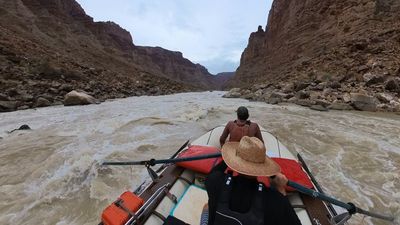
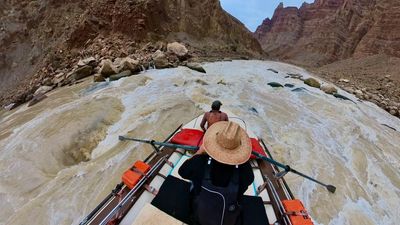
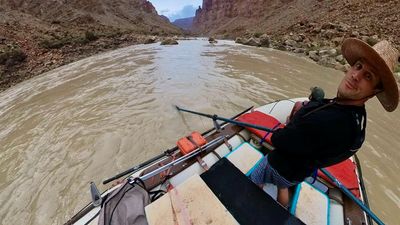
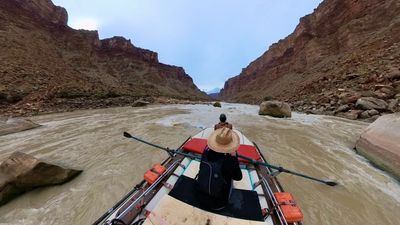
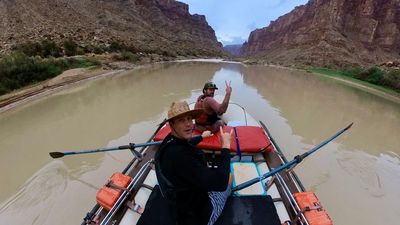
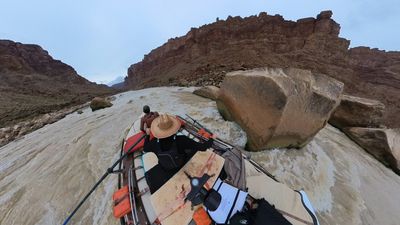
Day 3
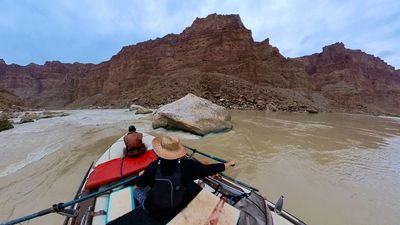
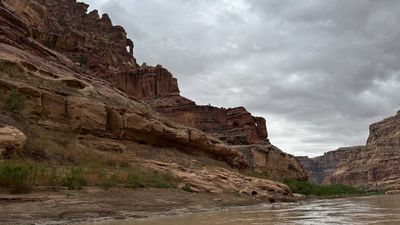
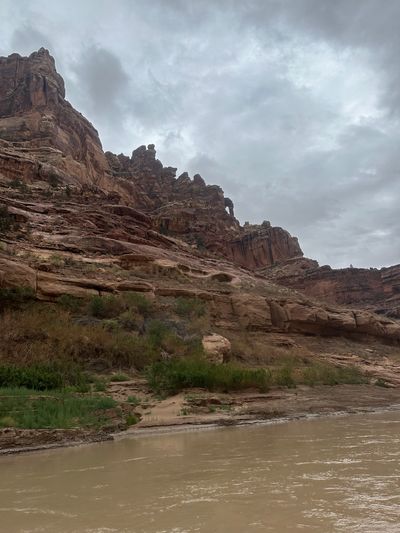
River-left ledges stepping up to the rim, under the day's flat gray ceiling.
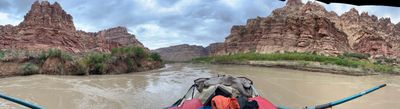
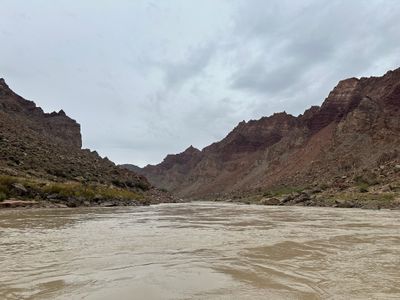
Panorama from the oars — the whole corridor at once, boat included.
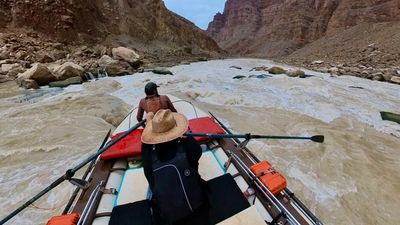
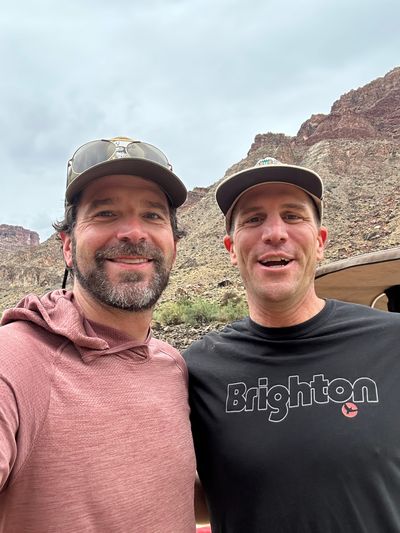
Two-person crew, mid-canyon.
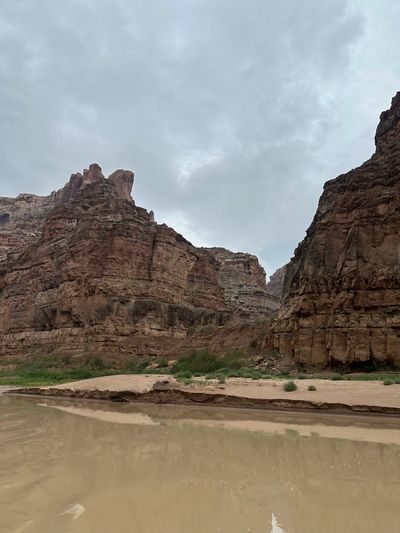
Into the rapid corridor — talus slopes replacing sheer sandstone.
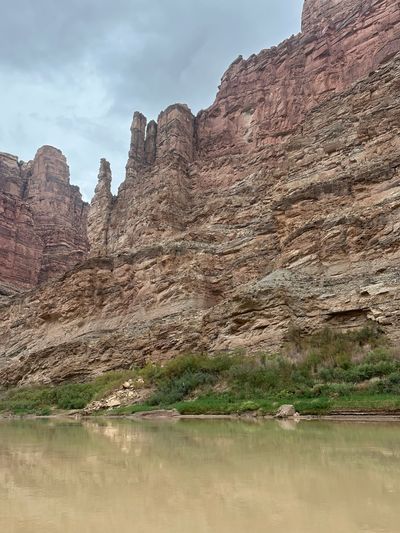
A free-standing spire on the wall, doubled in the flat water.
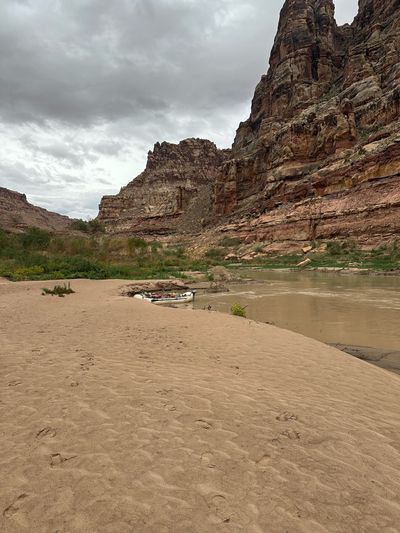
A big sand bench on river right — the kind of camp low water leaves behind.
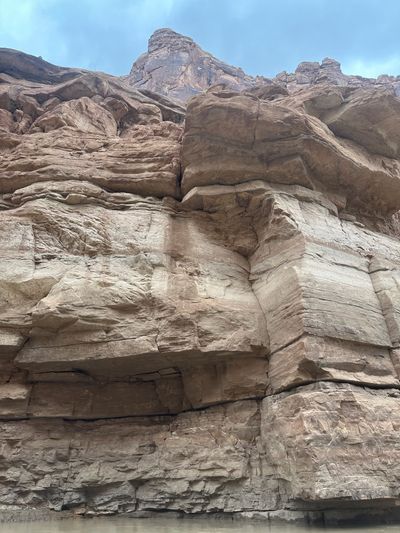
Straight up the wall — pale bench sandstone capped by the red unit above.
Potholed benches and knobbed rim, under a sky that kept threatening.
Boat tied off at the sand — the beach bigger than the boat by an order of magnitude.
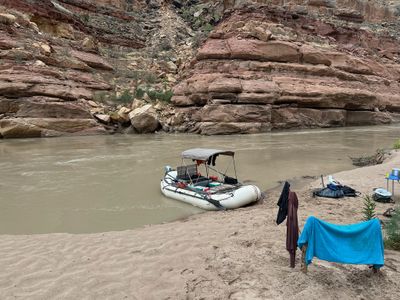
Camp laid out on the bar — laundry on driftwood, kitchen table up, boat still in the water.
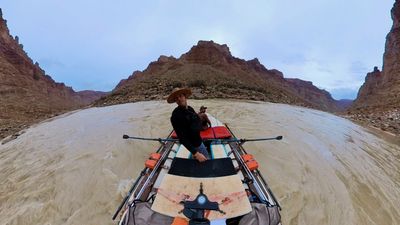
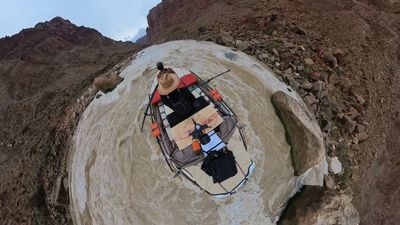
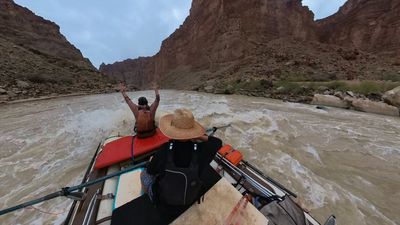
Straight down on the boat, mid-run.
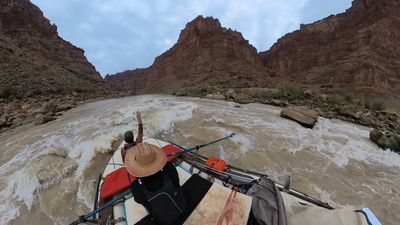
One arm up on the first hit.
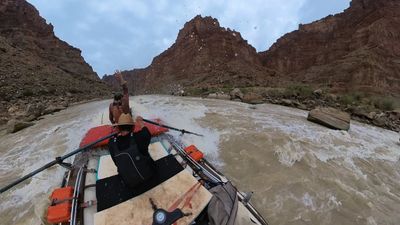
Same wave, water on the lens.
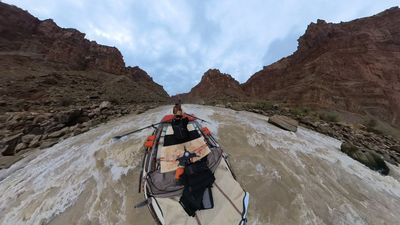
Pulled wide — the lane, the boat, and both rims at once.
Arms up as the wave goes under.
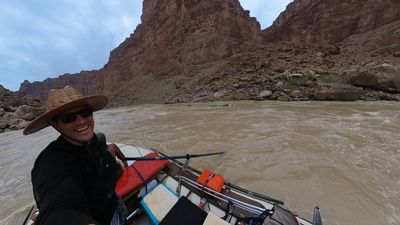
Grinning at the camera on the runout.
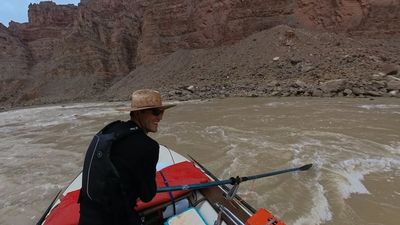
Sideways grin, oar still loaded.
Day 4
6,860 cfs (USGS daily mean)
Day 4
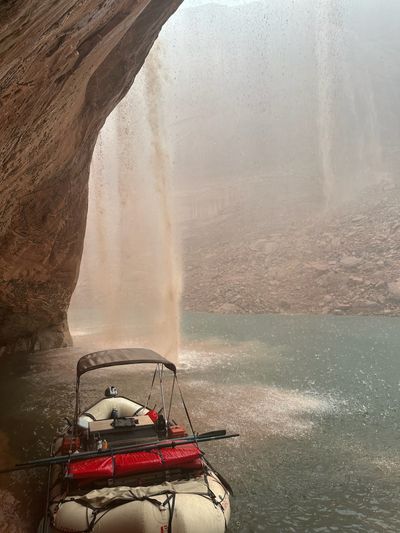
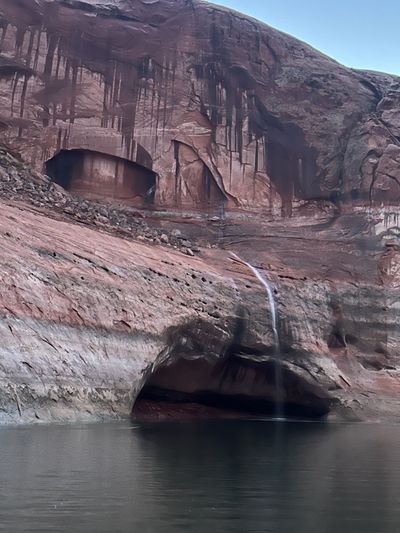
Two falls running at once, and the boat right under the first.
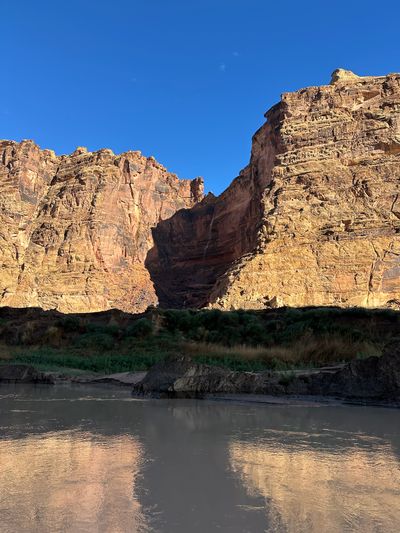
Morning sun on both walls, a side canyon still holding its shadow.
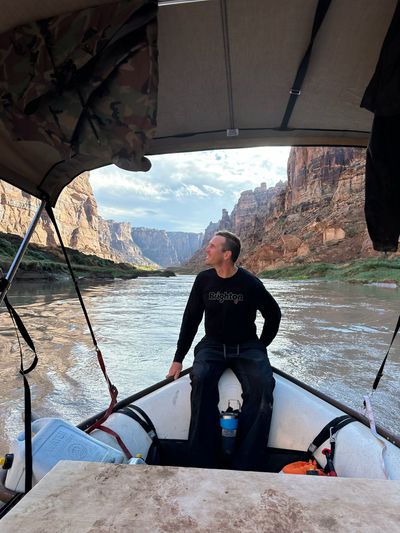
Bow seat, morning corridor — the day's first miles.
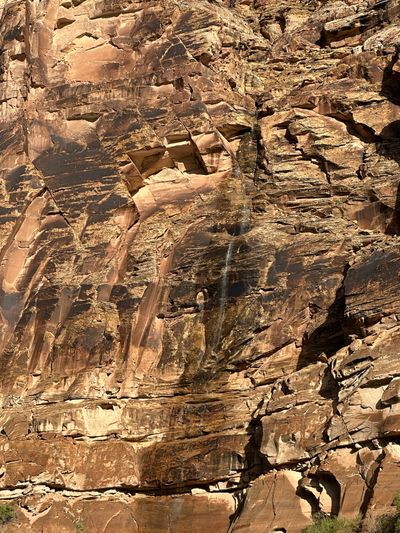
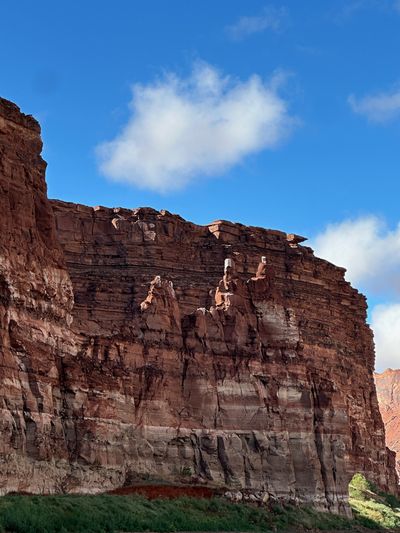
A seep working its way down a jointed wall.
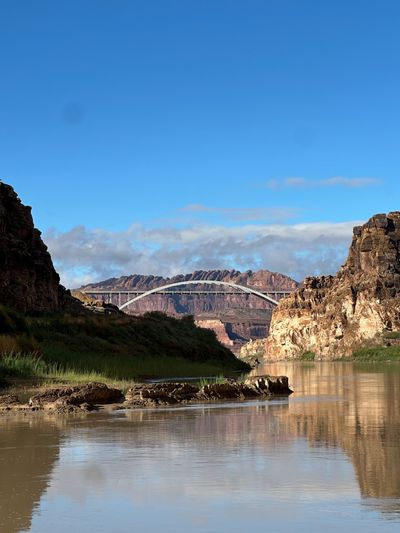
The bridge downstream — the canyon's first hard edge of road country.
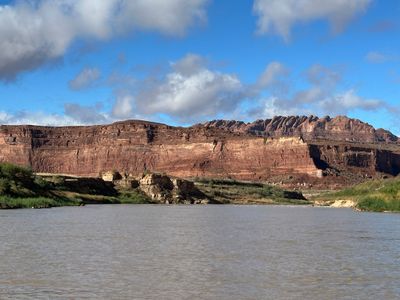
Knobbed skyline over a green bench — the canyon opening out.
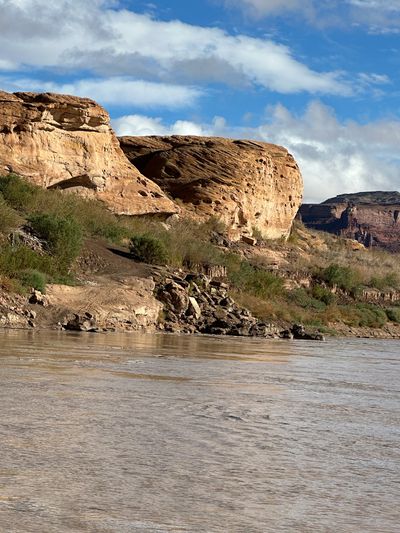
Pocketed slickrock standing right at the waterline.
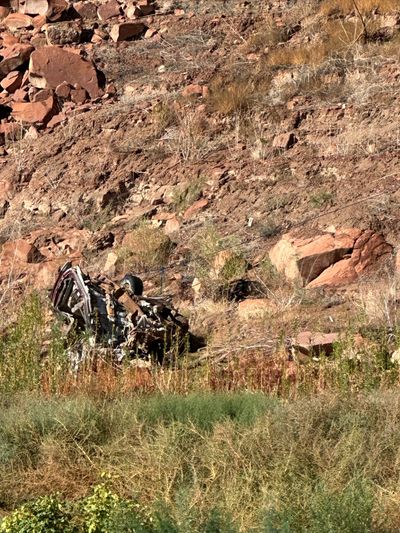
Somebody's very bad day, still parked on the slope.
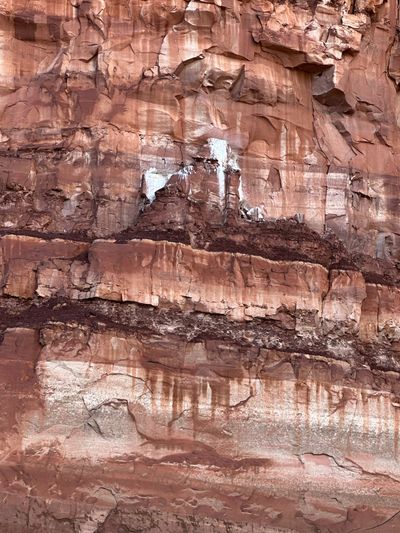
White streaking and a stick pile on a mid-wall ledge.
Whitewashed perch blocks under the rim band.
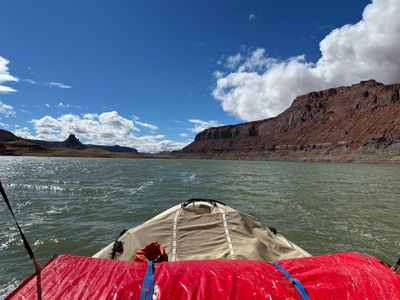
Out of the current and onto the reservoir — bow view, big sky.
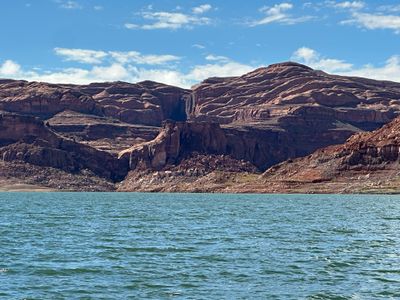
Drawdown line running the whole shore.
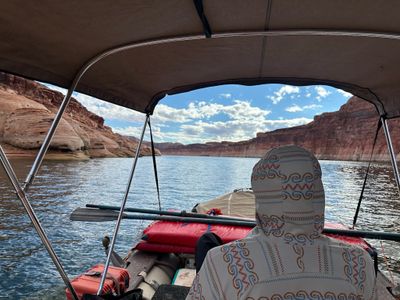
Under the canopy on the flat — nothing to do but watch the walls go by.
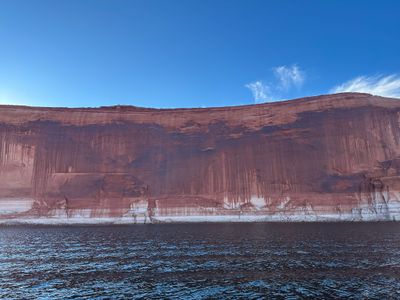
Varnish above, bleach below — the reservoir's two-tone wall.
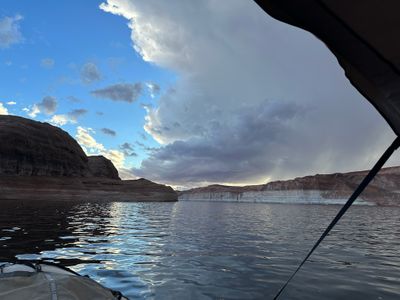
Weather building over the flat water, late in the day.
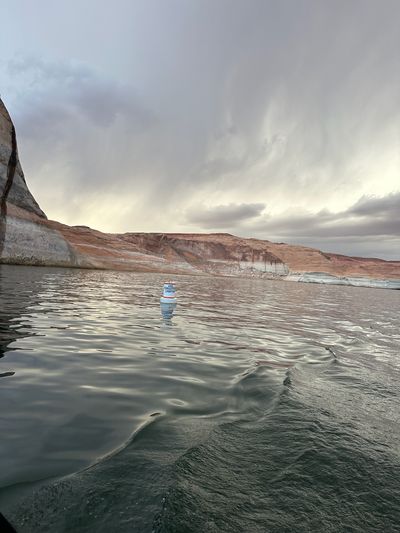
A channel marker naming a canyon the water swallowed.
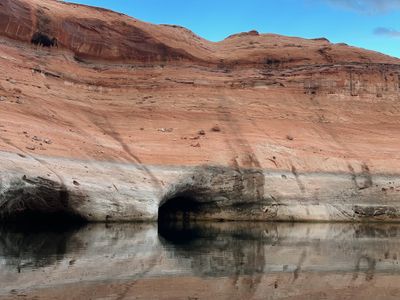
An alcove cut clean into the bleached band, doubled in the flat water.
Runoff still draining off the wall after the cell moved through.
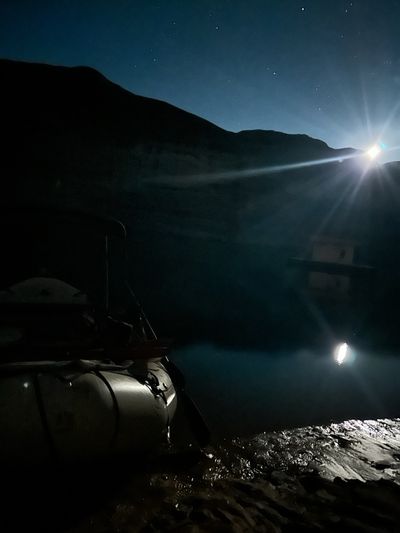
Moonrise over the flat water, boat tied to the rock.
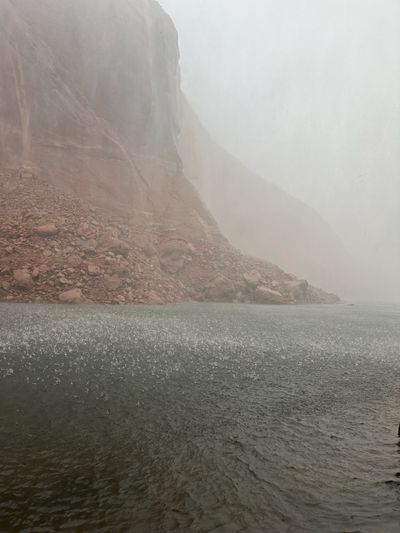
The storm arriving — visibility down to the nearest slope.
Handheld at the stars — mostly dark, a few points holding.
Day 5 — Take Out
7,920 cfs (USGS daily mean)
Colorado at Potash: 2,950–5,360 cfs (avg 3,732)
Green at Mineral Bottom: 1,390–2,560 cfs (avg 1,878)
Combined: 4,350–7,920 cfs (avg 5,610)
Lake Powell: 3544.13 ft at launch (3544.03–3544.46 ft during trip). USBR RISE API — Lake Powell at Glen Canyon Dam
Evidence behind the claims on this page — agency rules, maps, gauges, books, and field notes.
Permits
Hydrology
All 14 field sources
Access
Rapids
- book-excerpt Cataract Canyon (Webb / Belnap / Weisheit) — Selected Pages
- book RiverMaps Guide to the Colorado & Green Rivers in the Canyonlands of Utah & Colorado
Management
Books
Safety
- book-excerpt Cataract Canyon (Webb / Belnap / Weisheit) — Selected Pages
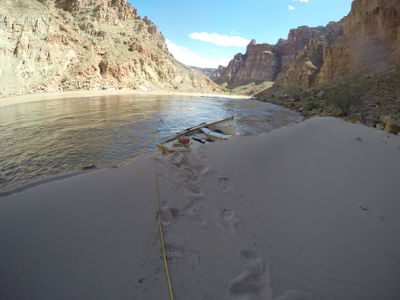
Cataract Canyon — May 2015 (~20,000 cfs)
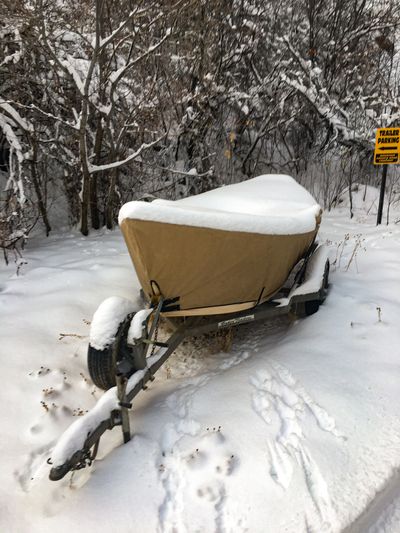
Cataract Canyon — December 2016
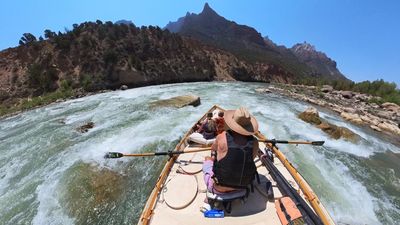
Split Mountain — August 2025 (Day Trip with Kids)
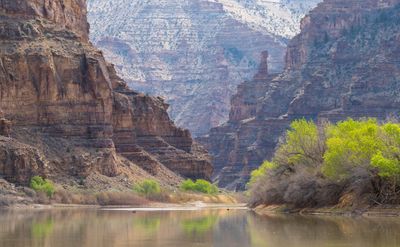
Desolation Canyon — March 2026
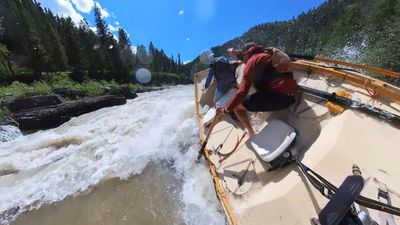
Snake River — June 2024 (Alpine Canyon x3, Dory)
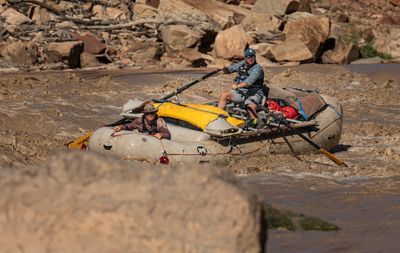
Cataract Canyon — October 2026
On this trip
Join the Expedition Briefing
Route drops, river notes, gear systems, and field reports—sent like a briefing, not a newsletter.