Skip to content
Book

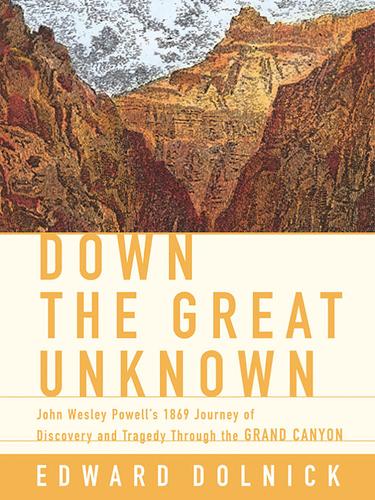
Down the Great Unknown

John Wesley Powell's 1869 Journey of Discovery and Tragedy Through the Grand Canyon

Cover of Down the Great Unknown

The dramatic story of John Wesley Powell's first expedition through the Grand Canyon and the birth of river exploration in the American West.

Edward Dolnick's book on the 1869 Powell expedition is the one I hand people who want to know the real story — not the monument-and-marker version, the actual day-by-day, how-did-they-survive-this version. Powell had nine men, four wooden boats, almost no relevant experience, and somewhere between zero and not-enough information about what was downstream of Green River Station, Wyoming. Three months later he came out of the mouth of the Grand Canyon with two boats, six men, and the bones of American river exploration. Dolnick lays that trip out with the kind of granular detail the story deserves, and he doesn't romanticize.

The book's big contribution is that it takes the three men who left the trip at Separation Rapid — the Howland brothers and Bill Dunn — seriously as people, not as footnotes. Traditional Powell history treats them as cowards who lost their nerve. Dolnick shows you what they were actually looking at: a crew that was half-starved, running on almost nothing, about to face a rapid that even Powell's journals describe as potentially fatal. They made a reasonable choice based on the available information. Dolnick doesn't defend them, but he refuses to condescend, and the book is stronger for it.

I keep going back to this book because it's about leadership under unreliable information, which is basically every trip. Powell is not a great captain by modern standards. He's stubborn, mercurial, dismissive of his crew's expertise, and makes decisions the reader can see are wrong in real time. But he also keeps the expedition moving when by rights it should have dissolved, and the reason he does is a quality Dolnick is careful with: a near-pathological refusal to turn around. Whether that's leadership or just stubbornness is a question the book leaves open. The fact that it leaves it open is what makes it useful to anybody who has led a multi-day trip where the plan broke at mile three.

The other thing to notice is the silence. For most of the trip, the crew has no idea what's below them. No maps. No accounts. Just cliff walls getting higher and water getting louder. Dolnick writes that silence in a way that doesn't oversell it. You feel it the way they felt it — as an ordinary thing that gets terrible by accumulation, and by the time anybody notices what they're inside, the question of whether to turn around has already answered itself.

Read it before you run the Grand. Read it before you run the Green. Read it again the next time you're in charge of a crew and somebody is asking for a certainty you don't have.
Details

Genre
History, Exploration
Subjects
exploration history
Geography
Grand Canyon, Colorado River
Tags
ISBN
9780060087173
Story DNA Themes, moods, voice signals
Themes
exploration and the unknown, leadership under pressure, team fracture and loyalty, river as adversary, the mythology of first descent
Moods
tense, dramatic, propulsive, reverent of the past
Motifs
the map ending at the river's edge, men on the verge of mutiny, waterfalls that couldn't be portaged, the canyon as devouring presence
Voice
narrative nonfiction, reportorial, historically grounded, cinematic pacing
Story function
myth-builder, historical-context, tension-builder, origin-story
Setting
unmapped canyon corridors, fragile wooden survey boats, portages around massive falls, Grand Canyon at river level, river camps under unknown stars
Why this book What it influences, what it teaches
Influence
storytelling, cultural-context, knowledge
Knowledge
Powell expedition history, Grand Canyon first descent, 19th century exploration, Green and Colorado River route
Concepts
Powell's 1869 vs. 1871 expeditions, the Howland brothers' departure, river fear as historical force, the birth of American river exploration
Use cases
writing about Powell's 1869 expedition as the mythological founding of Colorado River running, adding dramatic context to descriptions of Desolation Canyon, Cataract Canyon, or Grand Canyon sections traversed by Powell, contextualizing the courage and desperation behind the first modern river navigation, drawing on the expedition's fear of the unknown to frame modern first-descent or high-water stories
Related books
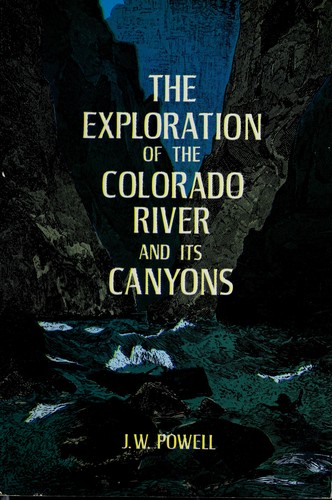
The Exploration of the Colorado River

The Exploration of the Colorado River

John Wesley Powell · 1875

Powell's original account of the first scientific expedition through the Grand Canyon, documenting the geology, natural history, and challenges of navigating the unknown Colorado River.

knowledge storytelling cultural context
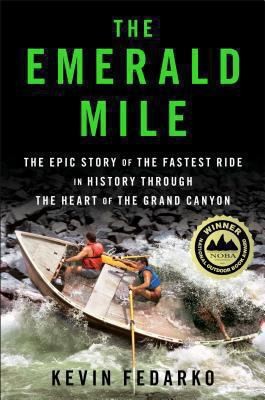
The Emerald Mile

The Emerald Mile

Kevin Fedarko · 2013

The thrilling story of the dory daredevils who set a speed record through the Grand Canyon at the height of the legendary flood of 1983 — and of the river that made it possible.

tone storytelling knowledge cultural context
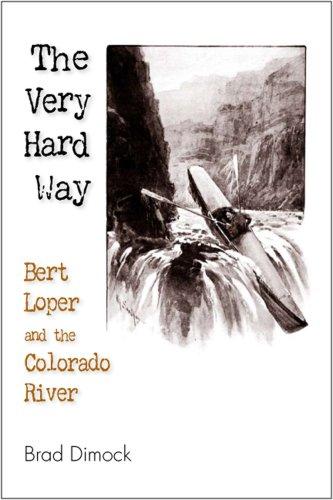
The Very Hard Way

The Very Hard Way

Brad Dimock · 2007

Brad Dimock's exhaustive biography of Bert Loper — gold prospector, early Colorado River boatman, and one of the great stubborn characters of Western river history — who died in Grand Canyon at 79, alone in his boat in a rapid, on the river he refused to leave. The definitive account of the Colorado River's pioneer running era.

storytelling knowledge cultural context
Cataract Canyon

Cataract Canyon

Robert H. Webb, Jayne Belnap, John S. Weisheit · 2007

An in-depth environmental and human history of Cataract Canyon and the rivers of Canyonlands, exploring Indigenous presence, exploration, dam impacts, river ecology, and the evolution of modern river running.

knowledge cultural context philosophy
River of Contraries

River of Contraries

Don Lago · 2010

A sweeping history of the Colorado River and its complex relationship with Western culture and landscape.

knowledge cultural context philosophy
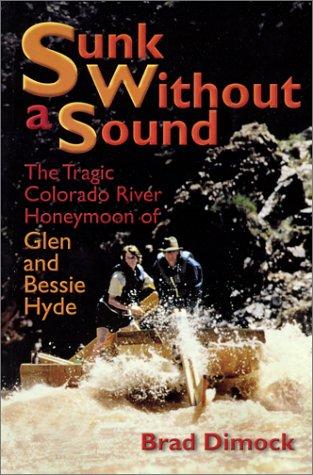
Sunk Without a Sound

Sunk Without a Sound

Brad Dimock · 2001

The story of Norman Nevills and the birth of commercial river running in the Colorado River basin.

storytelling cultural context knowledge

Connected in the graph

  • river/colorado-river
  • river/green-river
  • river-section/grand-canyon
  • river-section/desolation-canyon
  • river-section/cataract-canyon
  • theme/river-history
  • region/colorado-plateau
  • river/yampa-river
  • region/dinosaur-national-monument
  • river/colorado-river
Verified 2026-04-15 · Sources: open-library · Confidence: partial