Skip to content
Book

The Very Hard Way

Bert Loper and the Colorado River

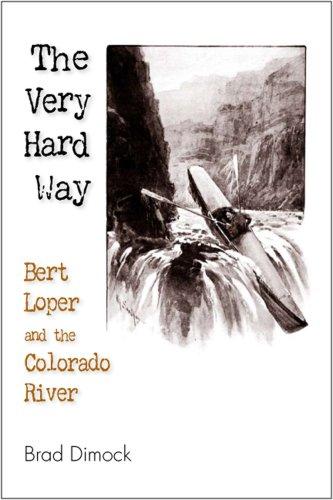
Cover of The Very Hard Way

Brad Dimock's exhaustive biography of Bert Loper — gold prospector, early Colorado River boatman, and one of the great stubborn characters of Western river history — who died in Grand Canyon at 79, alone in his boat in a rapid, on the river he refused to leave. The definitive account of the Colorado River's pioneer running era.

Brad Dimock's biography of Bert Loper is one of the most specific, patient, and affectionate pieces of river history in print. Loper was a gold prospector turned Colorado River boatman who spent something like fifty years on various stretches of the river and who died, at seventy-nine, running the Colorado in the Grand Canyon. Dimock's book is eight hundred pages. It took him roughly a decade to write. And every page of it is the kind of research-heavy, detail-rich, absolutely committed biographical work that almost nobody does anymore because the economics of publishing do not support it.

Loper was complicated. He was by some accounts an impossible man — stubborn to the point of self-injury, difficult with crews, married late, never quite financially stable, bad at most of the things a person is expected to be good at by middle age. He was also, and this is the book's argument, one of the true river originals. Dimock does not simplify him. The book shows you the cranky stubborn obsessive alongside the genuine talent, the long commitment, the decades of work on a river that most of his contemporaries treated as a curiosity.

I bring this book up when somebody asks me why river people are the way they are. The Loper story is a specific answer. The river attracts a certain kind of person — the person willing to organize an entire life around a specific piece of moving water — and Loper is the pattern. His half-century on the Colorado is the original template for the river-obsessed long-career boatman, and every subsequent lifer, commercial or private, is working out some variation of the same stubborn arrangement.

Dimock's research is the other reason to read the book. He interviewed everybody still alive who knew Loper. He read the letters. He crossreferenced the trip logs, the newspaper clippings, the oral histories. The citations are careful. The gaps are acknowledged. When the record is thin, Dimock says so. When he has to speculate, he flags the speculation. That methodological care is what makes the book a genuine contribution to river history rather than just a long piece of boatman lore.

Read it in winter. It is long, and it rewards patience, and the accumulation of Loper's life across the decades is a specific kind of reading pleasure that fast books do not provide. By the time you finish, you know Loper the way you know a grandfather — irritating, difficult, impossible to quite love or quite reject, but permanently part of the story you tell yourself about the family of river people you have joined.
Details

Genre
Biography, River Running, History
Subjects
Bert Loper, Colorado River history, early river running, Grand Canyon boatmen, Cataract Canyon history, San Juan River history
Geography
Colorado River, Grand Canyon, Cataract Canyon, San Juan River, Glen Canyon, Green River, Utah, Arizona
Tags
ISBN
9781892327697
Story DNA Themes, moods, voice signals
Themes
obsession as a form of devotion, the river as a life's work — not a vacation, stubbornness, survival, and the cost of commitment, the early era of Colorado River exploration
Moods
biographical, admiring, elegiac, thorough
Motifs
the wooden boat as a character, the river as adversary and home, death in a rapid as the right ending for a river man, maps and journals as the evidence of a life
Voice
meticulous researcher, river insider — Dimock is himself a boatman, affectionate but clear-eyed
Story function
historical-context, character-pressure, myth-builder, tension-builder
Setting
wooden boats in Cataract Canyon before Glen Canyon Dam, the Colorado River in its pre-dam state — wild and unregulated, Grand Canyon in the 1940s — few people, no permits, prospect camps on the San Juan River
Why this book What it influences, what it teaches
Influence
storytelling, knowledge, cultural-context
Knowledge
early Colorado River running history, pre-dam Colorado River hydrology and character, Grand Canyon boatman culture, Cataract Canyon rapid history, San Juan River early exploration
Concepts
the pre-dam Colorado as a fundamentally different river — unpredictable, unregulated, dangerous, Bert Loper as a founding figure of the Colorado River boatman tradition, wooden sweep-oar boats as the technology of the pioneer era, the concept of a 'river life' as a total commitment, not a recreational identity
Use cases
providing historical depth for DM write-ups of Cataract Canyon, Glen Canyon, and Grand Canyon — Loper ran all of them before they were tamed or drowned, grounding the 'river character' archetype that runs through DM's editorial voice — Loper is the original stubborn, river-obsessed figure, writing the historical context section for any DM river section page that existed in the pre-dam Colorado River era, supplying narrative tension and character pressure when DM writes about the difficulty or consequence of Colorado River rapids, contextualizing early 20th century river running — the era of wooden boats, no permits, and very little information — against modern expedition planning
Related books
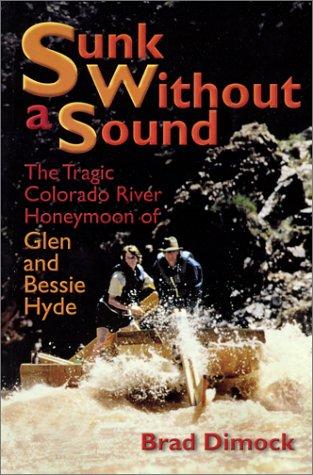
Sunk Without a Sound

Sunk Without a Sound

Brad Dimock · 2001

The story of Norman Nevills and the birth of commercial river running in the Colorado River basin.

storytelling cultural context knowledge
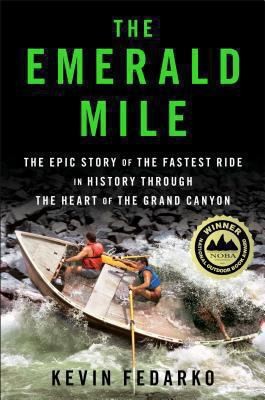
The Emerald Mile

The Emerald Mile

Kevin Fedarko · 2013

The thrilling story of the dory daredevils who set a speed record through the Grand Canyon at the height of the legendary flood of 1983 — and of the river that made it possible.

tone storytelling knowledge cultural context
Down the Great Unknown

Down the Great Unknown

Edward Dolnick · 2002

The dramatic story of John Wesley Powell's first expedition through the Grand Canyon and the birth of river exploration in the American West.

storytelling cultural context knowledge
Cataract Canyon

Cataract Canyon

Robert H. Webb, Jayne Belnap, John S. Weisheit · 2007

An in-depth environmental and human history of Cataract Canyon and the rivers of Canyonlands, exploring Indigenous presence, exploration, dam impacts, river ecology, and the evolution of modern river running.

knowledge cultural context philosophy
The Exploration of the Colorado River

The Exploration of the Colorado River

John Wesley Powell · 1875

Powell's original account of the first scientific expedition through the Grand Canyon, documenting the geology, natural history, and challenges of navigating the unknown Colorado River.

knowledge storytelling cultural context
Boatman's Quarterly Review Anthology

Boatman's Quarterly Review Anthology

Multiple Authors · 2000

A collection of essays and stories from the legendary Boatman's Quarterly Review publication, documenting the culture, lore, and voices of Grand Canyon river guides.

tone storytelling cultural context

Connected in the graph

  • river/colorado-river
  • river-section/cataract-canyon
  • river-section/grand-canyon
  • river-section/glen-canyon
  • theme/river-history
  • theme/river-culture
  • theme/craft-and-mastery
Verified 2026-04-15 · Sources: open-library · Confidence: partial