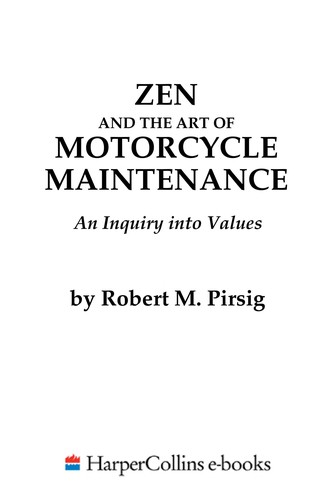
A father and son ride motorcycles from Minnesota to California while Pirsig excavates the ruins of his own mind — specifically, a prior self who pursued the concept of 'Quality' to the point of madness. The most influential meditation on craft, attention, and the relationship between the traveler and the machine in American letters.
Pirsig's book is the one everybody has heard of and most people have started without finishing. Zen and the Art of Motorcycle Maintenance is a father-son motorcycle trip from Minnesota to California, during which the narrator excavates the ruins of a former self — a philosophy-obsessed academic named Phaedrus who pursued the concept of Quality to the point of a specific kind of mental breakdown. The book moves between the road trip, the philosophy, and the family story, and the interleaving is either the book's genius or its weakness depending on which chapter you are in.
The philosophy is the part most readers remember, even when they disagree with it. Pirsig argues that the way modern American technical culture thinks about Quality — as a subjective matter of taste, separate from the objective world of engineering and measurement — is a specific error with specific consequences. The Quality he is after is something prior to that split. It is what a good mechanic is doing when they recognize a good weld. It is what a writer is doing when a sentence is working. It is what, Pirsig argues, our whole civilization has trained itself to stop seeing. Whether you agree with this is less important than whether you can follow the argument, and Pirsig is good enough as a teacher that most patient readers can follow it, at least in outline.
I bring this book up at the river when somebody is trying to understand why certain pieces of gear or craft matter in ways that resist being quantified. The specific way a good oar feels, the specific reason one dry bag is obviously better than another to somebody who has used both, the specific difference between a well-built trip and a poorly-built one that is made up of the same components. Pirsig has a vocabulary for that difference. The vocabulary is the book's real gift.
The travel writing is underrated. The road material — the two-lane highways through the Dakotas, the specific texture of motorcycle travel in 1968, the campgrounds and the diner breakfasts — is some of the best road-trip writing of its period, and it stands on its own even if the philosophy loses you. The relationship with his son Chris is the book's emotional ballast, and the final pages of the book, which I will not spoil, are the payoff that makes the long philosophical middle earn its keep.
Read it with a pen. Underline the passages that land. Skip the ones that don't. The book is generous enough to survive that treatment, and the underlinings you accumulate over a few rereads will end up being the working philosophy you actually carry with you on trips, whether you know you are carrying it or not.