Skip to content
Book

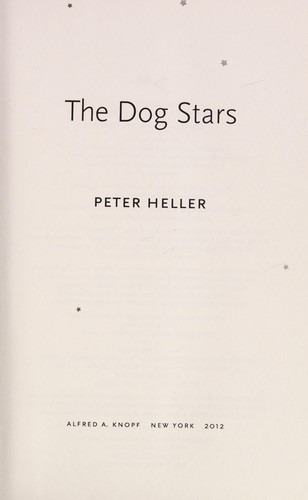
The Dog Stars

Cover of The Dog Stars

Heller's debut novel follows a pilot and his dog surviving a pandemic in the Colorado Rockies, patrolling their territory in a beat-up Cessna — a grief novel disguised as survival fiction, written in a prose style so spare and fragmented it reads like a field log from the end of the world. Heller is also a serious whitewater kayaker and the author of The River (2019).

Peter Heller wrote The Dog Stars as his debut novel, and it is one of the strangest, most durable post-apocalyptic books published in the last fifteen years. The setup is conventional: a pandemic has killed most of humanity, a pilot named Hig and his dog live at an abandoned Colorado airport, and the survivors they encounter are mostly not to be trusted. Standard materials. What makes the book a different beast is the prose — Heller writes Hig's first-person in short, fragmented, almost poetic sentences, and the voice is so specific that by page fifty you either love the book or you've put it down. There is no middle position.

The book is a grief novel wearing survival fiction as a disguise. Hig has lost his wife to the pandemic. The dog, Jasper, is old. The world has ended in the specific way that makes daily life almost normal — the sun still rises, the trout are still in the rivers, the Cessna still flies — while also being unbearably, permanently broken. Heller is after something in that tension. He wants you to feel how the beauty of the surviving world is sharper, not duller, because of what has been lost, and the sharpness is the book's real subject.

I bring this book up on the river when somebody is working through something hard. Heller is better than almost anyone at writing about beauty in the middle of loss, and the specific Colorado landscape of the novel — the mountains, the trout streams, the abandoned airport hangars, the high dry light — is a landscape that carries the weight the book puts on it. If you have flown small planes in the West, or fished the front range, or walked through a high basin in late summer, Heller's descriptions will hit harder than you'd expect from a post-apocalyptic novel.

The violence, when it comes, is not played for excitement. Heller wrote it the way I suspect violence actually feels when it happens to you — fast, unclear, followed by long stretches of trying to make sense of what just happened. That texture is rare in genre fiction and it is part of why the book has a longer shelf life than most of its post-pandemic peers.

Read it alone. Read it on a couple of long quiet evenings. Don't explain the voice to anyone else before they've tried it for themselves — the fragmented sentences are a big ask on the first page and either they work for you or they don't, and other people's warnings won't change the outcome. If Heller's voice takes, though, the book is going to stay with you longer than you expect, and you'll find yourself reaching for it again on a specific kind of grief-adjacent evening.

Details

Genre
Fiction, Post-Apocalyptic, Nature Writing
Subjects
survival, grief, wilderness, aviation, loyalty, Colorado Rockies, pandemic aftermath
Geography
Colorado, Rocky Mountains, American West
Tags
ISBN
9780307959942

Where to buy

Some links are affiliate — we may earn a commission at no cost to you. See merchants.

Story DNA Themes, moods, voice signals
Themes
grief as the ground under everything, loyalty to place and to living things, beauty persisting after catastrophe, the cost of keeping watch, what remains when everything is stripped away
Moods
spare, elegiac, taut, unexpectedly tender, post-loss clarity
Motifs
the dog as anchor to the present, flying over wilderness as a way of seeing it whole, the river as both threat and promise, what a person will do to not be alone
Voice
fragmented syntax that earns its incompleteness, present tense that makes everything feel immediate and precarious, no wasted words — everything load-bearing, emotional weight carried by landscape description, not internal monologue
Story function
tension-builder, tonal-counterweight, character-pressure, philosophical-anchor, scale-setter
Setting
landscape as the only stable thing, the Rockies as both refuge and exposure, altitude and open sky as emotional register, territory that must be actively held
Why this book What it influences, what it teaches
Influence
tone, storytelling, philosophy
Knowledge
wilderness survival, Colorado Rocky Mountain ecology, grief psychology, aviation, river travel ethics
Concepts
grief as landscape, the stripped sentence as honest form, beauty requiring no justification even at the end of things
Use cases
Writing the emotional arc of a solo expedition — the stripped-down quality of being alone with a river for 10 days, Trip reports that open in the middle of action with no preamble, dropping the reader into current conditions, Capturing the specific grief of leaving a canyon at the end of a trip — the way a place closes behind you, Writing about the Colorado Plateau in fire season or drought — landscape under pressure, Expedition philosophy sections that resist sentimentality while still landing emotionally
Related books
Into the Wild

Into the Wild

Jon Krakauer · 1996

Krakauer's account of Christopher McCandless, who abandoned his possessions and walked alone into the Alaskan wilderness in 1992 — a book that invites strong reactions and remains essential for anyone thinking seriously about the philosophy and ethics of wilderness pursuit, the romance of escape, and the difference between preparation and surrender.

storytelling philosophy cultural context
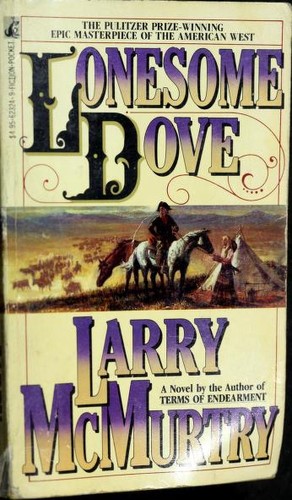
Lonesome Dove

Lonesome Dove

Larry McMurtry · 1985

McMurtry's Pulitzer Prize-winning epic follows a cattle drive from Texas to Montana — a vast, unsparing novel about loyalty, geography as fate, and the distance between the myth of the frontier and its actual grinding reality. The definitive American Western: enormous in scope, intimate in its attention to character.

storytelling cultural context tone
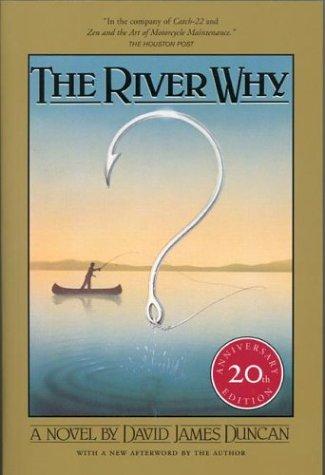
The River Why

The River Why

David James Duncan · 1983

Duncan's debut novel follows a young fly fisherman who retreats to a cabin in the Oregon Cascades and discovers that rivers are not a pastime but a way of life — a theology, a comedy, and a love affair. One of the great river novels in American literature: lyrical, funny, and deeply spiritual about moving water.

tone storytelling philosophy
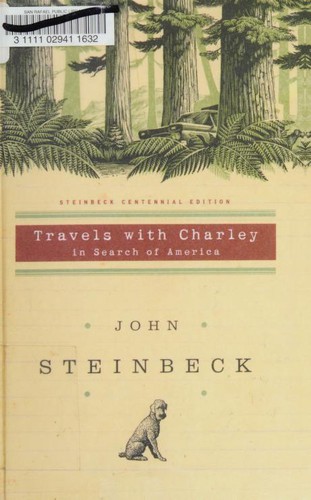
Travels with Charley

Travels with Charley

John Steinbeck · 1962

Steinbeck's account of driving across America with his standard poodle Charley in a custom pickup camper — elegiac, quietly political, full of American loneliness and open-road mythology. One of the great road-trip books: honest about age and uncertainty, clear-eyed about a country in transition.

tone storytelling philosophy
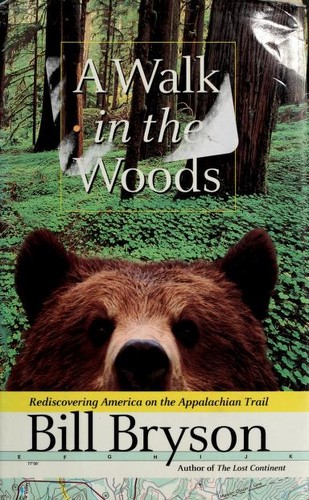
A Walk in the Woods

A Walk in the Woods

Bill Bryson · 1998

Bryson's hilariously honest account of attempting the Appalachian Trail with a wildly unprepared friend — a masterclass in writing about wilderness without pretension: self-deprecating, genuinely funny, laced throughout with natural history, conservation history, and a real love for the American backcountry.

humor tone storytelling cultural context
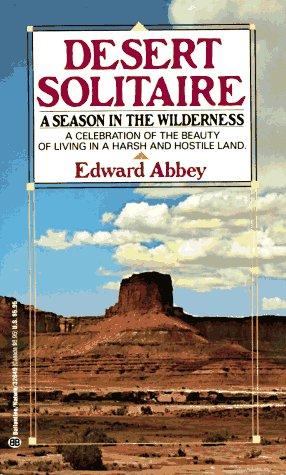
Desert Solitaire

Desert Solitaire

Edward Abbey · 1968

Edward Abbey's classic portrait of canyon country, solitude, and wilderness, influential to the identity and mythology of the Colorado Plateau.

tone philosophy

Connected in the graph

  • theme/desert-solitude
  • theme/desert-philosophy
  • theme/outdoor-voice
  • theme/trip-report-voice
  • region/colorado-plateau
Verified 2026-04-15 · Sources: open-library · Confidence: partial