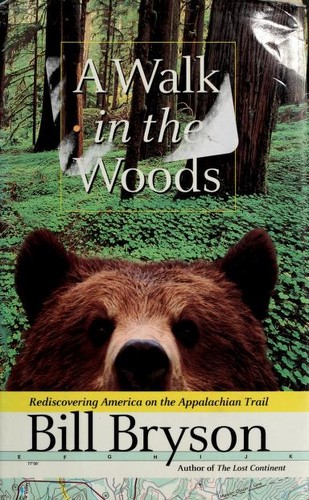
Bryson's hilariously honest account of attempting the Appalachian Trail with a wildly unprepared friend — a masterclass in writing about wilderness without pretension: self-deprecating, genuinely funny, laced throughout with natural history, conservation history, and a real love for the American backcountry.
You know the setup. Bryson decides to walk the Appalachian Trail. He rounds up his friend Katz, who honestly should not be on this trip, and off they go — wrong boots, wrong packs, wrong amount of food, wrong everything. Two middle-aged guys and more than two thousand miles of footpath. By any reasonable measure it's a failure. They quit. They unquit. They fight about bears. They eat Slim Jims until it hurts. They get nowhere near Katahdin. And somewhere along the way it turns into one of the best books anybody's written about actually being in the woods.
The comedy is what gets you in. Bryson is funny the way your actually-funny friend is funny — specific, self-aware, perfectly willing to be the idiot in the story. He gets the best lines because he lets Katz have most of the second-best ones. But the reason the book has held up is that every few chapters it slows down and he tells you something real. Chestnut blight. The invention of the Trail itself. Myron Avery. What the Park Service keeps getting wrong. Species loss that's quieter and more recent than you'd think. It's a stealth natural history book wearing a buddy-comedy coat.
The reason I hand it to people before a trip: Bryson took the trip he could actually take. He didn't finish. He didn't summit. He didn't have a big redemptive moment. He walked the parts he could walk, turned around when he had to, and then wrote the book anyway. That's a lesson a lot of trip-report writers could use. The trip I did is a better book than the trip I planned, every single time.
There's also something specifically useful here for a river crew. The dynamics of two people out too long on not enough rest and not enough food — that's in Bryson's book in comedic form, but it's real. Read it once for the laughs. Read it again as a study in how two people who more or less love each other will start to fray, and what it looks like when they fray with some grace. That second read is sneakily useful — it'll change how you pack snacks for day four, and it'll change how you handle the crew member who is visibly cracking on day seven.
Keep it in the boat for days when everything's wet, everyone's beat, and somebody needs to laugh. The natural history will still be there on the reread.
Details
Genre
Nonfiction, Humor, Travel, Nature Writing
Subjects
Appalachian Trail, long-distance hiking, American forests, conservation history, outdoor humor, middle age and adventure
Geography
Appalachian Mountains, Eastern United States, American Southeast, New England
Some links are affiliate — we may earn a commission at no cost to you.
See merchants.
Story DNAThemes, moods, voice signals
Themes
the comedy of being underprepared in a serious landscape, what wild places are worth and why we're losing them, the body's honest response to ambition, friendship under physical stress, self-deprecation as a form of earned authority
Moods
genuinely funny, warm, occasionally alarmed, affectionate toward wilderness without mystifying it, unexpectedly moving at key moments
Motifs
the gap between what you planned and what you did, the friend who makes it worse and better simultaneously, bears as a recurring source of comic dread, the forest that outlasts our ability to describe it
Voice
first-person confessional that never tips into self-pity, humor that doesn't undercut genuine feeling, natural history digressions that are actually interesting, the capable amateur as narrator — not pretending to expertise he doesn't have
the trail as a series of encounters rather than an achievement, American wilderness as something both magnificent and imperiled, the gear store before the trip as a comic theater of anxiety, the campsite shared with strangers as social laboratory
humor as the honest register for adventure writing, the capable amateur as the reader's best proxy, natural history made accessible through story not data
Use cases
Trip reports that include things going wrong or falling short without losing the reader's goodwill, Gear writing that uses self-deprecating humor to cut through the earnestness of outdoor culture, Trip planning pages that acknowledge the absurdity of logistics without making them feel impossible, Camp culture writing: the specific comedy of a bad night's sleep, an overloaded raft, a wrong turn, Conservation and land stewardship sections that make the stakes feel real without lecturing
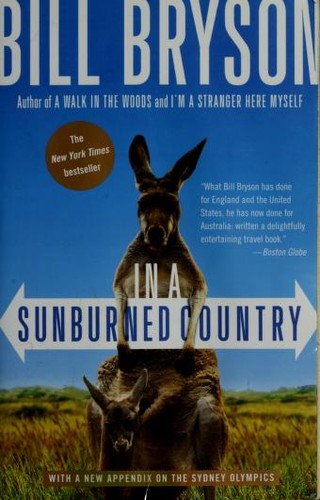
Bryson travels across Australia — a continent that is vast, arid, geologically ancient, and quietly full of things that will kill you — with his signature mix of warm humor, deep curiosity, and barely contained awe at the scale of the place. A model for writing about extreme landscapes without losing the comic thread.
Krakauer's account of Christopher McCandless, who abandoned his possessions and walked alone into the Alaskan wilderness in 1992 — a book that invites strong reactions and remains essential for anyone thinking seriously about the philosophy and ethics of wilderness pursuit, the romance of escape, and the difference between preparation and surrender.
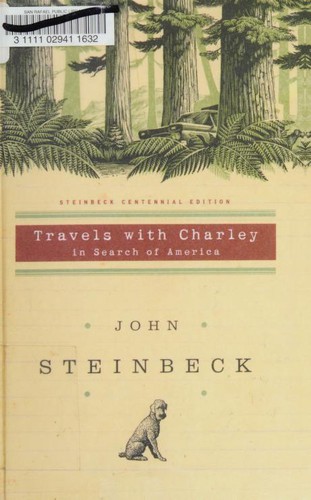
Steinbeck's account of driving across America with his standard poodle Charley in a custom pickup camper — elegiac, quietly political, full of American loneliness and open-road mythology. One of the great road-trip books: honest about age and uncertainty, clear-eyed about a country in transition.
Heller's debut novel follows a pilot and his dog surviving a pandemic in the Colorado Rockies, patrolling their territory in a beat-up Cessna — a grief novel disguised as survival fiction, written in a prose style so spare and fragmented it reads like a field log from the end of the world. Heller is also a serious whitewater kayaker and the author of The River (2019).
McMurtry's Pulitzer Prize-winning epic follows a cattle drive from Texas to Montana — a vast, unsparing novel about loyalty, geography as fate, and the distance between the myth of the frontier and its actual grinding reality. The definitive American Western: enormous in scope, intimate in its attention to character.