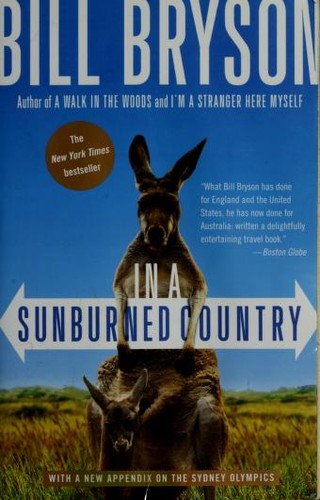
Bryson travels across Australia — a continent that is vast, arid, geologically ancient, and quietly full of things that will kill you — with his signature mix of warm humor, deep curiosity, and barely contained awe at the scale of the place. A model for writing about extreme landscapes without losing the comic thread.
Bryson goes to Australia because somebody pays him to, and he comes back with the book that made half of us want to go to Australia and made the other half want to stay very far away. In a Sunburned Country is the one where he leans into what Australia actually is — a continent the size of the continental United States with less population than Texas, full of animals and plants that are specifically adapted to kill you in creative ways, and geologically so old that the rocks you camp on in the Outback have been where they are for longer than most of Earth's eventful geology has existed.
The comic engine of the book is Bryson narrating his own fear of dying. He is constantly being told, by every Australian he meets, about something that will kill him. Sharks. Saltwater crocodiles. Funnel-web spiders. The snakes — every snake in Australia, basically. Box jellyfish. The sun itself. He relays each new threat with a specific kind of increasing hysteria that turns into one of the best sustained comic bits in any travel book. And underneath it, and this is why the book sits on the DM shelf, he's writing one of the better-observed tributes to a landscape of genuine aridity that anybody has published in English.
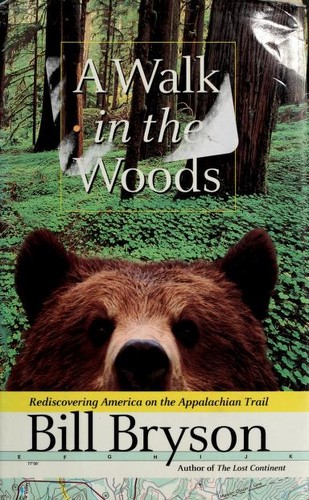
The Outback chapters are the reason to read the book. Bryson is taking the same comic voice he used in A Walk in the Woods and pointing it at a landscape that is larger, older, more arid, and less forgiving than anything an American has in the contiguous forty-eight. His descriptions of the Nullarbor Plain, the drives between towns where there are no towns for hundreds of miles, the quiet of genuinely empty land — these are passages that American desert people will recognize as kin. Australia is not our desert. But it is a desert, and Bryson writes its scale in a way that reminds you what scale really is.
I bring this book up when somebody's about to do a long western road trip and thinks they understand empty country. Bryson is useful insurance. His Australia is what the Great Basin would look like if the Great Basin were three times larger and a hundred million years older. Reading him before a long desert drive recalibrates your sense of what empty actually means, and that recalibration is good for the trip.
Read it on the road. Read it aloud, if you have a partner who can drive while you read. It is a generous book, and it travels as well as a good travel book should, and the laughs are genuine.