Skip to content
Book

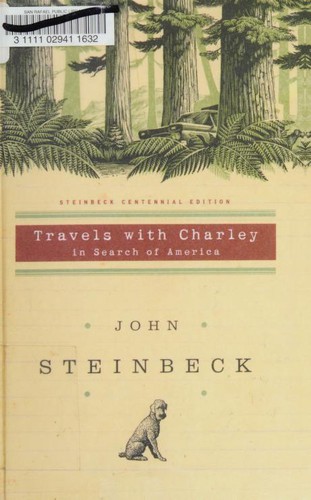
Travels with Charley

In Search of America

Cover of Travels with Charley

Steinbeck's account of driving across America with his standard poodle Charley in a custom pickup camper — elegiac, quietly political, full of American loneliness and open-road mythology. One of the great road-trip books: honest about age and uncertainty, clear-eyed about a country in transition.

Steinbeck drove across America in 1960 in a custom pickup camper with his standard poodle Charley, and he came back with a book that has been read by every American road-tripper since, not because it is his best work but because it is the book nobody else quite wrote. Travels with Charley is a loose, elegiac, occasionally cranky account of the country Steinbeck was trying to reacquaint himself with late in his career — and what he found, in town after town, was an America that had changed faster than his sense of it had kept up with.

The book's central mood is a specific kind of melancholy. Steinbeck is genuinely sad about what highways and franchising have done to the country, and also about the fact that his own aging body and mind no longer meet the journey the way they would have met it twenty years earlier. Both disappointments are in the book at once, and he does not always separate them. The parts where he is grumbling about modernization are sometimes really about something he is losing inside himself. That double register is one of the book's real gifts, if you are reading it at a certain age.

I bring this up on long shuttle drives. Charley is the right companion for the kind of multi-day drive where you are mostly in your own head. Steinbeck's observations — a specific waitress in Maine, a conversation with an itinerant theater actor, a morning looking at the North Dakota badlands — are calibrated for that kind of reading. You finish a chapter, look out the truck window, and the country you are driving through picks up some of his texture. It is a useful layering.

The book has been criticized in recent years for its factual reliability. Some scholars have shown that Steinbeck almost certainly compressed timelines, invented some of the conversations, and in places fictionalized more than the cover copy admits. Those criticisms are probably fair. They do not, for my money, damage the book. Travels with Charley is not claiming to be reporting. It is a late-career writer using the armature of a road trip to work through the country and himself at the same time, and reading it with full knowledge that the dog is sometimes doing narrative work does not thin the pleasure.

Read it on a road trip. Read it in pieces. Let Steinbeck's mood filter into your own. The book is good company for the specific loneliness of driving through empty country, and it is especially good company at the specific late-afternoon hour when you are starting to think about where you will sleep.

Details

Genre
Nonfiction, Travel, Memoir
Subjects
road travel, American identity, aging, solitude, driving across America, observation
Geography
United States, American West, New England, Deep South
Tags
ISBN
9780756992248

Where to buy

Some links are affiliate — we may earn a commission at no cost to you. See merchants.

Story DNA Themes, moods, voice signals
Themes
America observed from the road, the gap between the idea of a place and finding it changed, solitude as a condition of clear seeing, age and the open road, loneliness as a form of attention
Moods
elegiac, wry, gently melancholic, observant, occasionally wistful, road-worn
Motifs
the dog as honest companion and comic relief, the vehicle as home, arriving somewhere to find it's already gone, the American road as both freedom and melancholy
Voice
first-person and companionable — talking to the reader like a passenger, observations that feel casual and hit hard later, digression as method, aging narrator who earns his authority by admitting uncertainty
Story function
voice-model, cultural-context, tonal-counterweight, philosophical-anchor
Setting
America through a windshield at 50 mph, roadside America as a mirror of something larger, the campsite as temporary home, the truck cab as the unit of intimacy
Why this book What it influences, what it teaches
Influence
tone, storytelling, philosophy
Knowledge
American road culture, mid-century America, travel writing craft, observational nonfiction, place writing
Concepts
the road as subject not just transit, digression as a structural tool in travel writing, the companion (animal or human) as narrative anchor
Use cases
Approach descriptions and access narratives — the drive to the put-in as part of the trip, not preamble to it, Writing about arriving at a place you've wanted to visit and finding it different than imagined, Trip reports written in a first-person that includes the reader, not just reports to them, Desert driving essays: the particular texture of long highway miles through canyon country, Gear essays that use digression naturally — the story of the truck camper as entry point to something bigger
Related books
Into the Wild

Into the Wild

Jon Krakauer · 1996

Krakauer's account of Christopher McCandless, who abandoned his possessions and walked alone into the Alaskan wilderness in 1992 — a book that invites strong reactions and remains essential for anyone thinking seriously about the philosophy and ethics of wilderness pursuit, the romance of escape, and the difference between preparation and surrender.

storytelling philosophy cultural context
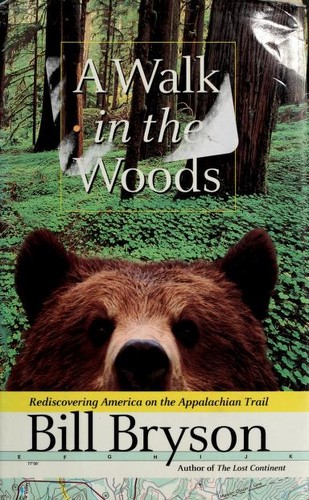
A Walk in the Woods

A Walk in the Woods

Bill Bryson · 1998

Bryson's hilariously honest account of attempting the Appalachian Trail with a wildly unprepared friend — a masterclass in writing about wilderness without pretension: self-deprecating, genuinely funny, laced throughout with natural history, conservation history, and a real love for the American backcountry.

humor tone storytelling cultural context
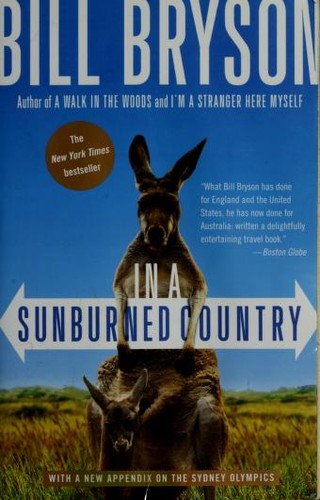
In a Sunburned Country

In a Sunburned Country

Bill Bryson · 2000

Bryson travels across Australia — a continent that is vast, arid, geologically ancient, and quietly full of things that will kill you — with his signature mix of warm humor, deep curiosity, and barely contained awe at the scale of the place. A model for writing about extreme landscapes without losing the comic thread.

tone storytelling humor knowledge
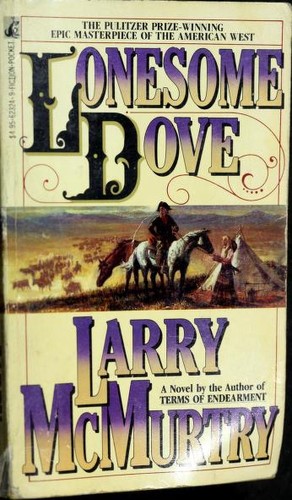
Lonesome Dove

Lonesome Dove

Larry McMurtry · 1985

McMurtry's Pulitzer Prize-winning epic follows a cattle drive from Texas to Montana — a vast, unsparing novel about loyalty, geography as fate, and the distance between the myth of the frontier and its actual grinding reality. The definitive American Western: enormous in scope, intimate in its attention to character.

storytelling cultural context tone
Zen and the Art of Motorcycle Maintenance

Zen and the Art of Motorcycle Maintenance

Robert M. Pirsig · 1974

A father and son ride motorcycles from Minnesota to California while Pirsig excavates the ruins of his own mind — specifically, a prior self who pursued the concept of 'Quality' to the point of madness. The most influential meditation on craft, attention, and the relationship between the traveler and the machine in American letters.

philosophy tone cultural context knowledge
Generation X

Generation X

Douglas Coupland · 1991

Three friends retreat to the California desert to swap apocryphal stories and escape the soul-crushing logic of careerism and brand culture. Coupland's debut coined 'McJob' and gave a generation its name — a portrait of people who chose smallness and experience over scale and status.

tone philosophy cultural context

Connected in the graph

  • theme/outdoor-voice
  • theme/trip-report-voice
  • theme/desert-philosophy
  • region/american-west
Verified 2026-04-15 · Sources: open-library · Confidence: partial