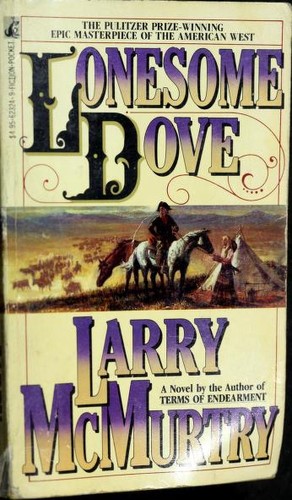
McMurtry's Pulitzer Prize-winning epic follows a cattle drive from Texas to Montana — a vast, unsparing novel about loyalty, geography as fate, and the distance between the myth of the frontier and its actual grinding reality. The definitive American Western: enormous in scope, intimate in its attention to character.
McMurtry spent most of his career arguing with the mythology of the American West, and Lonesome Dove is the book where the argument finally landed in the form of a nine-hundred-page novel that won the Pulitzer and, not incidentally, is one of the great pleasures of American reading. It's about a cattle drive from the Texas-Mexico border to Montana, and it follows two aging former Texas Rangers — Gus McCrae and Woodrow Call — as they push a herd three thousand miles through country that does not particularly care whether they make it. That's the plot. The book is about ten other things at the same time.
What McMurtry does that nobody else has quite pulled off is let the West be actually hard and actually boring and actually, occasionally, sublime, all in the same three pages. The long stretches where nothing happens except the herd moving north — those are the book. The violence, when it comes, is shocking because it's been deferred. The sublime moments, the sunsets on the high plains, the river crossings, are earned because McMurtry has made you sit through so many unexciting miles before you get there. That's the lesson for anybody writing about a landscape. Don't oversell. Let the dull miles be dull. The hit lands harder for it.
I bring this book up when somebody's trying to understand what a long river trip or a multi-week expedition actually feels like, as opposed to what it looks like on a trailer. Lonesome Dove is the closest thing in fiction to the texture of a real long trip. The boredom. The arguments. The strange intensities of small events. The way a piece of geography becomes part of your body by the time you've been in it for a month. McMurtry got that.
The characters are the other reason the book has held up. Gus and Call are one of the great double-acts in American fiction — one talky and sentimental, one silent and unreachable — and the book lets them be genuinely different people without either becoming a type. Around them is a cast of secondary characters who each get the novel to themselves for at least a chapter: the women, the Comanche raiders, the young hands, the guy who gets killed early and whose ghost haunts the rest of the trip. Nobody is wasted.
Read it in winter. Give it a month. Let the slow parts be slow. And when you come out the other end, your next western road trip will be quieter and better for it.