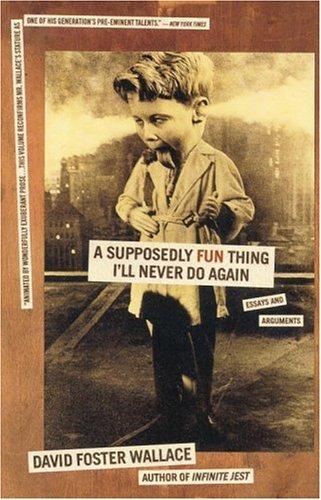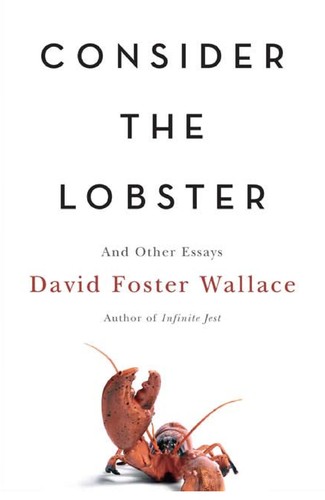
Wallace's second essay collection ranges from a piece on the Maine Lobster Festival (which turns into a moral inquiry into whether lobsters feel pain) to the 2000 McCain campaign to Kafka's humor to the Adult Video News Awards — each essay a demonstration that any subject, taken seriously enough, becomes a window into something large.
Wallace's second essay collection and, for my money, the better one. A Supposedly Fun Thing is the one people talk about, but Consider the Lobster is the one that's aged stranger — because the pieces in it keep turning out to be more prescient than they had any right to be. The title essay is the one everybody remembers: he goes to the Maine Lobster Festival to cover the festival, and ends up writing five thousand words on whether lobsters can feel pain. That's the move. Every piece in this book is the same move in a different costume.
He covers the 2000 McCain campaign and writes, in 2000, the most clear-eyed thing anybody has written about how modern American political media actually works. He reads the Oxford American Dictionary of American Usage and turns it into an essay about democracy, class, and why a grammar guide is never really about grammar. He goes to the Adult Video Awards. He writes about Kafka. He writes about the days after September 11 from a suburb. Every piece is a guy who has been asked to look at a thing, and who refuses to look at it the way everybody else is looking at it, and who won't let you look away either.
I bring this book up on the river in two specific contexts. First, when somebody starts a conversation about the ethics of what we're doing — permits, erosion, Leave No Trace, commercial vs. private, the whole argument. Wallace's framework for that kind of ethical thinking is in the title essay. He doesn't land on a conclusion. He shows you the shape of the question and refuses to let you off easy. That's the only honest way to do it.
Second, when a newer crew member is trying to write up a trip and can't figure out how to make the details matter. Wallace is the best teacher I know for the trick of taking a small observed thing and widening it until it contains a moral question. The lobster. The politician. The word in the dictionary. He turns the mundane into the consequential, and he does it without ever raising his voice. That's a technique a trip report writer can learn from.
Read the title essay first. Then Up, Simba. Then the McCain piece. By the time you get to the grammar essay, you'll trust him enough to follow him anywhere, even into a 60-page footnote about a dictionary.