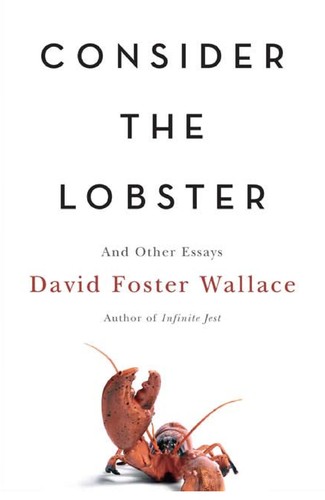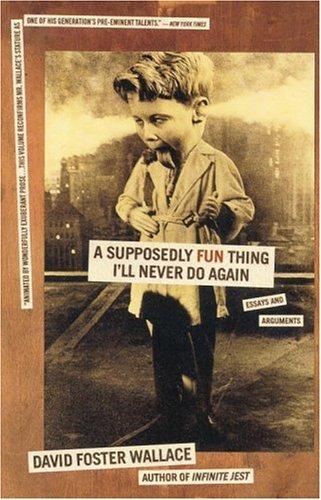
Seven essays that include a devastatingly funny account of a luxury cruise ship, a meditation on tennis and perfectionism, and a dispatch from the Illinois State Fair — all united by Wallace's relentless self-awareness, his footnote-addicted brain, and his genuine anxiety about what American leisure and entertainment are doing to us.
Here's what you need to know about Wallace. He goes on a luxury cruise because someone offers to pay him to write about it, and he comes back with probably the funniest piece of reporting anybody has filed from a vacation. But the trick is, underneath the jokes, he's doing a full-on phenomenological autopsy of leisure — why the thing that's supposed to make you happy produces a specific kind of low-grade despair, why the staff's forced cheerfulness feels like something out of a prison movie, why a five-star buffet can make you want to lie down in a dark room.
That's the move, and it's in every piece in this book. He goes to the Illinois State Fair and writes four thousand words on corn and cows and rural America and somehow none of it is condescending. He watches tennis and writes about obsession with a clarity that only a person who used to be a nationally ranked junior could pull off. He reads Kafka and decides the American reader has lost the ability to hear a joke unless it's wearing a neon sign. Every essay is a guy who thinks too much, noticing too much, catching the actual texture of what it feels like to be a conscious American at the turn of a century.
Bring this book up at the river when somebody starts a conversation about performative wilderness — the kind of trip that's more about the photos than the experience. Wallace was early to that problem. He could see, in 1995, that the infrastructure of leisure was designed to prevent experience rather than enable it. That's why people cry unexpectedly on day four of a river trip: the industrial-scale fun machine has finally stopped being loud enough to drown out the fact that you are, in fact, a person.
The footnotes are not optional. He's putting half of his best writing down there, half out of compulsion, half because the footnotes are themselves a form — they let a sentence have two directions at once. Read slow. Read with a pen. And accept that once you hear Wallace's voice, you can't unhear it. Every cruise ship ad, every resort brochure, every come-experience-the-real-Colorado pitch, you're going to hear the ghost-narrator pointing out what's underneath.
Use the title piece as the on-ramp. If you don't laugh at least six times in the first ten pages, something is wrong with you, not the book.