Skip to content
Book

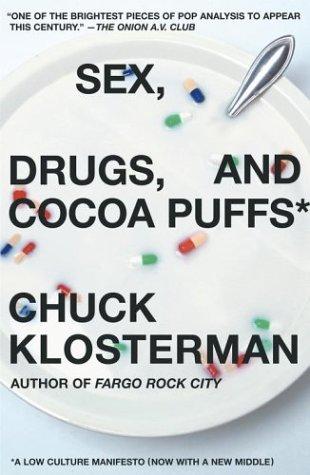
Sex, Drugs, and Cocoa Puffs

A Low Culture Manifesto

Cover of Sex, Drugs, and Cocoa Puffs

Klosterman's breakthrough uses cereal, soccer, The Sims, and Pamela Anderson as serious philosophical raw material — arguing that what a culture throws away tells you more about it than what it keeps. A manifesto for treating low culture with the same rigor you'd give to high culture.

Klosterman's breakthrough book, and the one where he established the mode he's been working in for twenty years now. Sex, Drugs, and Cocoa Puffs is a collection of essays about low-stakes pop culture subjects — cereal, The Real World, soccer, Pamela Anderson, internet dating, The Sims — treated with a seriousness that most critics reserve for high culture. The move is deceptively simple. Klosterman notices that the things a culture marks as trivial are often where its actual values are hiding, and he writes about those things with enough rigor that you come away thinking about them differently.

The famous essay is the opening one, on romantic comedies. Klosterman argues that watching too many romantic comedies has given a whole generation a warped expectation of how love actually works — that the cinematic logic of a misunderstanding followed by a chase at the airport has seeped into real lives in ways that make real relationships disappointing by comparison. The argument is funny. It is also, when you let it settle, alarmingly plausible. Every subsequent essay does something similar: takes a piece of pop culture most people would be embarrassed to think about, and shows that the embarrassment is the tell.

I bring this book up on the river when somebody's doing the thing where they're being snobbish about a thing somebody else loves. Klosterman's lens is useful here. The question isn't whether the thing is good. The question is what work the thing is doing for the person who loves it, and once you ask that question, a lot of judgment collapses into curiosity. That's a useful shift, and the book trains you to make it.

The voice is the other reason to read. Klosterman has the single driest comic instrument of any contemporary American essayist. He doesn't raise his voice. He doesn't strain for the joke. He lays down a sentence that has the joke embedded in the clause structure, and either you catch it or you don't, and he's not going to help. That restraint — combined with a willingness to write seriously about things other critics wouldn't touch — is the Klosterman signature, and this is the book where he figured out how to do it.

Read it when you need a mental break that isn't just vegetation. The pieces are short, self-contained, and individually satisfying in a way that long-form criticism often isn't. You can read one at camp, think about it while you're washing dishes, and by morning you have a new argument to bring to the crew. That's the book working.
Details

Genre
Essays, Cultural Criticism, Pop Culture
Subjects
pop culture as philosophy, sincerity and irony, media and identity, nostalgia as cultural force, meaning in disposable culture
Geography
American nowhere, suburban America
Tags
ISBN
0743236017
Story DNA Themes, moods, voice signals
Themes
the philosophical content of throwaway culture, sincerity as the only honest position, how we make identity from mass media, nostalgia as argument, the things we love uncritically are the most revealing things about us
Moods
playfully rigorous, pop-smart, confident, self-amused, culturally omnivorous
Motifs
low culture as Rosetta Stone for the culture, the guilty pleasure is actually just a pleasure, the argument that shouldn't work but does
Voice
the essay that begins with something absurd and ends somewhere true, arguing a position past the point of comfort, using 'I' without apology, treating the reader as someone who can handle rigor
Story function
voice-model, humor-anchor, cultural-context, tonal-counterweight
Setting
America as a media environment, the mundane as philosophical territory, anywhere culture is consumed
Why this book What it influences, what it teaches
Influence
tone, storytelling, humor, cultural-context
Knowledge
media studies, pop culture theory, American cultural identity, nostalgia studies
Concepts
low culture as philosophical material, sincerity as methodology, the throwaway object as cultural artifact
Use cases
applying Klosterman's low-culture rigor to river running culture — trip reports, camp food, boat brands, writing about the gear and media consumption of the DM audience without condescension, using pop-culture touchstones to explain river hydraulics or desert geology to a skeptical reader, making an argument about something outdoor culture doesn't take seriously but should
Related books
Fargo Rock City

Fargo Rock City

Chuck Klosterman · 2001

Klosterman's debut makes a deeply earnest case for heavy metal as the defining cultural experience of growing up isolated and rural in the 1980s — arguing that the music wasn't escapism but identity formation, and that what looks like bad taste from the outside can be the most honest thing about a person.

tone cultural context philosophy
A Supposedly Fun Thing I'll Never Do Again

A Supposedly Fun Thing I'll Never Do Again

David Foster Wallace · 1997

Seven essays that include a devastatingly funny account of a luxury cruise ship, a meditation on tennis and perfectionism, and a dispatch from the Illinois State Fair — all united by Wallace's relentless self-awareness, his footnote-addicted brain, and his genuine anxiety about what American leisure and entertainment are doing to us.

tone storytelling philosophy humor
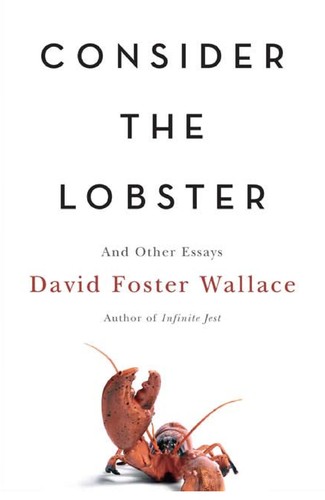
Consider the Lobster

Consider the Lobster

David Foster Wallace · 2005

Wallace's second essay collection ranges from a piece on the Maine Lobster Festival (which turns into a moral inquiry into whether lobsters feel pain) to the 2000 McCain campaign to Kafka's humor to the Adult Video News Awards — each essay a demonstration that any subject, taken seriously enough, becomes a window into something large.

tone philosophy storytelling cultural context
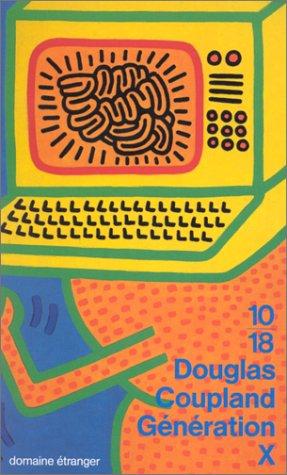
Generation X

Generation X

Douglas Coupland · 1991

Three friends retreat to the California desert to swap apocryphal stories and escape the soul-crushing logic of careerism and brand culture. Coupland's debut coined 'McJob' and gave a generation its name — a portrait of people who chose smallness and experience over scale and status.

tone philosophy cultural context
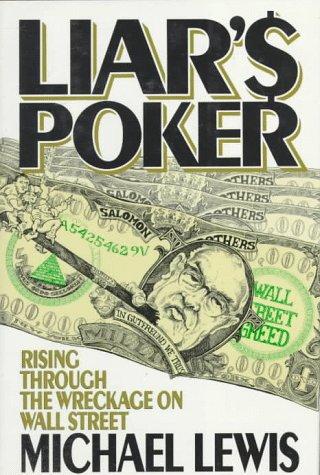
Liar's Poker

Liar's Poker

Michael Lewis · 1989

Michael Lewis's first-person account of his years at Salomon Brothers during the 1980s bond trading boom — a world of staggering excess, ritualized absurdity, and the slow realization that none of it means anything. A masterclass in using financial culture as a lens on human nature.

tone storytelling humor
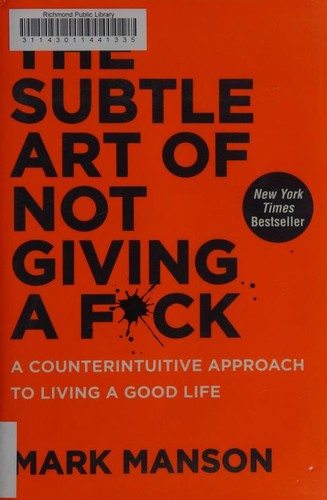
The Subtle Art of Not Giving a F*ck

The Subtle Art of Not Giving a F*ck

Mark Manson · 2016

A rejection of toxic positivity disguised as a self-help book — Manson argues that meaningful life requires choosing what to care about deliberately, not optimizing everything. More philosophically honest than the title suggests, it draws on Stoic and existentialist thought to make a case for values-driven suffering.

tone philosophy storytelling

Connected in the graph

  • theme/cultural-criticism
  • theme/comedy-as-criticism
  • theme/outdoor-voice
  • theme/gear-writing
  • theme/camp-culture
Verified 2026-04-15 · Sources: open-library · Confidence: partial