Skip to content
Book

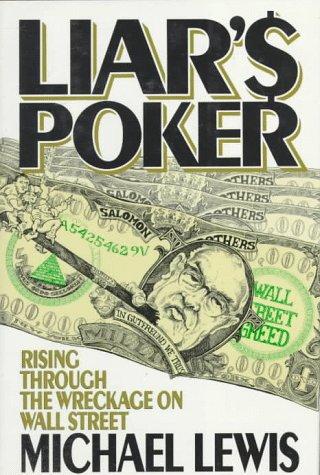
Liar's Poker

Cover of Liar's Poker

Michael Lewis's first-person account of his years at Salomon Brothers during the 1980s bond trading boom — a world of staggering excess, ritualized absurdity, and the slow realization that none of it means anything. A masterclass in using financial culture as a lens on human nature.

Michael Lewis wrote his first book about the two years he spent at Salomon Brothers on the 1980s trading floor, and almost forty years later it is still the one to read if you want to understand how a specific kind of American institutional culture actually works. Liar's Poker is short, funny, and extremely specific — Lewis walks you through the desks, the traders, the sales calls, the specific bond-market games that made people rich for reasons that had very little to do with intelligence or skill and very much to do with being in the right room at the right moment.

The reason the book is on the DM shelf is that Lewis's eye for institutional absurdity is the same eye you want trained on the Bureau of Reclamation, the Park Service, the permit office, the NOAA forecast office, any institution that shapes your life on the river. He notices what people in the room have stopped noticing. He notices the specific way a certain trader performs his confidence. He notices the ritualized language. He notices that the most senior people in the building usually don't understand what they are doing either — they are just better at seeming like they do. Once you have Lewis's lens, you can't not use it, and it becomes very useful.

I bring this book up at camp when somebody's trying to figure out how a regulatory or commercial system actually operates. Liar's Poker is the textbook case. The lesson isn't that Wall Street was corrupt, though it was. The lesson is that any large institution is a set of rituals performed by people who have mostly forgotten what the rituals were originally for, and that somebody who shows up with fresh eyes can see the machinery the insiders have gone blind to. That's a useful skill for anybody trying to navigate a public-lands permit process, a river-flow negotiation, or a water-rights argument.

The writing is the other reason to read it. Lewis is funny in a way most business writers are not, and the voice — dry, a little unforgiving, generous with the specific detail — is the voice he's been running for every subsequent book. If you liked Moneyball or The Big Short, this is the one where he figured out the approach. First-person, insider's-view, lots of named characters, a clear moral frame he never has to lecture you about. The Salomon specifics have aged. The method hasn't.

Read it the next time you have to deal with a bureaucracy and can't figure out why the decisions coming out of it make no sense. Lewis has a theory. The theory is usually right.

Details

Genre
Nonfiction, Finance, Memoir
Subjects
institutional absurdity, risk culture, masculinity and money, class performance, escape from prestige
Geography
New York, London, New Jersey
Tags
ISBN
0393027503
Story DNA Themes, moods, voice signals
Themes
institutional absurdity, the performance of confidence, risk as identity, escape from a system you see through, the gap between stated and actual values
Moods
sharp, ironic, gleefully absurdist, retrospectively horrified, entertained by disaster
Motifs
the rigged game, institutional hazing, money as abstraction, the moment you decide to leave
Voice
first-person immersion with ironic distance, the young man who knows he doesn't belong, anecdote as argument, specificity as comedy
Story function
voice-model, humor-anchor, tonal-counterweight, cultural-context
Setting
trading floors as psychological pressure chambers, systems that reward the wrong things, hierarchies built on bluff
Why this book What it influences, what it teaches
Influence
tone, storytelling, humor
Knowledge
institutional culture, risk psychology, class and status, financial history
Concepts
the big swinging dick archetype, liar's poker (bluffing as ritual), the rigged game you willingly enter
Use cases
writing about the type of DM reader who walked away from a finance or consulting career to run rivers, using the Lewis voice model for irreverent first-person expedition recaps, framing gear or logistics absurdity with comic specificity, describing the moment someone realizes their professional world is theater
Related books
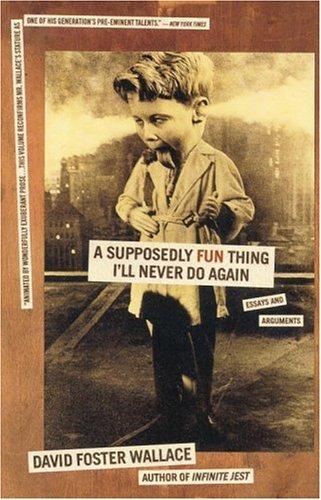
A Supposedly Fun Thing I'll Never Do Again

A Supposedly Fun Thing I'll Never Do Again

David Foster Wallace · 1997

Seven essays that include a devastatingly funny account of a luxury cruise ship, a meditation on tennis and perfectionism, and a dispatch from the Illinois State Fair — all united by Wallace's relentless self-awareness, his footnote-addicted brain, and his genuine anxiety about what American leisure and entertainment are doing to us.

tone storytelling philosophy humor
Sex, Drugs, and Cocoa Puffs

Sex, Drugs, and Cocoa Puffs

Chuck Klosterman · 2003

Klosterman's breakthrough uses cereal, soccer, The Sims, and Pamela Anderson as serious philosophical raw material — arguing that what a culture throws away tells you more about it than what it keeps. A manifesto for treating low culture with the same rigor you'd give to high culture.

tone storytelling humor cultural context
Generation X

Generation X

Douglas Coupland · 1991

Three friends retreat to the California desert to swap apocryphal stories and escape the soul-crushing logic of careerism and brand culture. Coupland's debut coined 'McJob' and gave a generation its name — a portrait of people who chose smallness and experience over scale and status.

tone philosophy cultural context
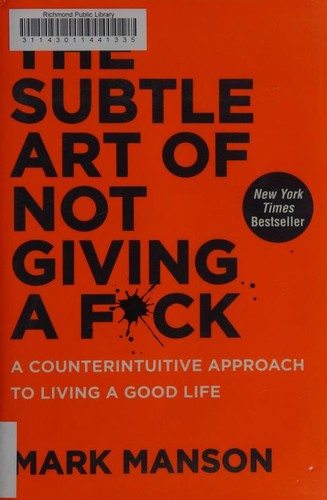
The Subtle Art of Not Giving a F*ck

The Subtle Art of Not Giving a F*ck

Mark Manson · 2016

A rejection of toxic positivity disguised as a self-help book — Manson argues that meaningful life requires choosing what to care about deliberately, not optimizing everything. More philosophically honest than the title suggests, it draws on Stoic and existentialist thought to make a case for values-driven suffering.

tone philosophy storytelling
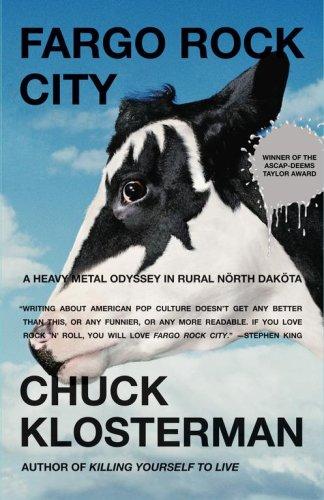
Fargo Rock City

Fargo Rock City

Chuck Klosterman · 2001

Klosterman's debut makes a deeply earnest case for heavy metal as the defining cultural experience of growing up isolated and rural in the 1980s — arguing that the music wasn't escapism but identity formation, and that what looks like bad taste from the outside can be the most honest thing about a person.

tone cultural context philosophy
Born Standing Up

Born Standing Up

Steve Martin · 2007

Martin's precise, unsentimental account of a decade of grinding craft — playing near-empty clubs, developing a deliberately absurdist act, and surviving the long ambiguous middle before everything worked. A memoir about obsessive mastery that happens to be about comedy, useful as a model for writing about any discipline that requires years of invisible apprenticeship.

tone storytelling philosophy

Connected in the graph

  • theme/comedy-as-criticism
  • theme/cultural-criticism
  • theme/outdoor-voice
  • theme/trip-report-voice
Verified 2026-04-15 · Sources: open-library · Confidence: partial