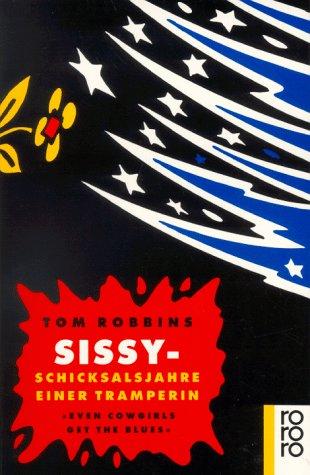
Sissy Hankshaw, born with outsized thumbs and an otherworldly gift for hitchhiking, travels through the American West in search of something the novel refuses to name tidily. Robbins's maximally digressive, spiritually curious, deliberately irreverent novel treats the West as a philosophical space rather than a backdrop.
So here's the premise, and you have to just go with it. A woman named Sissy Hankshaw is born with thumbs so large she becomes the greatest hitchhiker on the continent. From that setup, Tom Robbins writes a three-hundred-and-fifty-page novel that somehow contains a cattle ranch populated entirely by renegade cowgirls, a whooping crane sanctuary, a Native American mystic called the Chink, most of the seventies, and a bunch of long digressive passages where Robbins stops to tell you what he thinks about time, religion, capitalism, women, and thumbs specifically. It has no business working. It works.
The thing to understand about Robbins is that he's not trying to write a realist novel. He's trying to write a book that feels like the West actually feels when you're living in it — unreasonable, operatic, occasionally sacred, frequently funny, and governed by laws that aren't quite the laws in the rest of the country. Sissy's journey through Oregon, California, and the Dakotas has the texture of a specifically western kind of freedom, the kind where a person can reinvent themselves every six hundred miles because nobody out here is paying close enough attention to stop them.
I bring this book up at camp when somebody's getting too serious about whatever argument is happening around the fire. Robbins has a way of puncturing earnestness without being a jerk about it. The book is goofy in the way truly serious books can afford to be goofy — he's already done the spiritual work, so he can afford to be silly on the page. You can feel him enjoying himself, and that enjoyment is communicable.
The West in this book is a character, and it's the character I recognize most from actual long trips. Not scenic. Not cinematic. Weird. Full of people doing things that don't quite make sense to anybody who hasn't spent enough time in small towns between real cities. The gas station clerks, the drifters, the cattle-ranch prophets — Robbins got them right because he lived among them. If you've ever camped in a town that has one blinking red light and one bar, this book is recognizing you.
Read it the first time for the plot. Read it the second time for the digressions, which are the actual book. And don't be surprised if Sissy's thumbs become a working metaphor in your head for every weird thing you've ever loved about being out west with a full tank and no particular schedule.