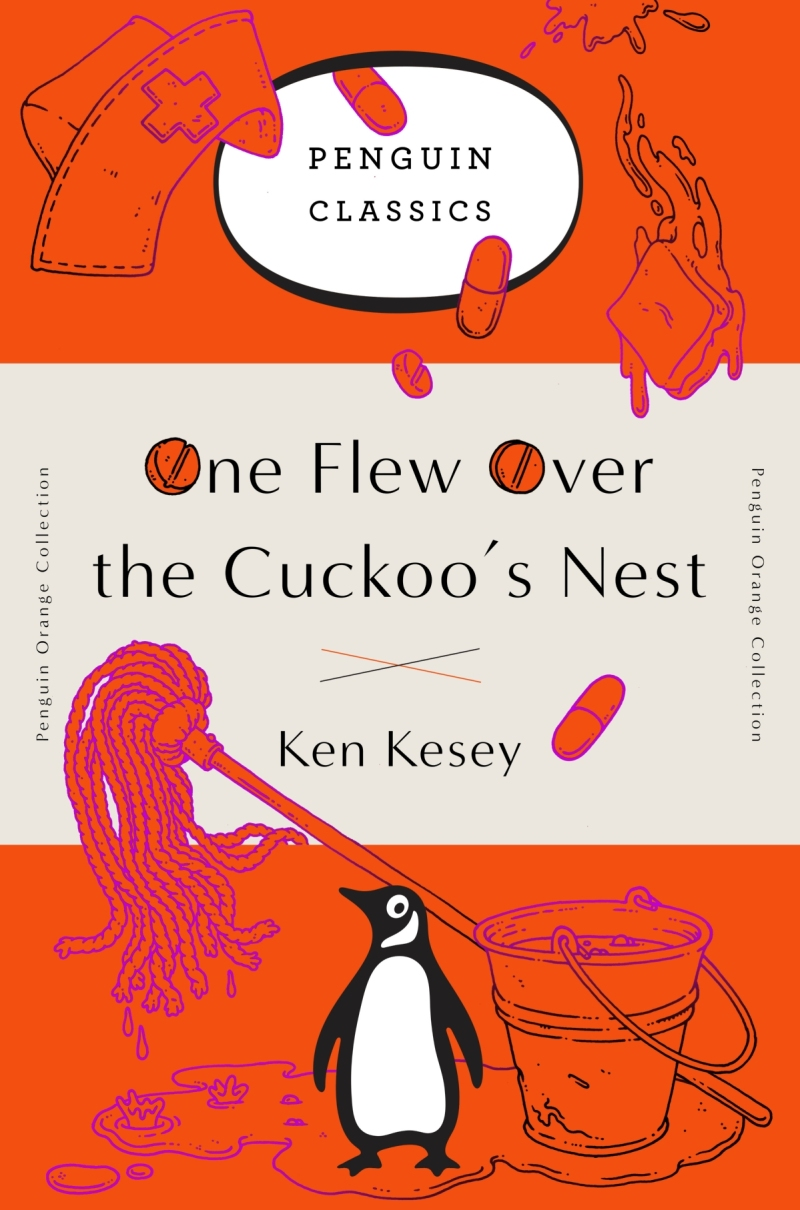
Narrated by the half-Native, half-hallucinating Chief Bromden, Kesey's novel pits the anarchic energy of Randle McMurphy against the totalizing logic of Nurse Ratched and the institution she runs. An extended meditation on power, freedom, sanity, and what it costs to refuse to be managed.
Kesey's novel is about a mental hospital, which is not where you'd expect to find a book that belongs on the Desert Maritime shelf. But Cuckoo's Nest is about something bigger than its setting — it's about the logic by which institutions organize human beings, and the ways a single unreasonable person can break that logic, and what the cost of breaking it turns out to be. Randle McMurphy checks himself in to escape a work-farm sentence, meets Nurse Ratched, and sets off the chain of events that the rest of the book works out with a slow inevitability that reads, forty-plus years later, as genuine tragedy.
The narration is the first thing to notice. The book is told by Chief Bromden, a half-Columbian River Indian who pretends to be deaf and mute so that the hospital will leave him alone. Kesey's decision to use Bromden as narrator — instead of McMurphy, instead of a neutral third-person — is the most important structural move in the book. What you get is a hallucinating outsider's view of an institution's internal logic, and the hallucination turns out to be more accurate than the hospital's official description of itself. That is the book's argument. The outsider sees what the institution is actually doing, because the institution has hypnotized everybody inside it into calling the dysfunction normal.
I bring this book up when the river conversation turns to authority, permits, rules. The question McMurphy is asking, and the question Cuckoo's Nest keeps open, is the question of what a person owes a system they can see is broken. McMurphy's answer is refusal, and the book is honest that refusal is expensive. Ratched doesn't lose. Neither does McMurphy, exactly. The book's ending is a small, specific liberation purchased at a specific price, and the cost is not abstract.
For anyone who has ever dealt with a bureaucracy that had decided what you were allowed to want — and that's most of us, by middle age — Cuckoo's Nest is the book that names the feeling. It names it with anger but also with a surprising amount of tenderness for the people inside the system. Nurse Ratched is not a cartoon. Her logic is internally coherent. The horror of the book is partly that she is good at her job.
Read it in a single sitting if you can. The book has a momentum that benefits from being ridden through. And when Bromden lifts the control panel at the end, you'll know what the gesture means, because Kesey has earned every inch of it.