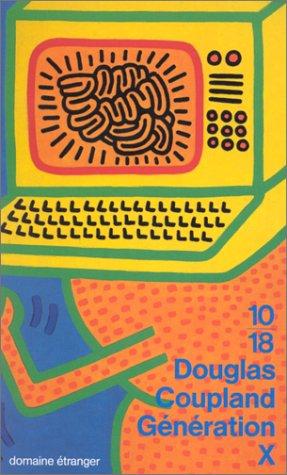
Three friends retreat to the California desert to swap apocryphal stories and escape the soul-crushing logic of careerism and brand culture. Coupland's debut coined 'McJob' and gave a generation its name — a portrait of people who chose smallness and experience over scale and status.
Three people in their late twenties move to a stucco apartment in Palm Springs to get out of the economy. That's the setup. They tell each other stories. The stories they tell each other turn into the novel. Douglas Coupland published Generation X in 1991 and ended up, by accident, both naming and defining the cultural moment it described — the generation that looked at the careerist treadmill built for them and said, quietly, no thanks, we're gonna be here in the desert for a while.
The device of the book is that the three narrators keep trading what Coupland calls bedtime stories — invented parables that keep bumping up against their actual lives. That structure lets the book talk about work and money and parents and brand culture without ever sounding like it's lecturing. Instead it feels like eavesdropping on three friends who have decided, together, that the stories you tell in your twenties become the stories you live in your thirties. Which, if you've watched yourself do this, is basically true.
The desert itself is the quiet fourth character. Palm Springs is retired-America desert — manicured, golf-coursed, artificial — but Coupland has his narrators keep slipping out to the real desert, the one just past the golf course, the one where nothing's been decorated. Some of the best passages are just three friends driving to an abandoned gas station outside Joshua Tree and sitting there. That's the book. People in their twenties go out into emptier land because the emptier land gives them room to think.
I bring this one up at camp when somebody's wrestling with a career decision that the river has made weirdly urgent. The desert does that. You come out of a long trip and the job you had when you launched stops fitting, and you can't quite explain why. Generation X is the book for that specific feeling. It doesn't tell you to quit. It tells you you're not the first person to feel the emptying-out, and it gives you a vocabulary for naming what's happening.
It's short. It's funny. It has cartoons in the margins that are still unaccountably good. And it's aged weirdly well — a lot of books that named a moment got stuck in the moment, but Generation X has outlasted the generation it named because the questions it's actually asking are older than that. Read it before the next time you disappear into the desert for longer than anyone expected.