Skip to content
Book

Fear and Loathing in Las Vegas

A Savage Journey to the Heart of the American Dream

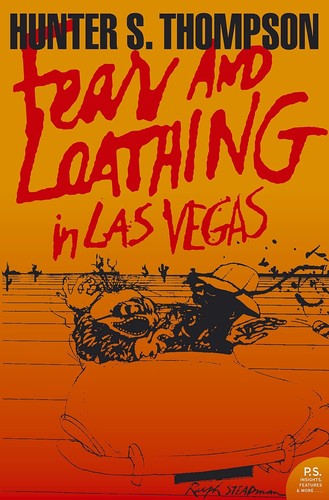
Cover of Fear and Loathing in Las Vegas

Thompson's hallucinatory account of a road trip through the Nevada desert — part journalism, part novel, entirely its own category. The founding document of gonzo journalism: total immersion in the subject, paranoid clarity about American culture, and the desert Southwest rendered as a fever dream that is somehow more accurate than straight reporting.

You already know what this book is. A lawyer and a journalist drive a rented convertible full of ether, mescaline, and a shaving kit of other chemicals from Los Angeles to Las Vegas, ostensibly to cover a motorcycle race. They don't really cover the race. They don't really cover anything. What Thompson does instead is write the book that invented a genre — gonzo journalism — and, under the cover of the drug jokes, delivers the most devastating document anybody has written about what happened to the sixties when the sixties ended.

The Vegas of this book is not a city. It's the desert in its most malignant form — an artificial oasis pumped full of money and ugliness, a place where the American promise has been turned into a slot machine and the slot machine doesn't pay. Thompson has been on the road long enough to see it clearly, and the drugs don't make him see wrong, they just strip away the cover he'd otherwise put on what he sees. The famous wave passage — the one about how you can almost see the high-water mark where the sixties broke and rolled back — is in here, and it's maybe the best single paragraph of prose about American disappointment ever written.

I bring this book up at the river because Thompson understood the desert as a place of consequence. When he's inside the Mint Hotel he's funny. When he's out on the open desert between Barstow and Vegas, he's something else — reverent isn't right, more like dead serious. The desert is what's real. The city is what America built to avoid having to look at the desert. That's a frame worth carrying on a trip through Nevada, Utah, or anywhere downstream of a big western engineered oasis.

The jokes hold up better than you'd expect. The politics are sharper than you remember. And the central move — a journalist telling the truth about America by making himself the absurd figure in the foreground — has been copied so many times since that it's easy to forget how radical it was in 1971. Thompson didn't invent the first-person narrator. He did invent a specific kind of first-person narrator who could be a ridiculous drug-mangled outlaw and also the only sane person in the room.

Read it before a trip to the desert. Read it on a red-eye. Read it aloud to a crew on a long shuttle drive. And pay attention to the quiet passages between the explosions — that's where Thompson buried the actual argument.
Details

Genre
Gonzo Journalism, Fiction, Cultural Criticism
Subjects
American Dream, the 1960s counterculture, the Nevada desert, journalism as participation, the West as myth and reality
Geography
Nevada, Las Vegas, American Southwest
Tags
ISBN
0679785892

Where to buy

Some links are affiliate — we may earn a commission at no cost to you. See merchants.

Story DNA Themes, moods, voice signals
Themes
the desert as altered state, the American West as both promise and delusion, total immersion as epistemology, the moment when the wave broke, paranoia as accurate perception
Moods
hallucinatory, savage, elegiac, furiously funny, paranoid, weirdly precise
Voice
acceleration as prose rhythm, the specific brand name as cultural indictment, the list of supplies as character revelation, fear and laughter as the same reflex, the aside that contains the whole argument
Story function
voice-model, cultural-context, myth-builder, tonal-counterweight, humor-anchor
Setting
the desert as psychological landscape, the American West as the place where dreams go to be tested and usually fail, the highway as narrative engine
Why this book What it influences, what it teaches
Influence
tone, storytelling, cultural-context, humor
Knowledge
gonzo journalism, American counterculture, the American West, journalism-as-participation, the desert Southwest
Concepts
total immersion journalism, the narrator as unreliable but honest, the wave metaphor for cultural moments, acceleration as prose rhythm
Use cases
River trip reports that use Thompson's technique of treating the specific, absurd logistics of an expedition — the shuttle, the permit, the pile of gear — as cultural material worth examining, Any DM piece set in the desert Southwest that needs to capture the psychological weight of the landscape without becoming reverential — Thompson's desert is real and surreal simultaneously, Expedition culture essays about the gap between the outdoor-industry ideal and what actually happens at camp on day four, Gear writing that uses the Thompson inventory technique — the list of what was packed, and what it says about the person who packed it, Trip reports that need to locate a specific moment in a larger American or cultural context — Thompson's 'wave breaking' as a structural device for wilderness writing
Related books
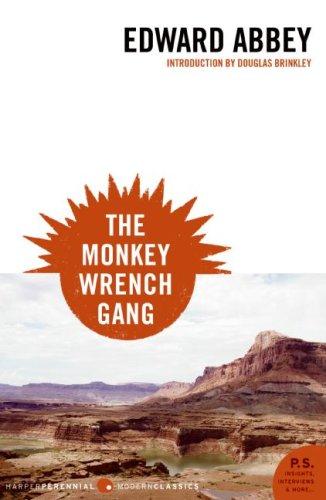
The Monkey Wrench Gang

The Monkey Wrench Gang

Edward Abbey · 1975

A gang of desert outlaws wage a reckless, irreverent war against the machines carving up the American Southwest.

tone philosophy cultural context
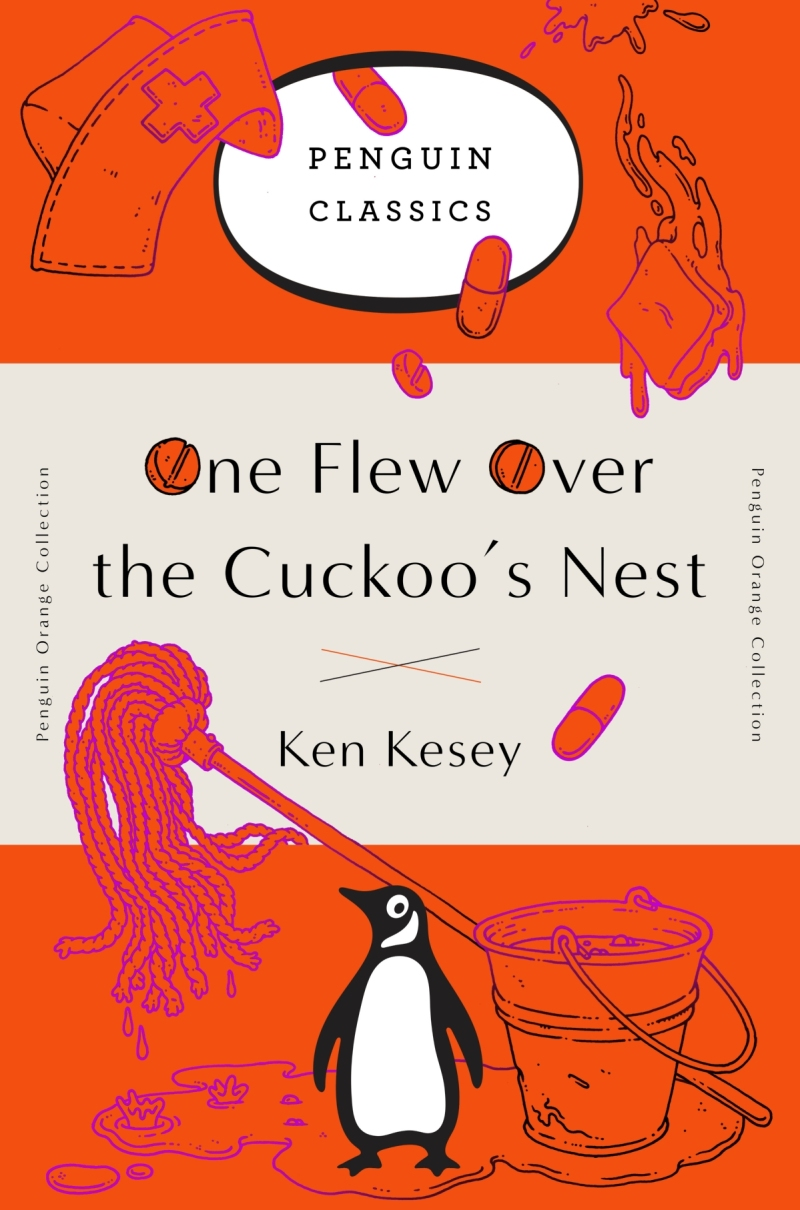
One Flew Over the Cuckoo's Nest

One Flew Over the Cuckoo's Nest

Ken Kesey · 1962

Narrated by the half-Native, half-hallucinating Chief Bromden, Kesey's novel pits the anarchic energy of Randle McMurphy against the totalizing logic of Nurse Ratched and the institution she runs. An extended meditation on power, freedom, sanity, and what it costs to refuse to be managed.

philosophy cultural context storytelling tone
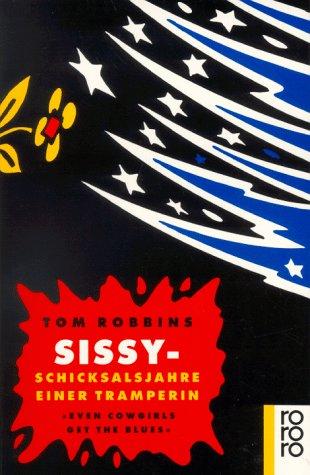
Even Cowgirls Get the Blues

Even Cowgirls Get the Blues

Tom Robbins · 1976

Sissy Hankshaw, born with outsized thumbs and an otherworldly gift for hitchhiking, travels through the American West in search of something the novel refuses to name tidily. Robbins's maximally digressive, spiritually curious, deliberately irreverent novel treats the West as a philosophical space rather than a backdrop.

tone philosophy storytelling humor
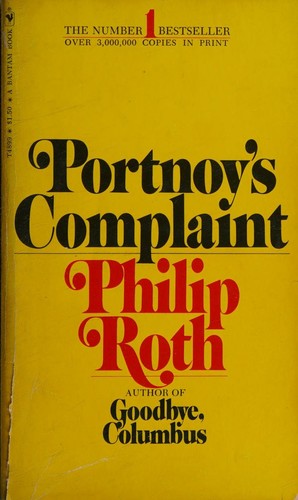
Portnoy's Complaint

Portnoy's Complaint

Philip Roth · 1969

One long confessional monologue delivered to a silent psychiatrist — furious, brilliantly funny, and pathologically self-aware. Roth's narrator understands exactly what is wrong with him and is completely helpless to change it, which turns out to be the funniest and most honest thing a character can do.

tone storytelling humor
How to Talk Dirty and Influence People

How to Talk Dirty and Influence People

Lenny Bruce · 1965

Lenny Bruce's autobiography — part confessional, part comedy manifesto, part indictment of American hypocrisy. Written while he was being prosecuted for obscenity, it reads as both a life story and an argument about what language, truth, and comedy are actually for.

tone humor philosophy cultural context
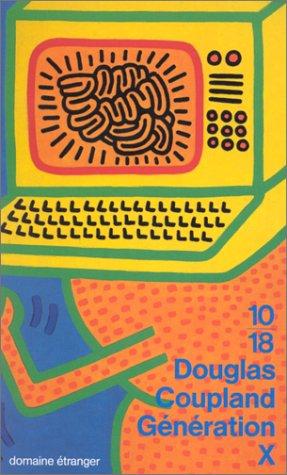
Generation X

Generation X

Douglas Coupland · 1991

Three friends retreat to the California desert to swap apocryphal stories and escape the soul-crushing logic of careerism and brand culture. Coupland's debut coined 'McJob' and gave a generation its name — a portrait of people who chose smallness and experience over scale and status.

tone philosophy cultural context

Connected in the graph

  • theme/counterculture
  • theme/comedy-as-criticism
  • theme/trip-report-voice
  • theme/outdoor-voice
  • region/american-west
Verified 2026-04-15 · Sources: open-library · Confidence: partial