Carlin's written comedy at full force — short, vicious observations on language, consumer culture, bureaucratic absurdity, and the self-seriousness of people who could use a hard look in the mirror. The page format lets the ideas land harder than the stage versions; nothing is softened.
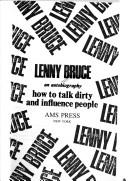
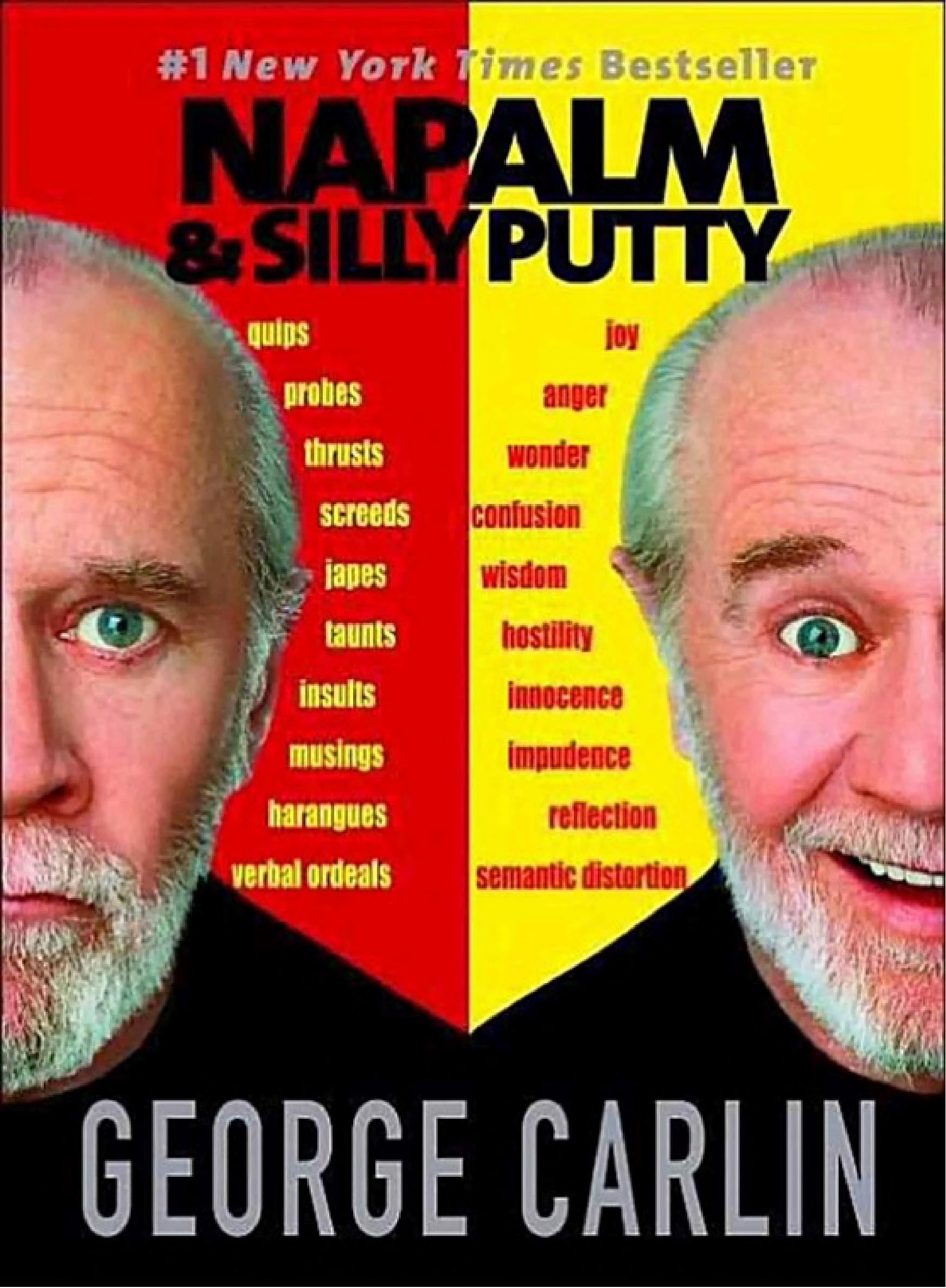
George Carlin wrote, toward the end of his life, a series of collections of his written comedy, and Napalm & Silly Putty is one of the best of them. Carlin was an essayist in the Lenny Bruce lineage but faster, angrier, more tightly-wound on the page. The book is short bursts — observations, riffs, lists, sustained paragraphs of pure irritation about specific modern idiocies — and it moves fast. You can pick it up for ten minutes and put it down and come back. That fragmentary structure is the book's pleasure.
The subjects are the ones Carlin spent his career on: language, consumer culture, bureaucratic absurdity, the self-seriousness of people who could use a hard look in the mirror. He is brutal about America. He is brutal about the specific stupidities of advertising, corporate communication, political euphemism. He is brutal, in a weirdly tender way, about aging. The through-line of the book is a man in his sixties who has stopped pretending to be polite because he has run out of time to pretend, and who is having, you can tell, a very good time being done with the pretending.
I bring Carlin up at the river when somebody gets to complaining about some specific corporate or governmental piece of absurdity — a permit rule, a signage choice at a launch ramp, a marketing campaign for something a river doesn't need. Carlin is the patron saint of that complaint. He has already filed the piece. He has already named the underlying problem. You can just point to him and everybody at the fire understands what you mean.
The material on language is the book's most durable part. Carlin believed — and argued persuasively — that the corruption of language precedes and enables the corruption of thought. When a company calls layoffs a right-sizing, when a politician says kinetic military action, when a river gauge gets replaced with a modeling algorithm — Carlin would have a bit for all of it. The bits are still funny. They are also, if you're paying attention, kind of a toolkit for noticing what's happening in your own daily reading.
Read a few pieces at a time. Keep it by the bed. And accept that after a while, you will start doing Carlin-like riffs on your own — in your head, at the river, at the post office — and you will be correct to do so, because the world has not run out of things that deserve the Carlin treatment, even as the bits about answering machines and Blockbuster Video have aged into period pieces.