Skip to content
Book

Me Talk Pretty One Day

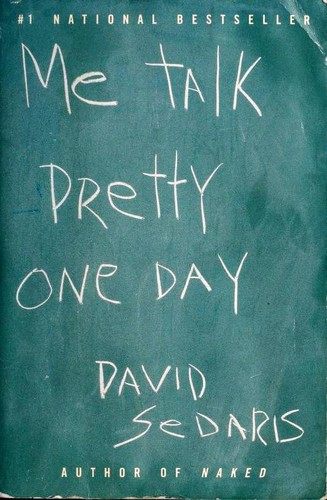
Cover of Me Talk Pretty One Day

Sedaris at the height of his powers — the first half set in America (art school, siblings, odd jobs), the second in France attempting to learn the language and failing spectacularly. A masterclass in building a deeply funny, warmly human persona from the raw material of one's own inadequacy.

Sedaris's third book, and the one where everything comes together. Me Talk Pretty One Day is two halves — the first in America covering art school and siblings and miscellaneous failures of adulthood, the second in France attempting to learn the language and failing in ways that would be humiliating if they weren't so funny. The title is a line from a French-class classmate trying to conjugate a future tense, and the book builds outward from that moment into a sustained meditation on what it's like to be bad at something as an adult, in public, for years.

The linguistic material is the gold. Sedaris on French grammar is comic writing at the highest level because he's genuinely inside the experience — he moved to Paris, he took the classes, he studied with a sadistic teacher whose character-assassinations make up some of the book's best passages. What you get is a comedian explaining the specific humiliation of being unable to form a sentence, and by extension, a meditation on how much of adult identity is built on the assumption that we know how to talk. Take the talking away and the person underneath is, Sedaris suggests, still the same ridiculous creature they always were, just without the cover.

I hand this book to people before any long international trip. Especially any trip where they'll be trying to operate in a language that isn't theirs. Sedaris is a reassurance. You are going to be stupid. You are going to embarrass yourself. You are going to say something in public that makes a seven-year-old laugh at you, and the seven-year-old will be right. Sedaris has been there, professionally, and his book is a preemptive giving of permission to be the idiot you are going to be.

The American half is worth its own attention. Sedaris on his sister Amy is some of the best writing about siblings in any contemporary memoir. Sedaris on his father's jazz records. Sedaris on a methamphetamine-fueled art-school phase. The specific essays about his family are calibrated, polished, and funnier on the tenth reread. He's doing genuine craft in there — the pieces are short but they're tightly constructed, and you can feel him knowing exactly where each joke is landing.

Read it slowly. Read it in a tent at the end of a long day. If you find yourself laughing loud enough that somebody asks you what's so funny, that is a feature, not a bug, and Sedaris would be pleased.
Details

Genre
Essays, Humor, Memoir
Subjects
language and belonging, expatriate life, American identity abroad, family, the comedy of failure
Geography
New York, North Carolina, Paris, Normandy
Tags
ISBN
0316776963
Story DNA Themes, moods, voice signals
Themes
the comedy of competence failure, belonging through incompetence, language as identity, the American abroad as comic type, emotional honesty inside comedy
Moods
warm, funny, self-deprecating, occasionally devastating, deeply humane
Motifs
incompetence as the entry point to honesty, the foreign place that clarifies home, the reader laughing and then realizing they're sad
Voice
building sympathy through self-undermining, the anecdote that turns into something true, humor as intimacy, the emotional gut-punch earned through comedy
Story function
voice-model, humor-anchor, tonal-counterweight, character-pressure
Setting
foreign territory where you don't speak the language, anywhere you are clearly out of your depth, new environments that expose old selves
Why this book What it influences, what it teaches
Influence
tone, humor, storytelling
Knowledge
comedic memoir, cultural displacement, language acquisition, personal essay craft
Concepts
warmth-inside-comedy as voice signature, the anecdote as unit of truth, incompetence as reader intimacy device
Use cases
writing about first-time river trips where everything goes wrong with warmth and precision, building a DM narrator persona who is simultaneously expert and self-mocking, writing about the experience of being new to canyon country — the language you don't yet speak, turning a logistical nightmare into a story that ends with something true
Related books
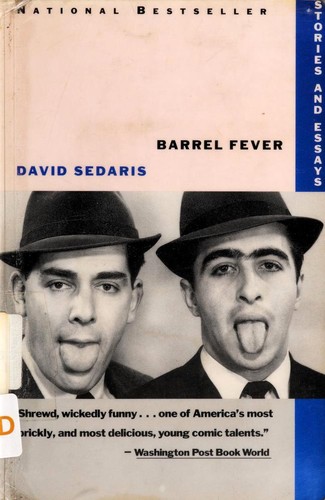
Barrel Fever

Barrel Fever

David Sedaris · 1994

Sedaris's debut collection mixes caustic personal essays with dark short fiction, introducing his signature voice: self-lacerating, absurdly specific, socially horrified, and funnier than it has any right to be. The fiction pieces in particular show a writer willing to go somewhere genuinely uncomfortable.

tone humor storytelling
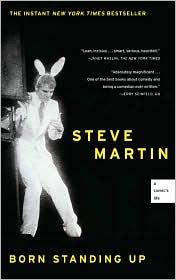
Born Standing Up

Born Standing Up

Steve Martin · 2007

Martin's precise, unsentimental account of a decade of grinding craft — playing near-empty clubs, developing a deliberately absurdist act, and surviving the long ambiguous middle before everything worked. A memoir about obsessive mastery that happens to be about comedy, useful as a model for writing about any discipline that requires years of invisible apprenticeship.

tone storytelling philosophy
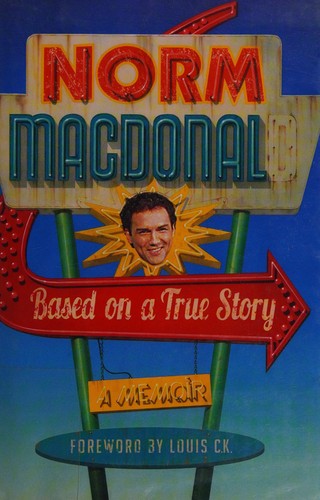
Based on a True Story

Based on a True Story

Norm Macdonald · 2016

Macdonald's 'memoir' that is simultaneously a novel, a meditation on death, and a serious philosophical inquiry into the difference between a story and the truth. One of the strangest books a comedian has produced — structured around the joke as the only honest response to mortality, and the lie as the only honest form of autobiography.

tone storytelling humor philosophy
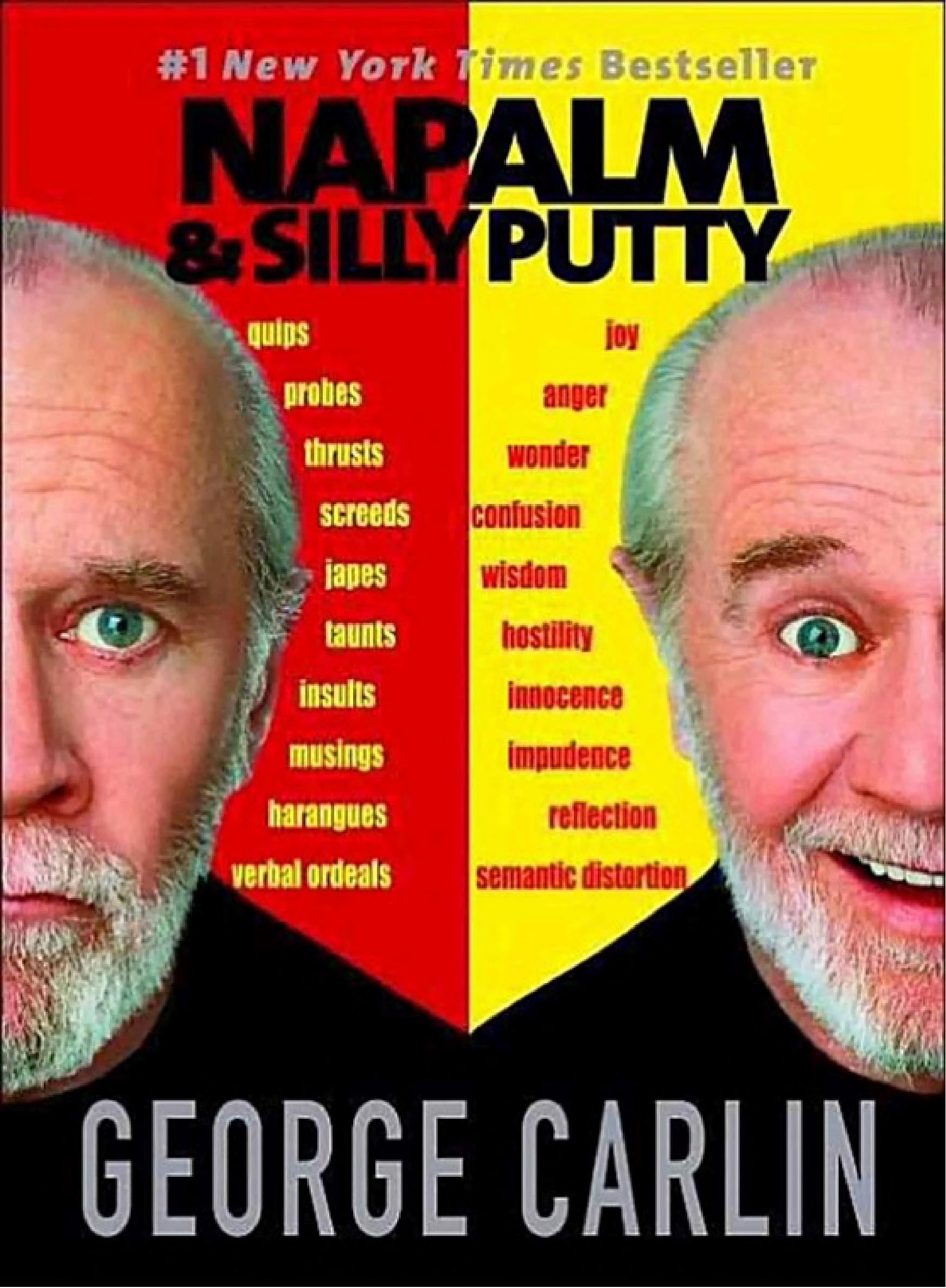
Napalm & Silly Putty

Napalm & Silly Putty

George Carlin · 2001

Carlin's written comedy at full force — short, vicious observations on language, consumer culture, bureaucratic absurdity, and the self-seriousness of people who could use a hard look in the mirror. The page format lets the ideas land harder than the stage versions; nothing is softened.

tone humor cultural context
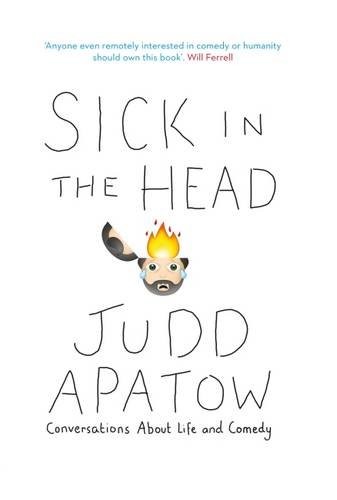
Sick in the Head

Sick in the Head

Judd Apatow · 2015

Thirty years of Apatow's interviews with comedians — from a teenage Apatow with a tape recorder interviewing Carlin and Seinfeld, to career-peak conversations with Louis C.K., Lena Dunham, and others. A book about obsession, apprenticeship, and the specific compulsion that drives people to be funny for a living.

storytelling cultural context humor
In a Sunburned Country

In a Sunburned Country

Bill Bryson · 2000

Bryson travels across Australia — a continent that is vast, arid, geologically ancient, and quietly full of things that will kill you — with his signature mix of warm humor, deep curiosity, and barely contained awe at the scale of the place. A model for writing about extreme landscapes without losing the comic thread.

tone storytelling humor knowledge

Connected in the graph

  • theme/comedy-as-criticism
  • theme/trip-report-voice
  • theme/outdoor-voice
  • theme/camp-culture
Verified 2026-04-15 · Sources: open-library · Confidence: partial