Skip to content
Book

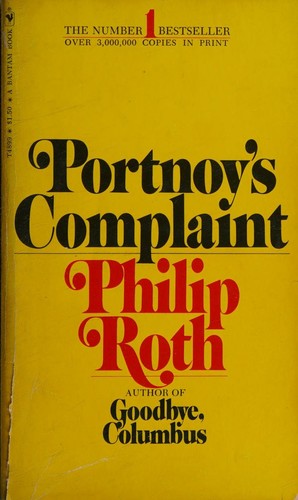
Portnoy's Complaint

Cover of Portnoy's Complaint

One long confessional monologue delivered to a silent psychiatrist — furious, brilliantly funny, and pathologically self-aware. Roth's narrator understands exactly what is wrong with him and is completely helpless to change it, which turns out to be the funniest and most honest thing a character can do.

Philip Roth's breakthrough novel, and a book that is still, more than fifty years after publication, one of the funniest and most uncomfortable sustained performances in American literature. Portnoy's Complaint is a single confessional monologue delivered by Alexander Portnoy to his silent psychiatrist. It runs somewhere north of 250 pages. It is all one voice. And that voice — furious, filthy, brilliantly self-aware, genuinely ashamed — is the voice Roth used to open up a whole region of permissible subject matter for American fiction.

The book is structured like a specific kind of comic complaint. Portnoy cannot stop talking about his mother, his father, his complicated relationship with his body, his girlfriend, his guilt about his girlfriend, his guilt about his guilt. The mode is confession, but the psychology is theatrical — Portnoy is a man who understands exactly what is wrong with him and is completely unable to stop doing any of it. That gap, between self-knowledge and self-control, is where the book lives. Roth makes it catastrophically funny, and also, by the end, sadder than you'd expect a comic novel to be allowed to be.

I bring this book up when somebody starts a conversation about the confession as a literary form. Portnoy's Complaint is the case study. It works because Roth refuses to let the confession be a confession — Portnoy is performing, he knows he is performing, the psychiatrist is a prop, and the whole book is actually a one-man show about a man who is addicted to the form of his own self-examination. That is a different thing than an honest confession, and the novel is about the difference. Which has applications anywhere you encounter somebody who is too good at telling on themselves.

The prose is extraordinary. Roth's sentences have a specific breathlessness to them that is, I think, genuinely new in American fiction. He's using the full range of Jewish-American speech — Yiddish-inflected English, Philly-neighborhood cadence, the long run-on kvetch — and turning it into a prose instrument capable of things standard novelistic English can't do. Writers who came after Roth inherited this. You can hear it in Lethem, in Chabon, in half a dozen younger novelists who don't always know they're working in Roth's voice.

Read it when you are not at the river. It is an indoor book. But it will change what you consider possible on the page, and that change travels with you everywhere, including to the next campfire conversation about what stories are really for.
Details

Genre
Fiction, Satire, American Literature
Subjects
interiority, self-consciousness, American Jewish identity, desire and guilt, confessional form
Tags
ISBN
0394441982

Where to buy

Some links are affiliate — we may earn a commission at no cost to you. See merchants.

Story DNA Themes, moods, voice signals
Themes
the comedy of self-knowledge without self-control, desire as narrative engine, the confession as performance, the gap between understanding and acting, language as the medium of identity
Moods
furious, funny, overwrought, bracingly honest, operatic
Voice
the rhetorical question that answers itself badly, escalation as structural principle, self-accusation and self-defense in the same breath, the parenthetical as emotional safety valve, grandiosity undercut by specificity
Story function
voice-model, humor-anchor, philosophical-anchor, tension-builder
Setting
interior monologue as landscape — the mind is the terrain
Why this book What it influences, what it teaches
Influence
tone, storytelling, humor
Knowledge
confessional literature, psychoanalytic structure, Jewish-American literary tradition, comic fiction technique, interiority as form
Concepts
the unreliable narrator who knows he's unreliable, confession as performance, the monologue as argument with oneself, humor as the only honest response to self-knowledge
Use cases
Trip report interiority — the internal monologue of a boater approaching a big rapid, oscillating between bravado and terror with full self-awareness of both, Expedition planning essays that honestly describe the gap between what you intend to do and what you actually do, in the same voice, Gear essays written as confession — the acquisition impulse dissected with full awareness that dissecting it doesn't stop it, River section writing that uses escalating rhetorical self-consciousness to convey the emotional texture of a place without sentimentality, Any DM piece that benefits from a narrator who is simultaneously the expert, the fool, and the person narrating both — the Roth double-bind as editorial voice
Related books
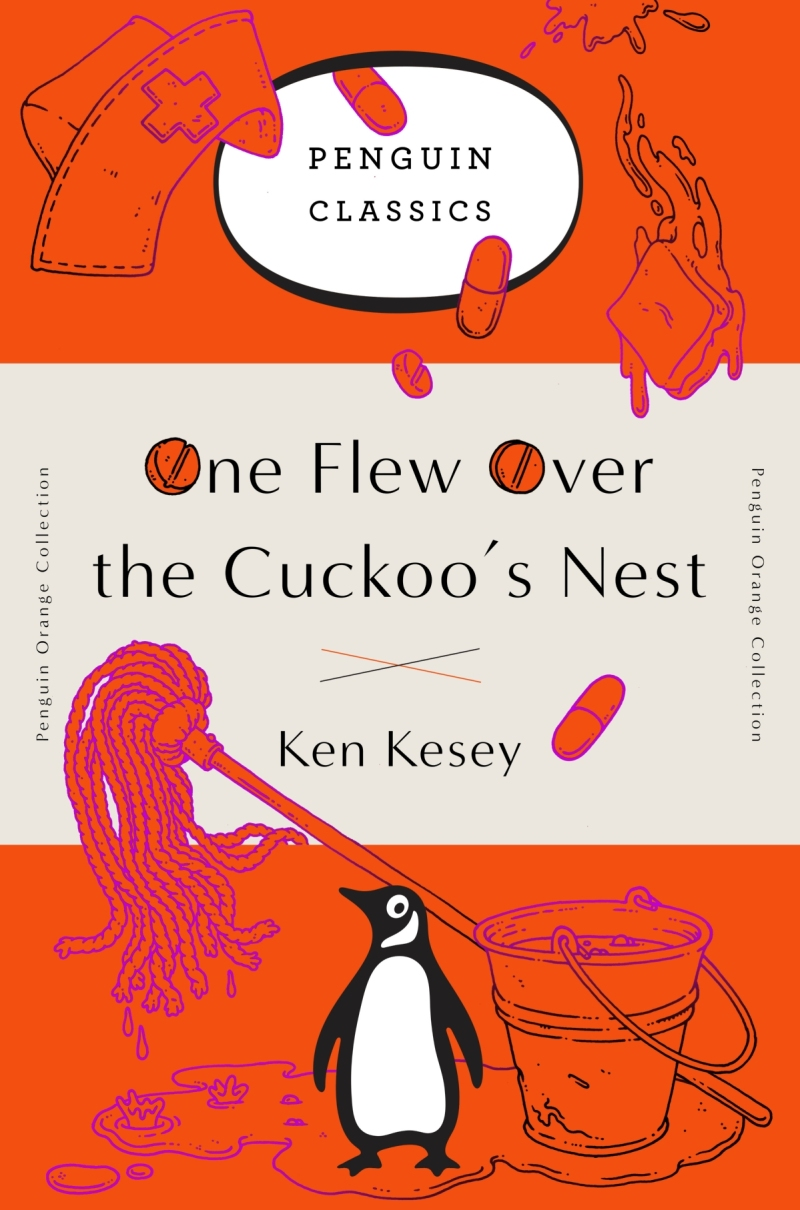
One Flew Over the Cuckoo's Nest

One Flew Over the Cuckoo's Nest

Ken Kesey · 1962

Narrated by the half-Native, half-hallucinating Chief Bromden, Kesey's novel pits the anarchic energy of Randle McMurphy against the totalizing logic of Nurse Ratched and the institution she runs. An extended meditation on power, freedom, sanity, and what it costs to refuse to be managed.

philosophy cultural context storytelling tone
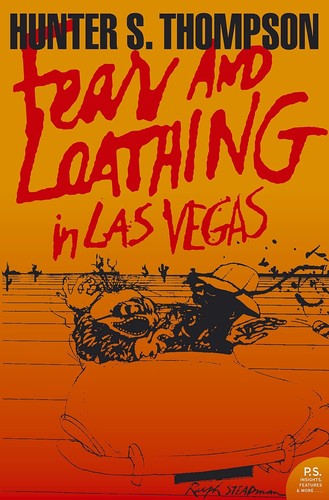
Fear and Loathing in Las Vegas

Fear and Loathing in Las Vegas

Hunter S. Thompson · 1971

Thompson's hallucinatory account of a road trip through the Nevada desert — part journalism, part novel, entirely its own category. The founding document of gonzo journalism: total immersion in the subject, paranoid clarity about American culture, and the desert Southwest rendered as a fever dream that is somehow more accurate than straight reporting.

tone storytelling cultural context humor
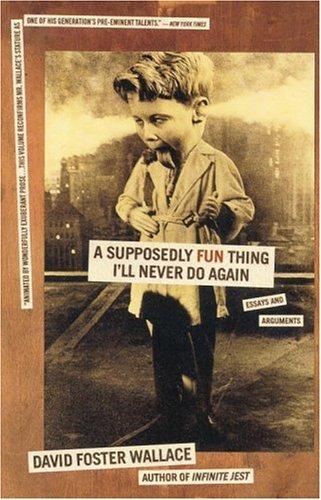
A Supposedly Fun Thing I'll Never Do Again

A Supposedly Fun Thing I'll Never Do Again

David Foster Wallace · 1997

Seven essays that include a devastatingly funny account of a luxury cruise ship, a meditation on tennis and perfectionism, and a dispatch from the Illinois State Fair — all united by Wallace's relentless self-awareness, his footnote-addicted brain, and his genuine anxiety about what American leisure and entertainment are doing to us.

tone storytelling philosophy humor
How to Talk Dirty and Influence People

How to Talk Dirty and Influence People

Lenny Bruce · 1965

Lenny Bruce's autobiography — part confessional, part comedy manifesto, part indictment of American hypocrisy. Written while he was being prosecuted for obscenity, it reads as both a life story and an argument about what language, truth, and comedy are actually for.

tone humor philosophy cultural context
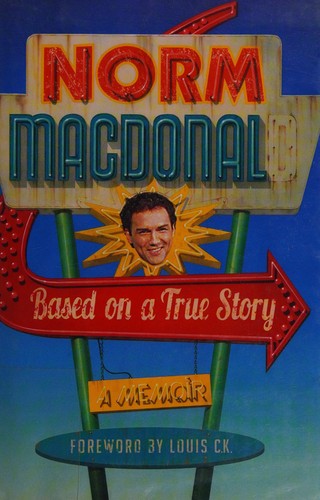
Based on a True Story

Based on a True Story

Norm Macdonald · 2016

Macdonald's 'memoir' that is simultaneously a novel, a meditation on death, and a serious philosophical inquiry into the difference between a story and the truth. One of the strangest books a comedian has produced — structured around the joke as the only honest response to mortality, and the lie as the only honest form of autobiography.

tone storytelling humor philosophy
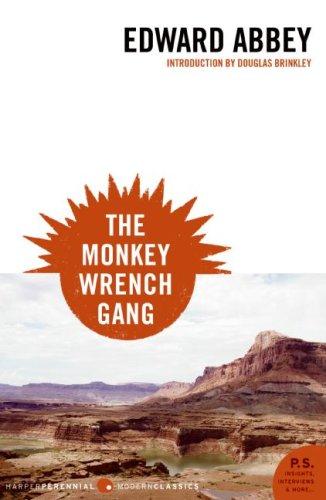
The Monkey Wrench Gang

The Monkey Wrench Gang

Edward Abbey · 1975

A gang of desert outlaws wage a reckless, irreverent war against the machines carving up the American Southwest.

tone philosophy cultural context

Connected in the graph

  • theme/comedy-as-criticism
  • theme/cultural-criticism
  • theme/outdoor-voice
  • theme/trip-report-voice
Verified 2026-04-15 · Sources: open-library · Confidence: partial