Skip to content
Book

The Puebloan Past and Present of the Colorado Plateau

Cover of The Puebloan Past and Present of the Colorado Plateau

A scholarly regional survey of Ancestral Puebloan occupation across the Colorado Plateau — covering architecture, land use, migration, and the deep continuity between ancient and living Pueblo peoples. Note: exact bibliographic identity of this volume is uncertain; treat as representative of the University of Utah Press Colorado Plateau archaeology series.

A scholarly survey of Ancestral Puebloan occupation of the Colorado Plateau, and the book to have on the shelf when the question of who lived here, for how long, and in what relationship to the people who live here now comes up in a conversation at camp. Where Plog's Ancient Peoples is the general Southwest overview, this book zeroes in specifically on the Colorado Plateau — the canyons, the mesa tops, the cliff dwellings, the outlying farms, the major centers from Chaco to Mesa Verde to Hovenweep. The specificity is the value.

The architectural material is particularly strong. The book walks through the major site types — great houses, unit pueblos, cliff dwellings, tower complexes — with diagrams, photographs, and the archaeological reasoning for how each site is interpreted. You come out of the reading able to look at a ruin on the landscape and make a reasonable guess at its period, its likely function, and its place in the broader settlement pattern. That is a specific literacy that very few visitors to the region have, and having it will change every hike you take in canyon country afterward.

I pull this book out before any trip that will pass Ancestral Puebloan sites — which, on the plateau, is most trips. The Escalante, the San Juan, Grand Gulch, Cedar Mesa, the loops around Bears Ears. Reading the relevant regional chapter before a trip means you arrive at the sites with the interpretive framework already loaded. The granary on the ledge is not just a ruin. It is part of an agricultural system you can reconstruct. The petroglyph panel is part of an ongoing tradition whose continuity has been documented. The difference between looking at a site cold and looking at it with the book's framework is, frankly, the difference between tourism and genuine encounter.

The connection to living Pueblo peoples is a throughline. The book does not treat Ancestral Puebloan archaeology as a disconnected artifact. The contemporary Hopi, Zuni, and Rio Grande Pueblo communities are treated as the direct descendants they are, and their oral histories and continuing relationship to specific sites is part of how the book reads the archaeology. That orientation is now standard in the discipline, but the book was early enough to be part of why it became standard, and you can feel the care of the framing.

Keep this one on the shelf next to Plog and Childs. The three together give you the working library for understanding the deep human history of the Colorado Plateau, and the plateau reads differently once that library is in your head, forever. Every visit after is a denser visit, which is the point.
Details

Genre
Archaeology, Anthropology, Native American History
Subjects
Ancestral Puebloan archaeology, Pueblo cultural continuity, Colorado Plateau land use, prehistoric architecture, Indigenous migration
Geography
Colorado Plateau, Four Corners, Utah, Arizona, New Mexico, Colorado
Tags
ISBN
0000000000
Story DNA Themes, moods, voice signals
Themes
deep human time on the plateau, cultural continuity and living tradition, landscape as inhabited history, the canyon country as home — not wilderness
Moods
scholarly, reverent, grounding, humbling
Motifs
masonry walls, ceramic traditions, water management in an arid landscape, movement and return
Voice
measured, evidence-based, respectful of living descendants
Story function
historical-context, cultural-context, humility-inducer, scale-setter, knowledge-foundation
Setting
cliff dwellings in sandstone alcoves, kiva interiors, mesa-top villages, canyon-bottom agriculture, painted desert pottery sherds
Why this book What it influences, what it teaches
Influence
knowledge, cultural-context
Knowledge
Ancestral Puebloan archaeology, Colorado Plateau prehistory, Pueblo IV and V periods, arid-land agriculture and water harvesting, ceramics as cultural chronology
Concepts
cultural continuity between ancient and living Pueblo peoples, the plateau as a mosaic of overlapping territorial traditions, abandonment as migration rather than collapse, kiva as community and ceremonial infrastructure
Use cases
grounding river section write-ups (Cataract, Glen Canyon, San Juan) in the 1,000-year human history of the canyon walls they pass through, writing the cultural context header for any DM canyon trip that passes Ancestral Puebloan ruins — granaries, cliff dwellings, petroglyphs, establishing that the Colorado Plateau is not empty wilderness but a landscape continuously shaped by human presence for millennia, contextualizing modern Pueblo and Navajo land stewardship in the broader arc of Indigenous occupation, adding historical weight to expedition planning pages for Glen Canyon, Escalante River, or San Juan corridors where Puebloan sites are visible from the water
Related books
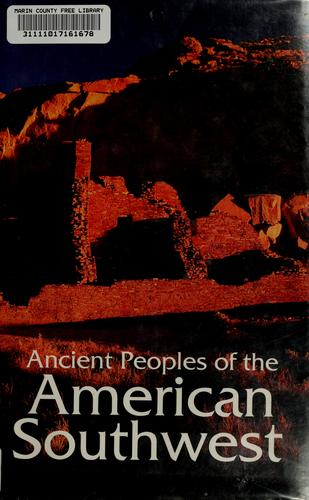
Ancient Peoples of the American Southwest

Ancient Peoples of the American Southwest

Stephen Plog · 1997

Stephen Plog's lucid, well-illustrated synthesis of the three great pre-Columbian cultures of the American Southwest — Ancestral Puebloan, Hohokam, and Mogollon — tracing their rise, interaction, and transformation across nearly two millennia. One of the most accessible single-volume overviews of the archaeology of the Four Corners and surrounding region.

knowledge cultural context
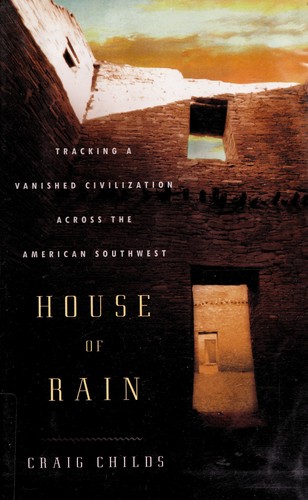
House of Rain

House of Rain

Craig Childs · 2007

Craig Childs traces the routes of the ancient Anasazi across the Colorado Plateau, uncovering evidence of a lost civilization's migrations through canyon country.

storytelling cultural context philosophy
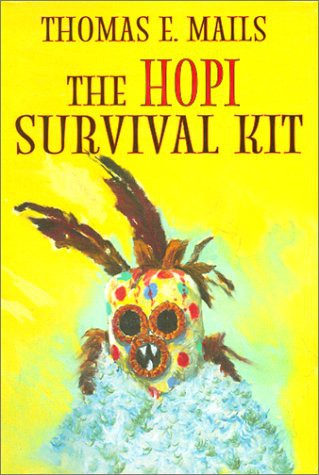
The Hopi Survival Kit

The Hopi Survival Kit

Thomas E. Mails · 1997

Thomas Mails's compilation of Hopi elder teachings, prophecy, and warnings — including the centrality of water, the dangers of living beyond the land's limits, and the moral stakes embedded in the Colorado Plateau's future. A difficult, earnest transmission of Hopi cosmological thought that gives human and spiritual weight to the canyon country DM operates in.

cultural context philosophy
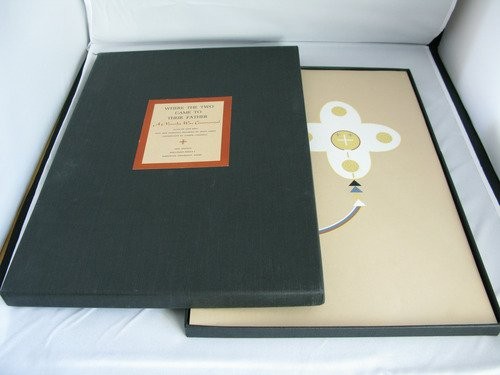
Where the Two Came to Their Father

Where the Two Came to Their Father

Jeff King, Maud Oakes, Joseph Campbell · 1943

A Navajo war ceremonial given by Haske Naabah (Jeff King), recorded and painted by Maud Oakes, with mythological commentary by Joseph Campbell — one of the foundational Bollingen Series documents transmitting the Twin Hero myth cycle and the cosmological geography embedded in Navajo ceremony. A primary-source encounter with the spiritual landscape of the canyon country.

cultural context storytelling philosophy
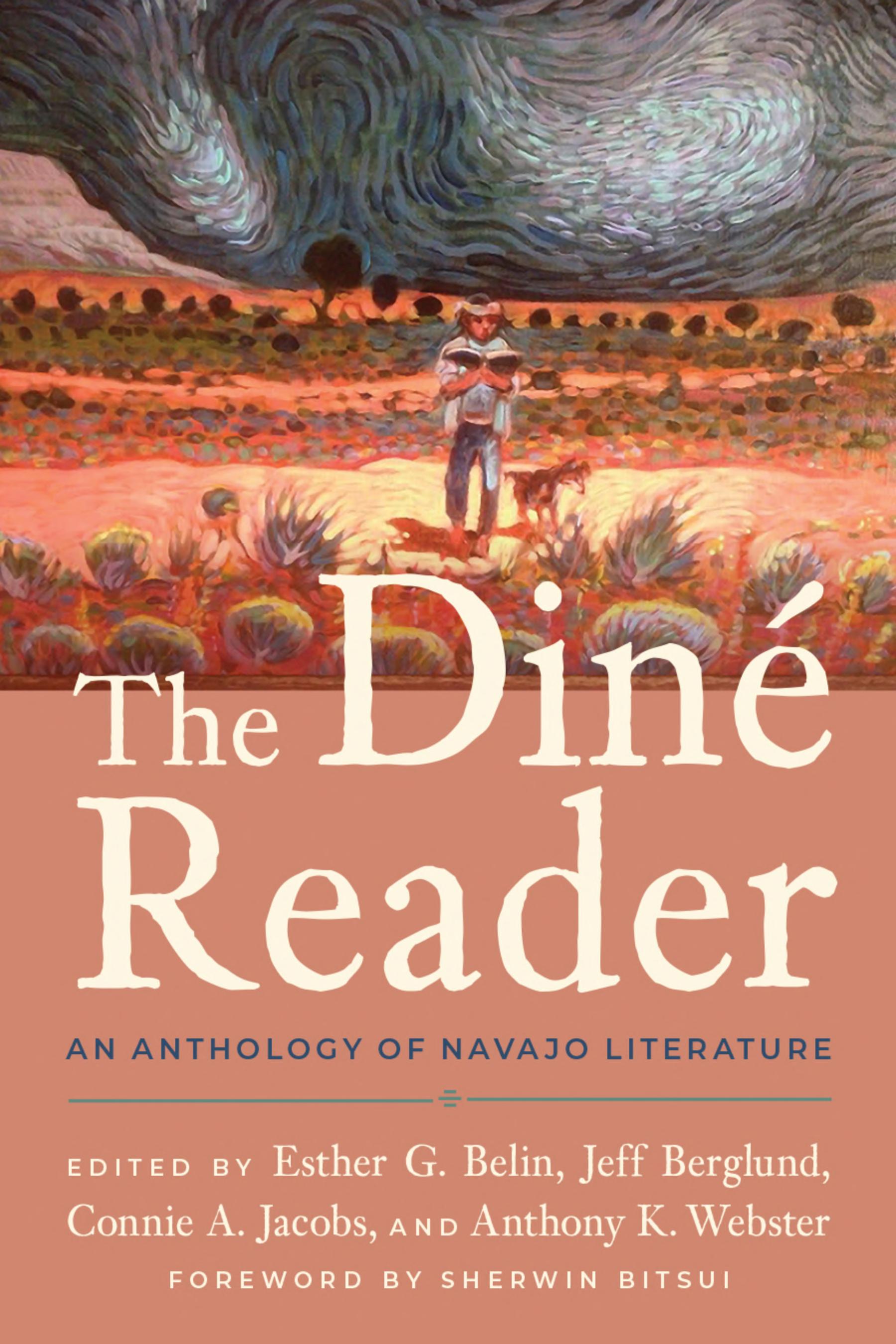
The Diné Reader

The Diné Reader

Esther G. Belin, Jeff Berglund, Connie A. Jacobs, Anthony K. Webster · 2021

The first comprehensive anthology of Navajo (Diné) literature — poetry, fiction, memoir, and essay by Diné writers spanning the 20th and 21st centuries. Essential for any editorial voice writing about the canyon country and Colorado Plateau that is home to the Navajo Nation — a reminder that this land has a rich, living literary tradition in English and Navajo.

cultural context storytelling tone
Canyon Country

Canyon Country

Donald L. Baars · 1989

An accessible introduction to the rock layers, canyon formation, and landscapes of the Colorado Plateau and canyon country.

knowledge

Connected in the graph

  • theme/ancestral-puebloan
  • subject/archaeology
  • subject/indigenous-history
  • region/colorado-plateau
  • region/four-corners
  • river-section/lower-san-juan
  • river-section/glen-canyon
Verified 2026-04-15 · Sources: open-library · Confidence: partial