Cataract Canyon
An in-depth environmental and human history of Cataract Canyon and the rivers of Canyonlands, exploring Indigenous presence, exploration, dam impacts, river ecology, and the evolution of modern river running.
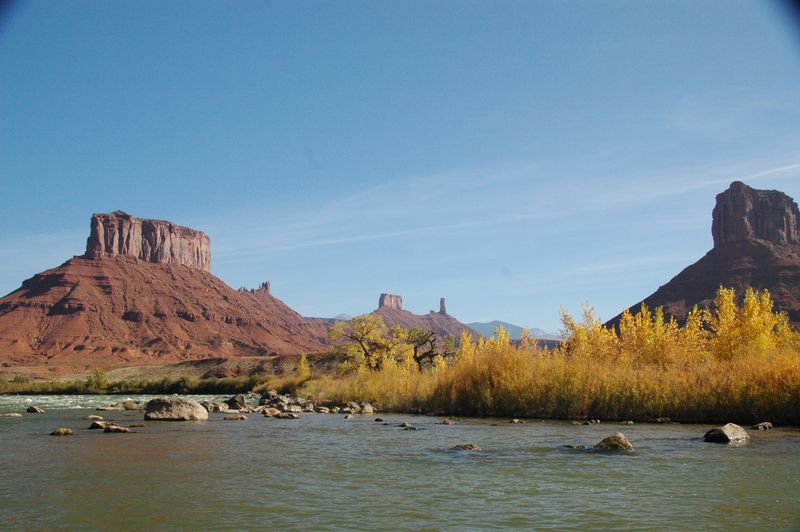
Thirteen miles of Class I–II from Hittle Bottom to Take Out Beach — the most-run day float on the Colorado Plateau, no permit required.
The 13-mile Hittle Bottom to Take Out Beach float — the most-run day section on the Colorado Plateau, Class I–II with Rocky Rapid as the only real wave, no permit required.
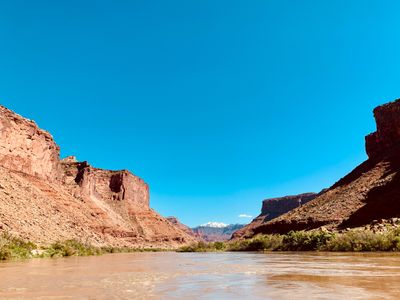
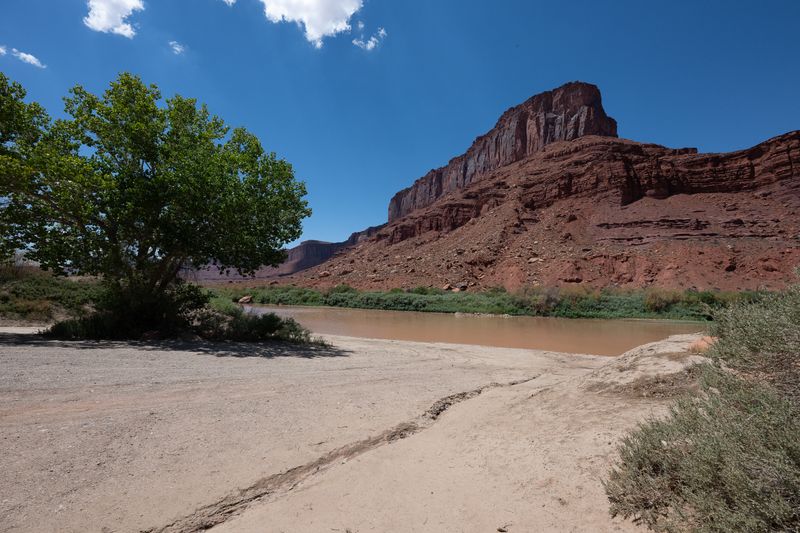
The Moab Daily — the most-run day section on the Colorado Plateau. 13 miles from Hittle Bottom Campground to Take Out Beach along UT-128, passing Big Bend, Rocky Rapid (Class II+), and the sandstone walls of lower Professor Valley / Castle Valley before the river opens out toward Moab. Class I–II with one notable wave train at Rocky Rapid; runnable daily all summer by commercial outfitters and private paddlers alike. No permit required for day use. The classic introduction to the Colorado Plateau for first-time rafters and the default training run for Moab-area guides.
Flow = Colorado near Cisco plus Dolores near Cisco, summed (the Dolores enters at Dewey above the put-ins); 4,000–10,000 cfs combined is the sweet spot.
Below 2,500 cfs Rocky Rapid is a small wave; gravel bars expose and rigging of inflatable kayaks may scrape.
4,000–10,000 cfs is the sweet spot — Rocky Rapid has a clean wave train and the section floats at a pleasant pace.
Above 12,000 cfs the river is pushy and fast; Rocky Rapid becomes a substantial wave train until it washes out near 20,000 cfs.
Runnable all season; Rocky Rapid washes out above roughly 20,000 cfs at Cisco and shallows below 2,000 cfs
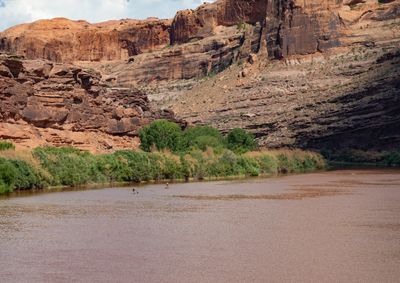
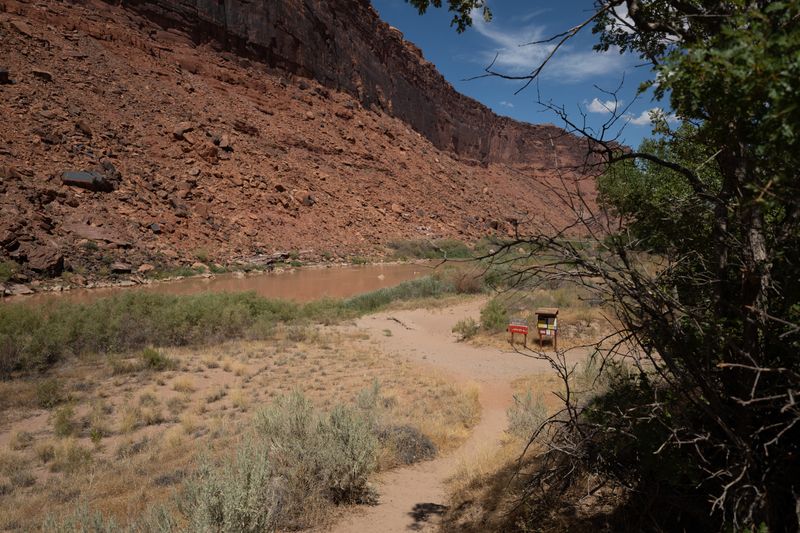
The Moab Daily passes through the lower end of Professor Valley and into the approach to Moab, with Wingate and Navajo Sandstone walls visible on both banks. Castle Valley opens to river-left near the put-in; the La Sal Mountains — Tertiary laccolithic intrusions — rise to the south. Rocky Rapid itself is formed by debris fan material deposited where a minor side canyon intersects the river.
↑ Rim
↓ River level
This is the most-run day trip in Utah, commercially guided since the first Moab outfitters opened in the 1960s, and it remains a default training run for Moab-area guides. The corridor is Ute and Ancestral Puebloan homeland long before any of that. The paved UT-128 stretch alongside the river has doubled as a film set for Westerns and car commercials for decades — if a desert two-lane in a car ad looks familiar, this is often the one.
The Moab Daily has been commercially guided since the first Moab-based outfitters opened in the 1960s and remains the single most-run day trip in Utah. Film crews have used the UT-128 corridor for Westerns and car commercials for decades.
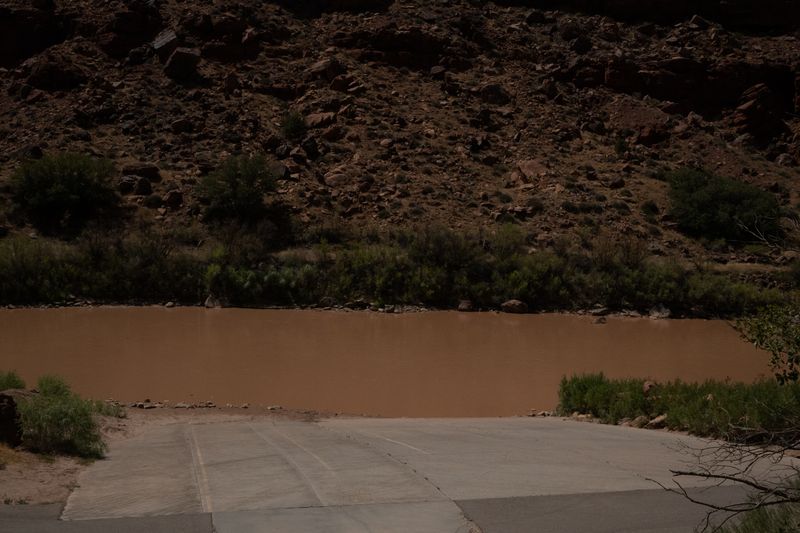
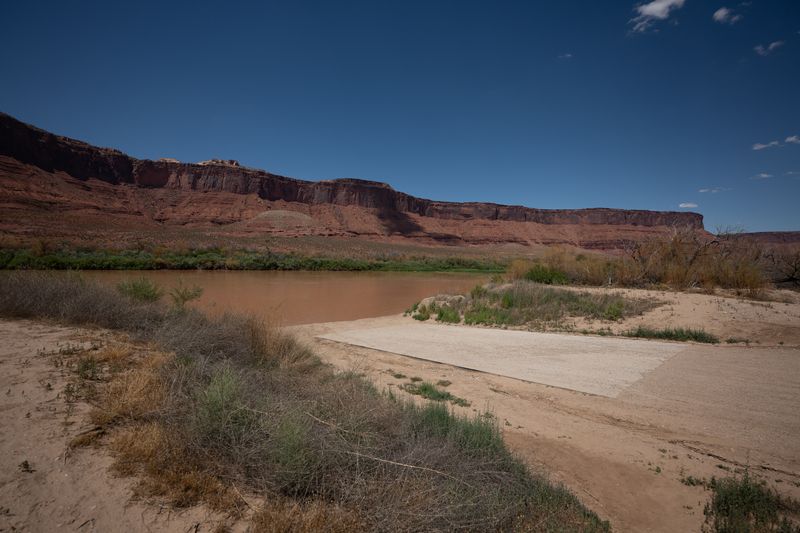
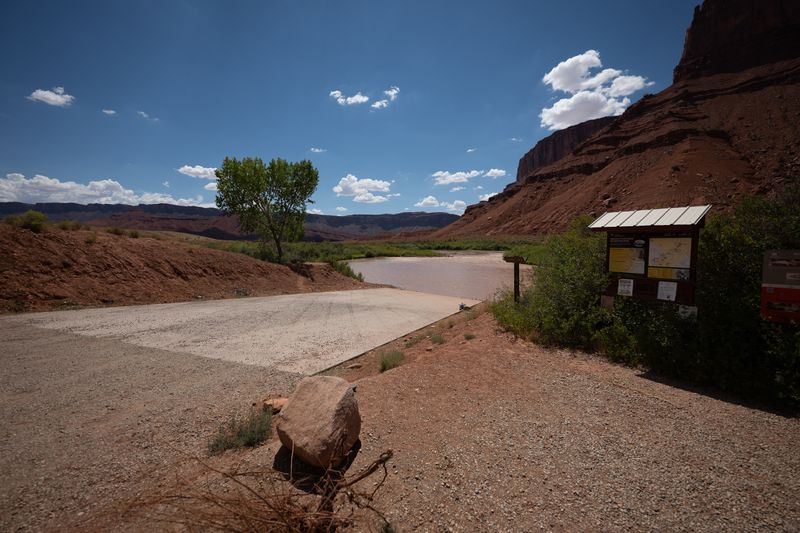
No permit, paved shuttle on UT-128, BLM parking at both ends.
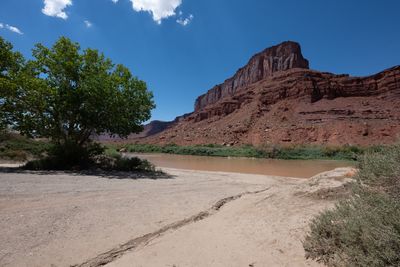
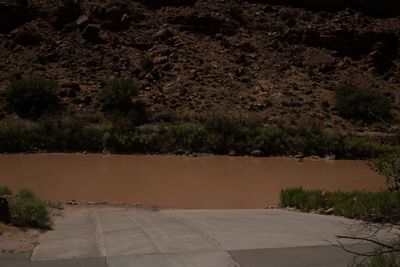
Hittle Bottom to Take Out Beach
Google used a car, their times do not account for towing a trailer, driving on washboard, pitted pavement, and dirt that goes to grease in the rain — our adjusted times help align to the reality of running real river shuttles.
No permit required for day use. Commercial outfitters operate under BLM special-recreation permits. This is the most-heavily-used day section on the Colorado Plateau.
On a seven-day trip, you'll cook roughly 20 meals on a folding table in the sand. The constraint isn't ambition — it's ice management. Days one through three, you have real cooler capacity. Days four and five are the transition zone. Days six and seven are pantry cooking.
The best river cooks plan backward from the last night. If your final dinner is still good — not just edible, but genuinely good — the trip ends on a high.
Two coolers, segregated by access frequency. A well-managed deep cooler will hold usable ice through day 6 in 100°F air temps.
Folding table, two-burner propane stove, cast iron skillet, Dutch oven, and a large pot. The Dutch oven is the single most versatile piece.
Books that shape the science, history, and stories behind this place.
An in-depth environmental and human history of Cataract Canyon and the rivers of Canyonlands, exploring Indigenous presence, exploration, dam impacts, river ecology, and the evolution of modern river running.
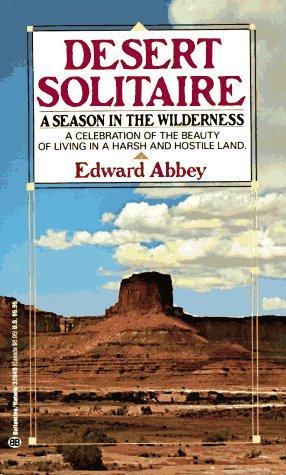
Edward Abbey's classic portrait of canyon country, solitude, and wilderness, influential to the identity and mythology of the Colorado Plateau.
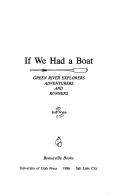
A river-running memoir by Roy Webb capturing the spirit, humor, and culture of Western river expeditions and the people who chase moving water through canyon country.
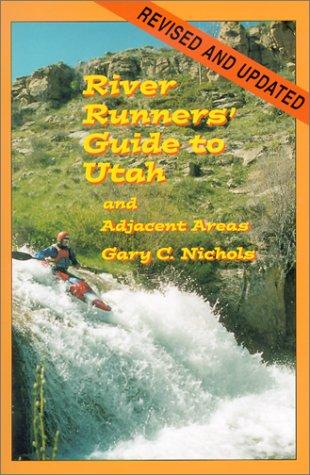
A comprehensive guidebook to whitewater rivers in Utah and neighboring regions, covering river access, rapids, flow considerations, trip logistics, and historical context for river runners.
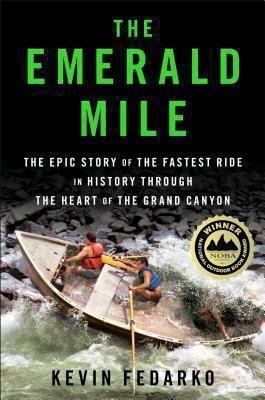
The thrilling story of the dory daredevils who set a speed record through the Grand Canyon at the height of the legendary flood of 1983 — and of the river that made it possible.
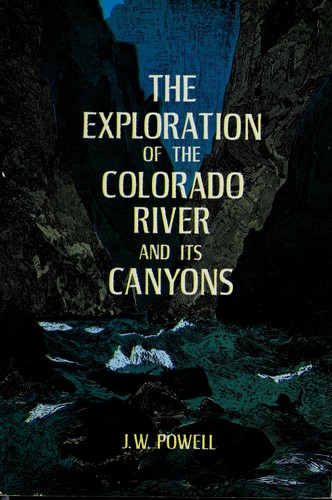
Powell's original account of the first scientific expedition through the Grand Canyon, documenting the geology, natural history, and challenges of navigating the unknown Colorado River.