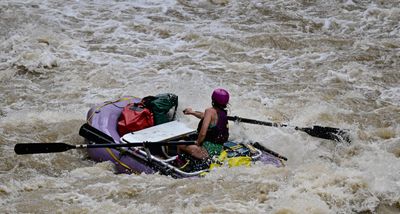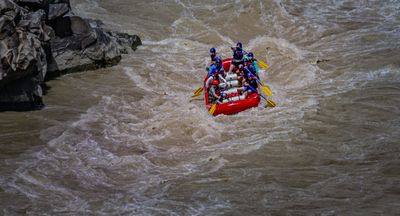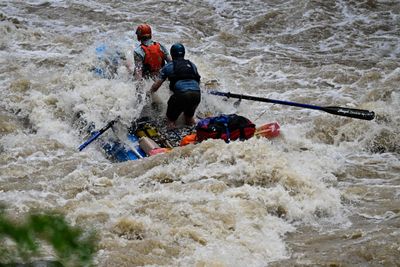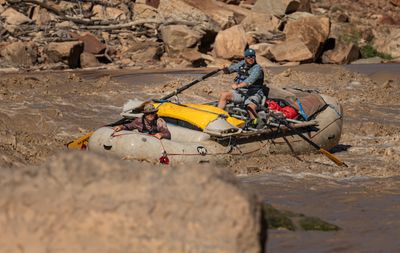
Westwater Canyon is 17 miles. That's short enough to do in a single long day, but long enough that an overnight trip gives you a different experience. Which one makes sense depends on your group, your schedule, and what you actually want from the trip. Here's how to think through it.
The Case for a One-Day Trip
A one-day Westwater run is the most logistically compact option. You drive to the put-in in the morning, paddle 17 miles through the canyon, run Skull Rapid, and reach the take-out in the late afternoon. No camping gear, no groover, no vehicles left overnight.
Who it works for:
- Experienced paddlers who move efficiently on the water
- Groups with tight schedules — one night away instead of two
- Paddlers who've done the canyon before and want a fast hit
- Those who prefer their own bed to a sandy beach
- Hire out the shuttle
The pacing reality: You need to launch no later than 8 AM. Groups that start at 9 or 10 AM often find themselves rushing through the lower canyon or finishing in the dark. The 17 miles at moderate flows takes 6–8 hours paddling plus scouting time at Skull. Don't underestimate the flatwater stretches at the top and bottom of the canyon — they're slow.
Skull Rapid on a one-day trip: You'll scout it, you'll run it, and then you'll push on. There's less margin for extended scouting or running it multiple times. Know your line in advance
The Case for a Two-Day Trip
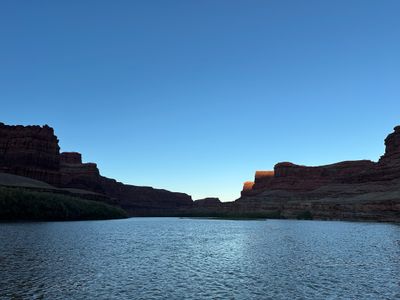
A two-day trip through Westwater Canyon is the preferred option. Once you're camping in the canyon, the black granite walls at night, the sound of the river in the dark, and the quiet morning light on the rock changes everything.
The schedule: Most two-day groups run the first 6-8 miles on day one, camp at the site the River Ranger assigns at launch, then finish the lower 7–9 miles — including Skull Rapid — on day two. Now if you get an earlier start and day 1 weather is better than what day 2 weather looks like, camping below the rapids is your best bet.
Benefits:
- You arrive at Skull Rapid rested, in the morning, with good light for scouting.
- You can run it, eddy out, hike up and watch your paddling partners, and run it again.
- No time pressure. You can spend an hour watching the canyon walls or exploring on foot.
- The black granite gorge section is best appreciated from an eddy, not a moving raft.
The logistics tradeoff: Overnight trips require camping gear, a groover, and food for two days. Camping gear transported in dry bags on a raft is not complicated, but it's more to organize than a day trip. Your campsite is assigned by the River Ranger at launch — it isn't chosen in advance on recreation.gov.
Shuttle Logistics
Regardless of trip length, the shuttle is the main logistical puzzle.
Put-in: Westwater Ranger Station. Take I-70 exit 227 and follow the paved road south to the ranger station.
Take-out: Cisco Boat Ramp, Cisco, Utah. Paved but pitted access from I-70. Remote, with limited facilities.
Shuttle options:
- Two-car shuttle: Drop one vehicle at Cisco the night before or morning of launch. Drive the second car to the put-in. Straightforward, but someone makes the 45-minute drive twice.
- Commercial shuttle: Several companies in Grand Junction and Moab handle Westwater shuttles. Expect $120–180 depending on vehicle type and company. Book in advance for spring season.
- Bike shuttle: Possible for the very motivated — UT-128, or the kokapilli trail is bikeable and scenic. A fit cyclist can cover the 45 miles in 2–3 hours.
For overnight trips, the shuttle vehicle (or vehicles) stays at the take-out overnight. Lock valuables out of sight.
Early Season vs. Late Season Pacing
Spring (April–May): Higher flows mean faster water. One-day trips move quicker — 6 hours is achievable. Overnight trips should account for powerful eddies and some wave trains that require more energy. Skull Rapid demands careful scouting at high spring flows.
Summer (June–August): Lower flows slow everything down. Plan an extra hour or two for a one-day trip. The flatwater at the top and bottom of the canyon can feel tedious at low flows. An overnight trip lets you enjoy the canyon without feeling rushed.
Fall (September–October): Flows are usually moderate. Days are shorter — don't launch later than 8 AM on a one-day fall trip. Two-day trips are relaxed and the crowds are mostly gone.
What to Do with Extra Time on a Two-Day Trip
If you're camping in the canyon and find yourself with a free afternoon or evening, here's what's worth doing:
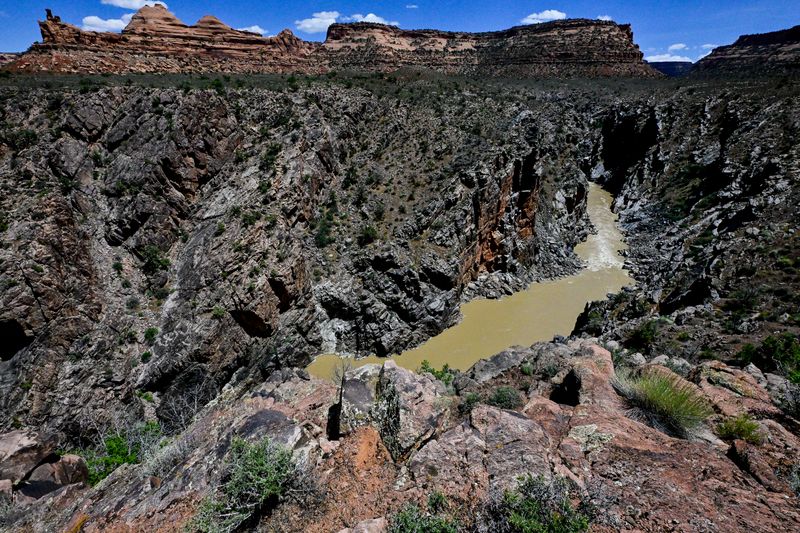
Explore the black walls on foot: The gneiss and schist exposed in the gorge section, the basement of the Uncompahgre uplift, are some of the most ancient rock in Utah — 1.7 billion years old. At camp, you can walk the riverbank and touch walls that were formed before complex life existed on Earth.
Photography: Morning light in the canyon is exceptional. Narrow walls channel the early sun into clean shafts. If you have a camera, get up early.
Fishing: Colorado and Utah licenses both apply depending on where you're camped. The Colorado River holds brown and rainbow trout in this stretch.
Scout Skull Rapid: Pull off above the rapid on river left. The rocks are slick.
The Recommendation
For first-timers to Westwater Canyon: two days. The canyon rewards time, and you'll make better decisions at Skull Rapid when you're not watching a clock. For experienced paddlers returning for another run: one day works fine — start early, move efficiently, and enjoy the canyon for what it is.