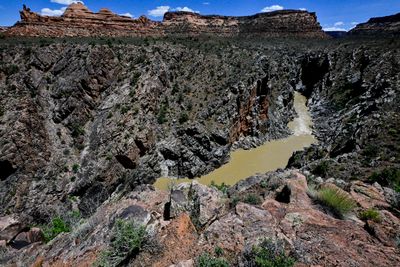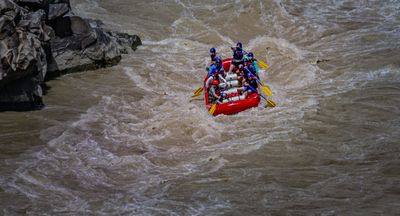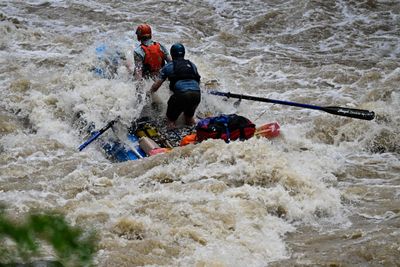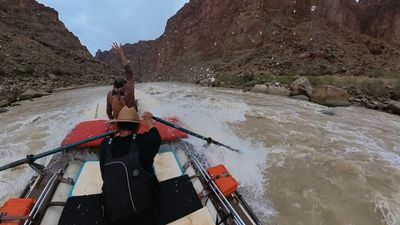
Westwater Canyon is 17 miles of the Colorado River compressed between vertical walls of black Precambrian gneiss and schist — some of the oldest exposed rock in Utah. The canyon sits near the Colorado–Utah border, a short drive from Moab, and offers the most convenient serious whitewater on the Colorado River in Utah. You don't need a week to run it. You do need a permit, a solid plan, and respect for Skull Rapid.
The Route
Put-in: Westwater Ranger Station, Utah, just west of the Colorado line. Take I-70 exit 227 and follow the paved road south to the ranger station. Take-out: Cisco Boat Ramp, Cisco, Utah. Paved access from I-70. Distance: 17 miles. Difficulty: Class III–IV overall; Class IV at Skull Rapid. Trip length: 1 full day or overnight.
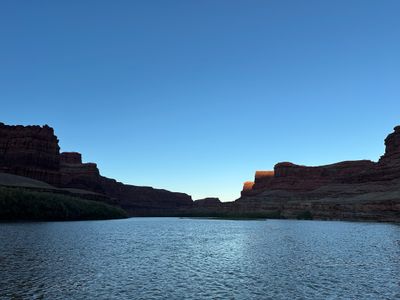
The run begins with several miles of calm water and canyon walls closing in around you. By mile 6 or 7, you're deep in the gorge of black gneiss and schist — narrow, dark, and dramatic. Rapids come in clusters. The gorge constricts at several points, forcing the full river volume through tight channels.
Skull Rapid comes at mile 10.2. Below it come Bowling Alley, Sock-It-To-Me at mile 10.6 and Last Chance at mile 10.8; then the canyon opens for the run to Cisco.
Canyon Character
The black rock that defines Westwater is the basement of the Uncompahgre uplift: dark gneiss and schist cut by pink granite, roughly 1.7 billion years old. It's the same age as the Vishnu Schist at the bottom of the Grand Canyon, but a separate body of rock. The Triassic red beds rest directly on top of it — a contact called the Great Unconformity, with about 1.5 billion years of missing record — and the dark walls give the canyon an almost brooding quality distinct from every other Utah river canyon.
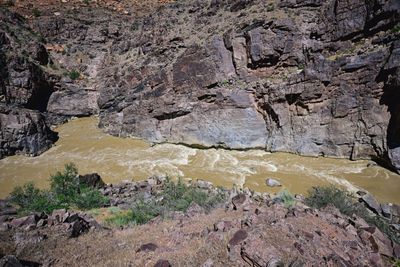
The walls in the gorge section are vertical and barely 50 feet apart at river level in places. The river fills the slot completely at moderate to high flows. There's no shoreline, no beach, no easy exit — once you're in, you commit to the bottom.
This is not a forgiving canyon for swim situations. Group safety and solid boat-handling are not optional.
Skull Rapid
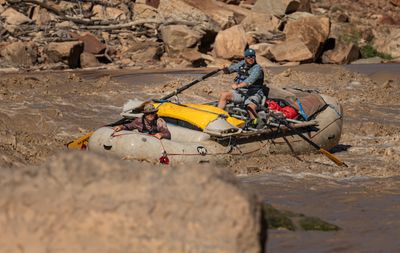
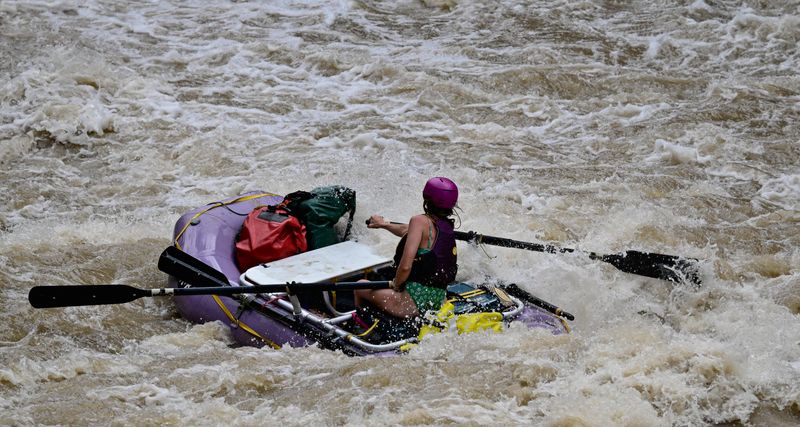
Skull Rapid is the defining feature of Westwater Canyon and the reason experienced paddlers come here. At moderate flows it's a Class IV: a long, technical line through standing waves on river left, away from Skull Rock's huge hole and the Room of Doom, a turbulent eddy on river right.
Scouting: Always scout Skull from the left bank. A trail leads up from the eddy above the rapid. Take the time — the Room of Doom has a hard-earned reputation for holding swimmers and boats.
The line at moderate flows: Enter river left, stay off the right wall, and punch straight through the wave train. The hole at the bottom right is avoidable with a good entry angle.
At high flows: the Room of Doom fills and the rapid becomes one complex hydraulic across most of the river. Know your limit before you launch, not at the horizon line. Check the Cisco gauge and current conditions before you commit.
Other notable rapids include Funnel Falls, Sock-it-to-Me, and Last Chance — all Class III with clean lines at moderate flows.
Permits
Westwater Canyon requires a BLM river permit for all trips — day and overnight, year-round. It's managed by the BLM Moab Field Office and reserved through recreation.gov. The group cap is 25 people per permit. Fees and the daily launch quota change, so confirm both on recreation.gov before you plan around a date.
- Reservations: this is an advance reservation, not a lottery. Launch dates open on a rolling two-month window: each morning at 8 a.m. MT, the date two months out becomes available, and it stays bookable until 11:59 a.m. on launch day if it goes unclaimed. Peak dates can fill fast — set an alarm and have your trip details ready.
- Self-registration: if no ranger is on duty at the Westwater Ranger Station, self-register at the kiosk and sign up for a campsite. Confirm the current on-site policy with the station.
- Fees and quotas: a per-person BLM fee plus the recreation.gov reservation fee apply, and the daily number of launches is capped. Confirm the current fees and quota on recreation.gov at booking.
The Westwater Ranger Station staffs a ranger during the busy season. Stop in for current conditions and a safety briefing if it's your first run.
Flow Levels and Season
The USGS gauge at Cisco, Utah (09180500) is the relevant flow reference — check it before you commit, and match the level to your group's experience.
- Low water: rocky and technical; some rapids become boulder mazes and lines get tight. Not ideal for rafts.
- Moderate flows (its prime range): clean lines, readable hydraulics, a manageable Skull.
- High water: Skull gets more consequential — bigger holes, faster water, less margin. Experienced parties only; check the Cisco gauge and current BLM guidance before you launch.
Spring snowmelt from the Rockies drives peak flows in April and May. Summer flows depend on upstream reservoir releases. Fall is typically low water.
One Day vs. Overnight
One day: Start at the put-in no later than 8 AM. Move steadily, scout Skull carefully, and plan for 6–8 hours on the water. This works for experienced groups with no one who needs extra time in rapids.
Overnight: Westwater Canyon has eight designated campsites. The extra day lets you slow down, explore the canyon walls, and not feel rushed at Skull. Highly recommended for first-timers to the canyon, even if you're an experienced paddler.
Shuttle: Arrange it before launch. The default is I-70: out from the ranger station to exit 227, west on the interstate, and back down to the Cisco ramp. It's paved the whole way, though the pavement on both access legs runs from good to pitted. BLM 179 through Agate is shorter, but it's dirt and usually holds a muddy puddle that has trapped people; take it only when it's dry. Commercial shuttle companies operate out of Moab and Grand Junction.