Cataract CanyonDecember 2016
Two brothers, one dory, and the Colorado at 38°F. A December run from Potash to North Wash at 5,800 cfs — forty miles of flatwater to Cove Camp the first day, the Big Drops the second, and a night on a brand-new sandbar that was less about the view than about getting a fire lit before Sam stopped shivering.
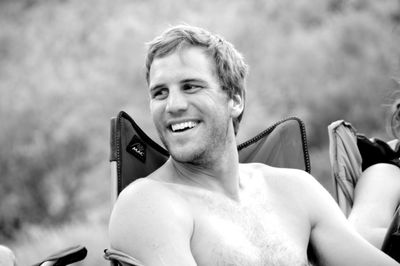
Cutty
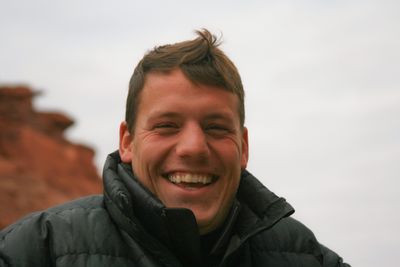
Sam
Bow. Came closest to freezing solid.
Forty miles to Cove Camp
5,960 cfs (USGS daily mean) | Moab, UT: 24–45°F
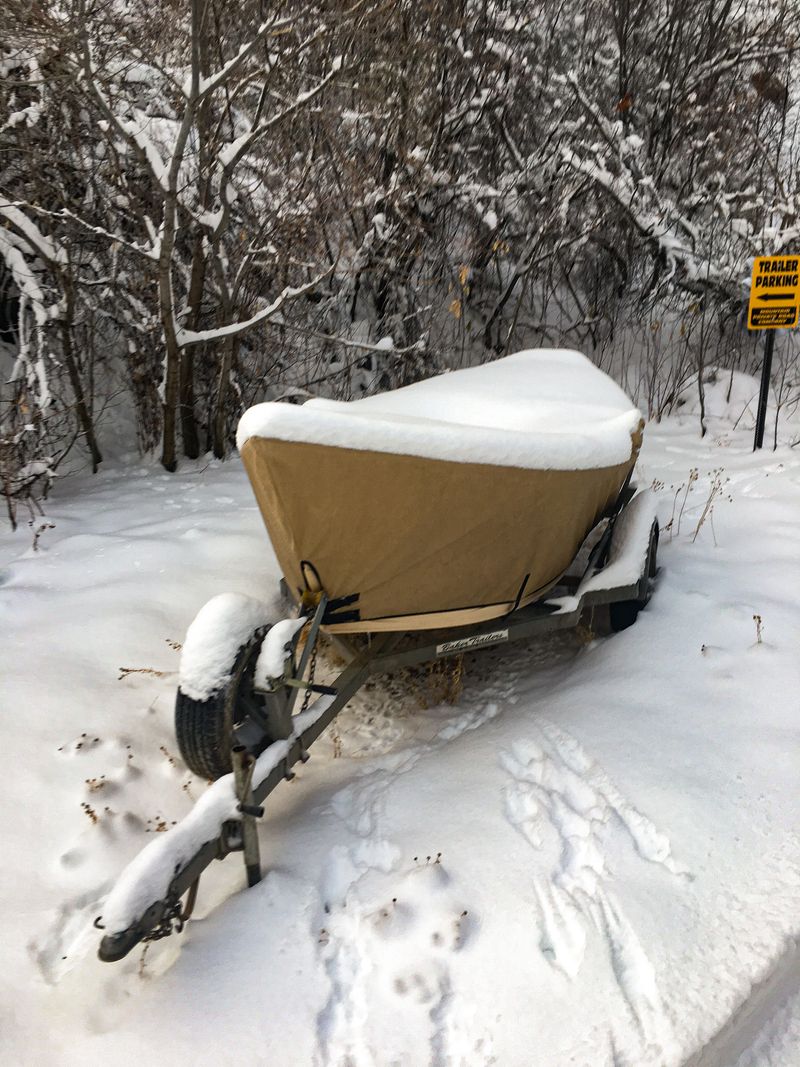
The snow in the launch photo was Salt Lake’s, from the night before we left. We drove to Moab, slept on a friend’s couch, moved the couch back where it belonged, and rolled out at six. By about seven the dory was in the Colorado at Potash, and the plan was simple because the daylight was short: motor on. A Honda 2.3 outboard on a wooden dory is not a fast boat, but at 5,950 cfs the approach above the Confluence is slow water, the channel braids around sand shoals, and the eddies along the walls pull at a hull that is not paying attention — and a small motor humming along beats oars for forty miles of that. We found a couple of those eddies by accident anyway. We also found out what 38-degree water does when it comes over the gunwale: muddy, sloshing across the floor between the bags, and instantly the only thing either of us could think about. We made roughly forty miles to Cove Camp, pressing on through a long, flat, beautiful afternoon of red walls mirrored in gray-green water, and pulled in with about as much warmth left as the day had. The lesson arrived early and stayed for the whole trip: in December, the water is the hazard.
The Big Drops, then a fire before anything else
5,790 cfs (USGS daily mean) | Moab, UT: 27–45°F
Day two is the day the canyon earns its name. At 5,770 cfs the Big Drops are what the old hands call classic low water: the holes are well defined, the lines are narrow, and a wooden dory either hits them clean or takes the consequences in the footwell. The rapids were all genuinely fun. Did not have an issue with the ledge rock in Big Drop 3’s left run. The rapids seemed to have been tuned just perfectly to have every splash end up on Sam’s lap. The problem was physics. Each time, the cold got a little further in — a wetsuit in 38-degree water is a thin argument, and by the time we were below the drops the argument was lost. Sam was very close to freezing solid. There was no discussion about where to camp; the choice had already been made for us. We pulled over at the first bank that would take a boat, a left-side sandbar near Waterhole Canyon that had not existed a few years earlier — the river is cutting down through the silt the reservoir left behind, the layer boaters call the Dominy Formation — and we got a fire going before we touched a single bag. Not a polite campfire. Whole driftwood trees, roots and all. It was survival mode, not leisure, and it was exactly the right call. By the time we were lying back in the sand laughing at a flash-lit selfie, the fire had done the job the wetsuits could not.
Out to North Wash
5,730 cfs (USGS daily mean) | Moab, UT: 23–44°F
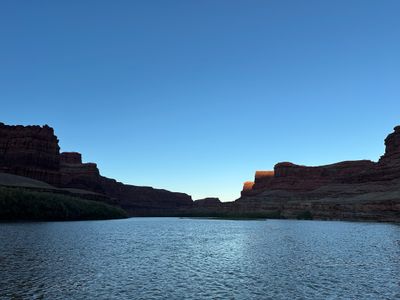
The morning came up clear and cold, 23 degrees by the Moab readings, with the sun reaching the high walls long before it reached the dory tied at our landing. We climbed the ledges behind camp to look down at the boat and the still water mirroring the lit sandstone, which is the kind of thing you do when the fire is out and the river is 37 degrees and nobody is in a hurry to get back in it. Then we got back in it. The last day of a Cataract trip is the long, quiet water below the rapids, and the flow was down to about 5,590 cfs, which meant less push from the current and the Honda doing most of the talking. Somewhere downstream the canyon opened a gap and there was snow on the far peaks, a reminder of what month it was in case the water had not made the point. Lake Powell sat at 3,605.65 feet, and the takeout at North Wash was the end of the trip — the way it is for everyone who runs Cataract, and the way it had been the least predictable part of the trip for years. We were two brothers in a dory in December. We were cold the whole time. Epic is the word that survives.
Below the Big Drops, Sam was close to freezing solid — past shivering and into the quiet stage.
Stop at the first bank that would take a boat — a raw left-side sandbar near Waterhole Canyon — and build a fire before unloading anything else.
Outcome: Fire first, camp second. Survival mode, not leisure — and the right call.
Insight: When someone is past shivering, the trip becomes a fire drill: pick the bank while everyone can still talk.
- When the water is 38°F, a wetsuit is not a plan — the rapids soak you and the air finishes the job. December Cataract means dry suits, full stop.
- When flow is under 6,000 cfs, the approach above the Confluence grows sand shoals and sticky eddies; read the foam lines ('follow the feathers') and commit early, because a dory does not forgive a late decision.
- When someone is shivering past the point of talking, the trip becomes a fire drill: pull over at the first usable bank, get flame before anything else, and let the schedule go.
- Sleeping was fine — air temperatures in the 20s and 40s are manageable with the right bag. The river, not the night, is what can kill you in December.
- Plan the second camp before the cold does — pick the bank while everyone can still talk.
- Launch at the same first-light hour; low water is slow water and the December day is short.
Gear changes:
- Dry suits, not wetsuits, for every rapid day.
- A real insulated layer for the bow rider — Sam came closest to freezing.
Wooden dory on oars; a Honda 2.3 hp outboard pushed the flatwater approach and the reservoir miles. Wetsuits proved inadequate in the rapids — dry suits required. Fires fueled by whole driftwood trees.
Colorado at Potash: 3,010–3,180 cfs (avg 3,070)
Green at Mineral Bottom: 2,720–2,780 cfs (avg 2,757)
Combined: 5,730–5,960 cfs (avg 5,827)
Lake Powell: 3605.65 ft at launch (3605.38–3605.65 ft during trip). USBR RISE API — Lake Powell at Glen Canyon Dam
Weather: Moab, UT, 23–45°F. NOAA GHCN-Daily
Evidence behind the claims on this page — agency rules, maps, gauges, books, and field notes.
Permits
Hydrology
All 14 field sources
Access
Rapids
- book-excerpt Cataract Canyon (Webb / Belnap / Weisheit) — Selected Pages
- book RiverMaps Guide to the Colorado & Green Rivers in the Canyonlands of Utah & Colorado
Management
Books
Safety
- book-excerpt Cataract Canyon (Webb / Belnap / Weisheit) — Selected Pages
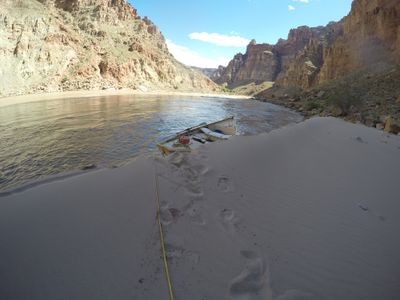
Cataract Canyon — May 2015 (~20,000 cfs)
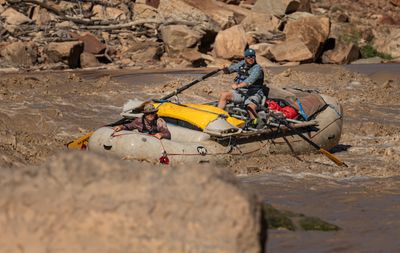
Cataract Canyon — October 2026
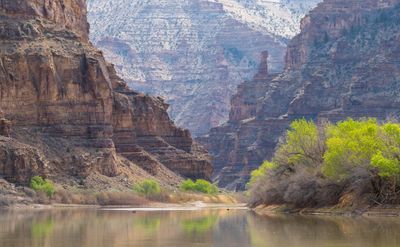
Desolation Canyon — March 2026
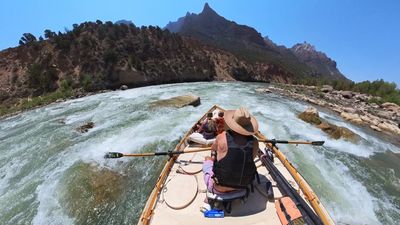
Split Mountain — August 2025 (Day Trip with Kids)
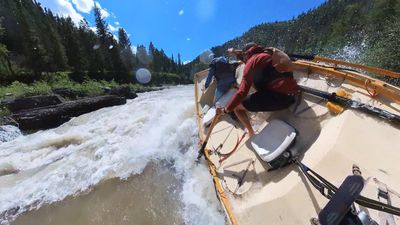
Snake River — June 2024 (Alpine Canyon x3, Dory)
Cataract Canyon — October 2025
- Tex's Riverways Shuttle service for Green River and Colorado River trips in eastern Utah. Covers Desolation Canyon, Labyrinth Canyon, Stillwater, and Cataract Canyon put-ins and take-outs. Tex's Riverways
On this trip
Join the Expedition Briefing
Route drops, river notes, gear systems, and field reports—sent like a briefing, not a newsletter.