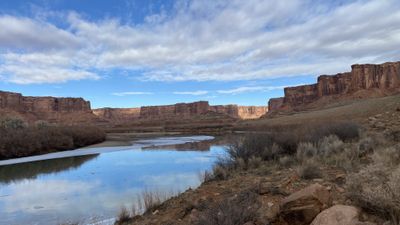
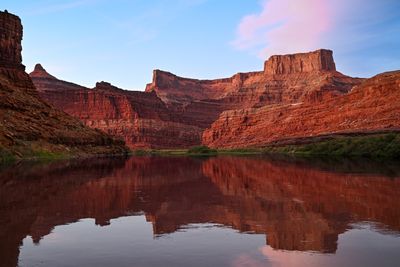
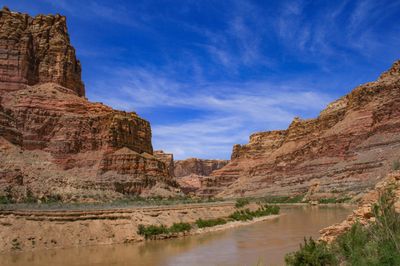
Below 5,000 cfs
Extra boney
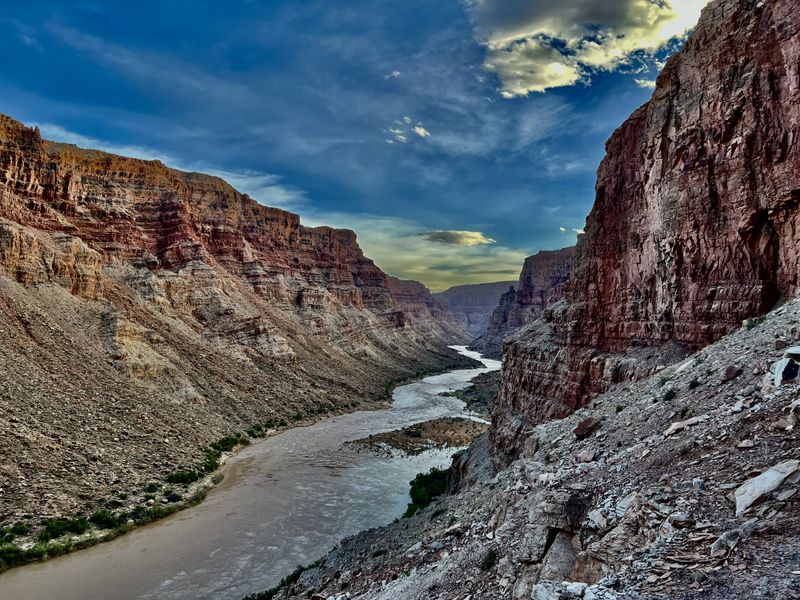
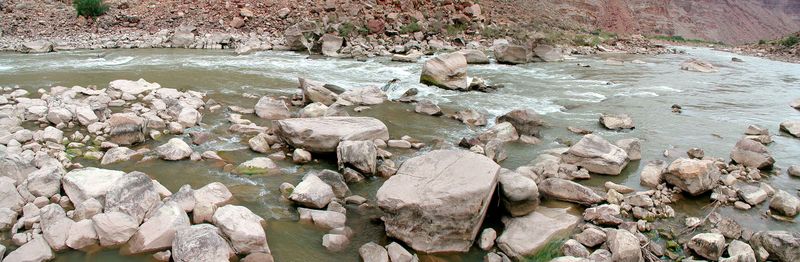
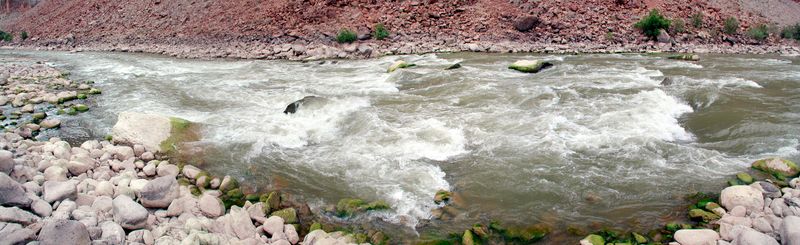
The ledge rock in Big Drop 3 is exposed. Don't take your dory.
5,000–10,000 cfs
Technical low water
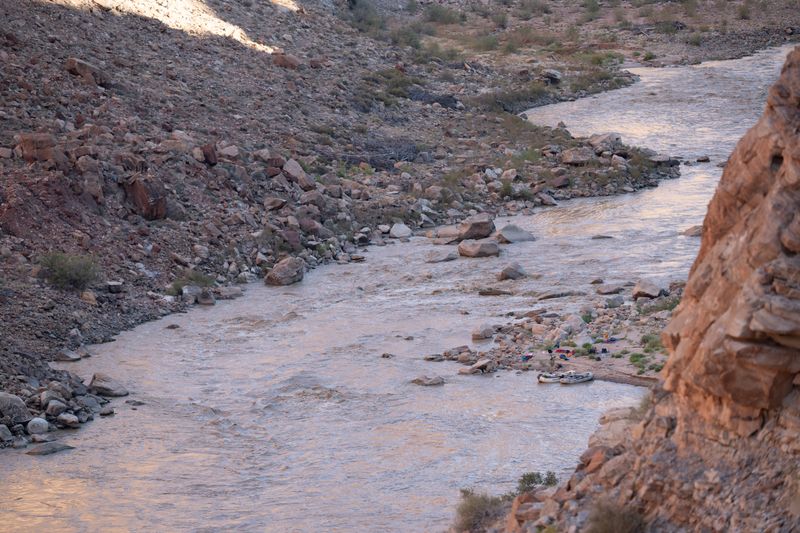
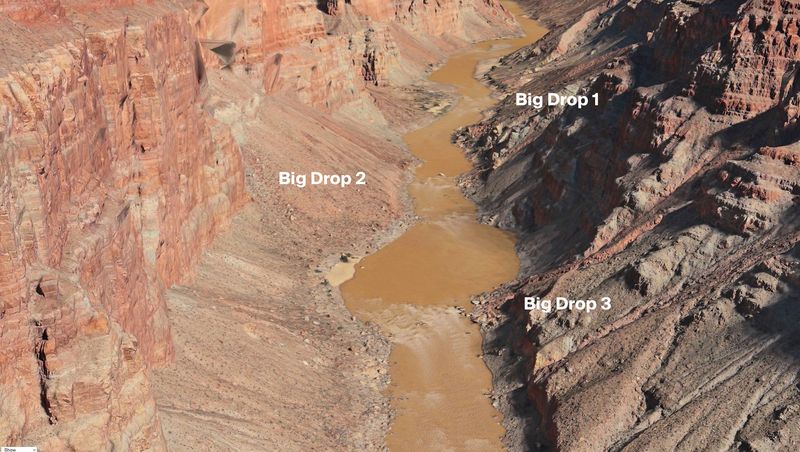
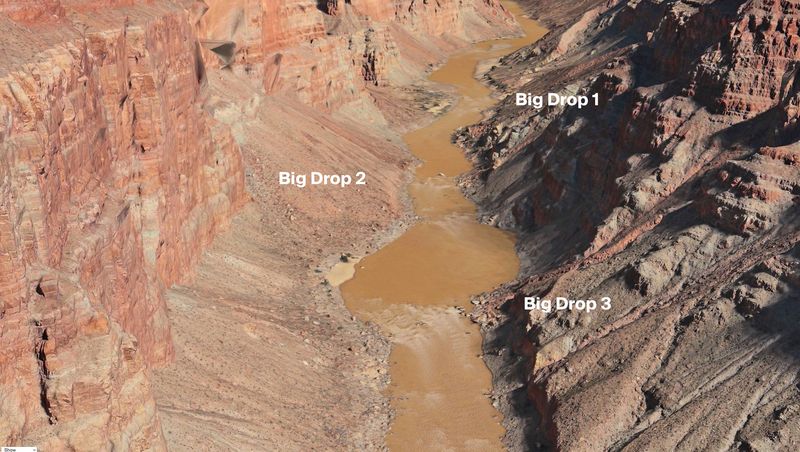
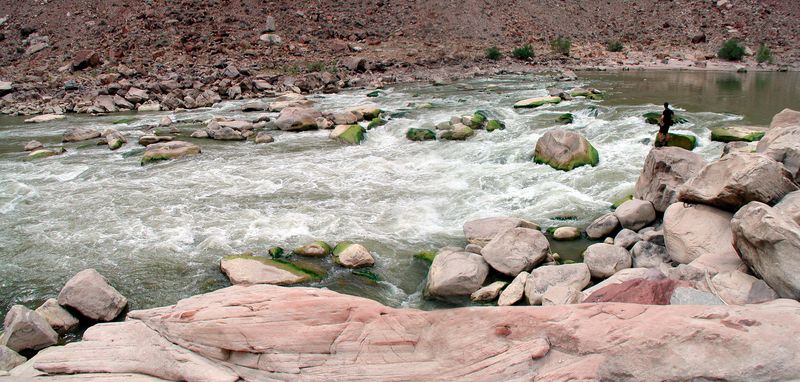
Class III character with technical, rocky lines through the Big Drops. Pool-drop sequencing dominates; the long flatwater approach drags. Best for boulder-garden navigation and skill development.
10,000–20,000 cfs
Classic moderate
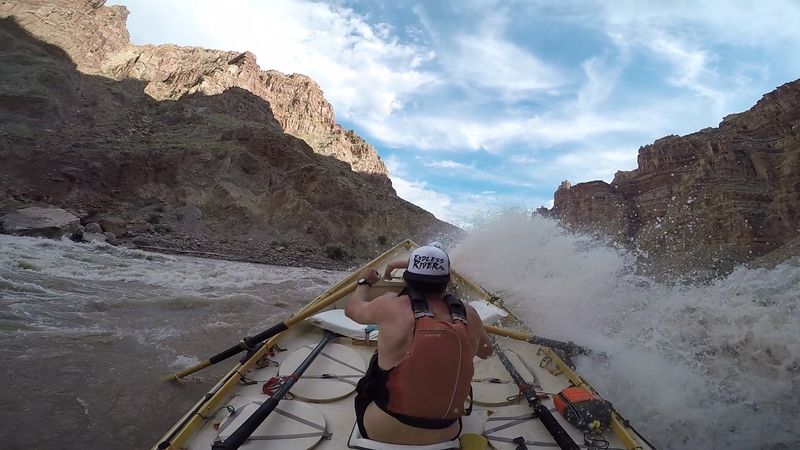
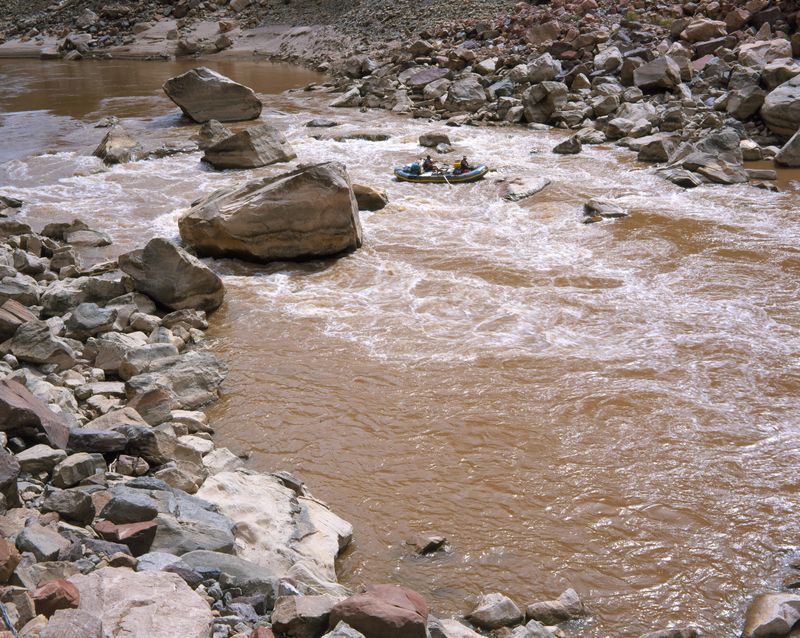
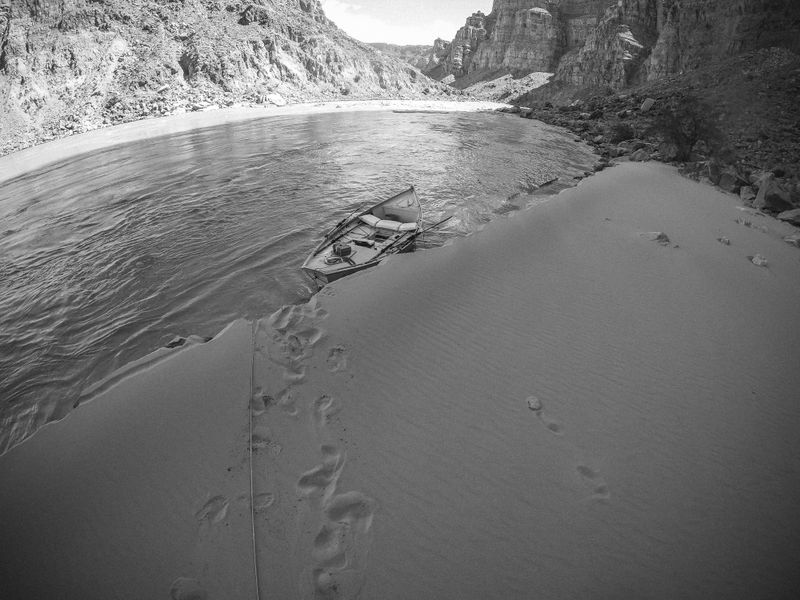
The sweet spot for experienced self-guided crews. Big Drops are powerful but read-and-run with clean lines. Sandy beaches above water; hydraulics are well-defined and readable.
20,000–35,000 cfs
Big-water Class IV
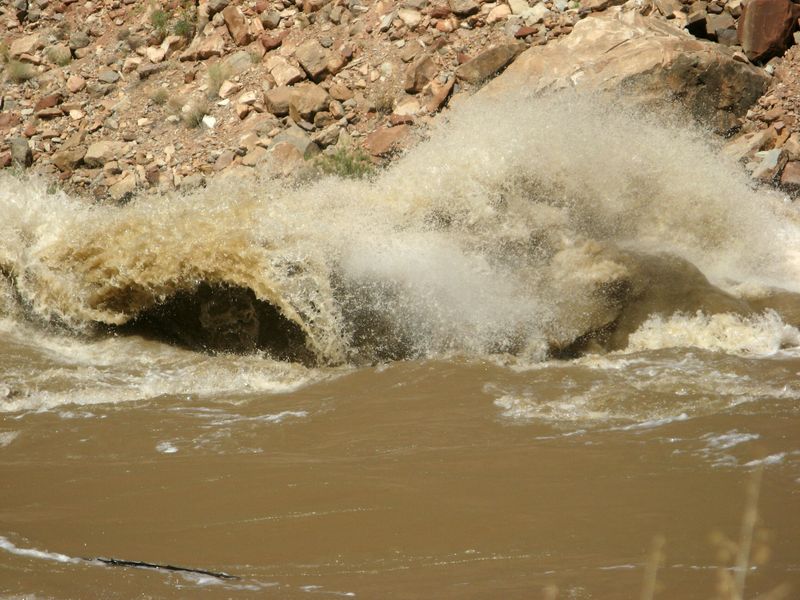
Big-water Class IV. Hydraulics intensify, the sequence feels compressed, and pool recovery shrinks. Rewarding for crews with prior big-water experience; not a first run.
Most recently reached: 2001, 2007, 2013, 2020, 2022
35,000–50,000 cfs
Big water
Pools start to wash out and beaches flood. Of the big water levels, this flow band is the most washed out. Now, North Seas & South Seas are starting 10-15', the Claw in Big Drop 2 is the major gotcha, Button Hole is washed. As always Rig to flip.
Most recently reached: 2006, 2015, 2016, 2017, 2024
50,000–100,000 cfs
Serious big water
Most beaches are gone. North Seas, Mile Long South Seas top out around 20' and the Big Drops are in full flex. Expedition-grade above 50,000 cfs — commercial outfits shift tactics or cancel; private trips at that level only with a deep big-water experience. Webb, Belnap and Weisheit warn that at these flows the canyon can be very dangerous and boats frequently flip.
Most recently reached: 2010, 2011, 2014, 2019, 2023
100,000–130,000 cfs
Historical flood
Flood stage, up to the highest daily flow the gauges ever recorded: 130,100 cfs on June 27, 1917. Bigger floods came through unmeasured: the upstream Colorado gauge has no record for 1918–1922, and Webb/Belnap/Weisheit put the 1921 flood, the largest of the twentieth century, at about 147,000 cfs. Not a runnable target; the Big Drops at their absolute limit.