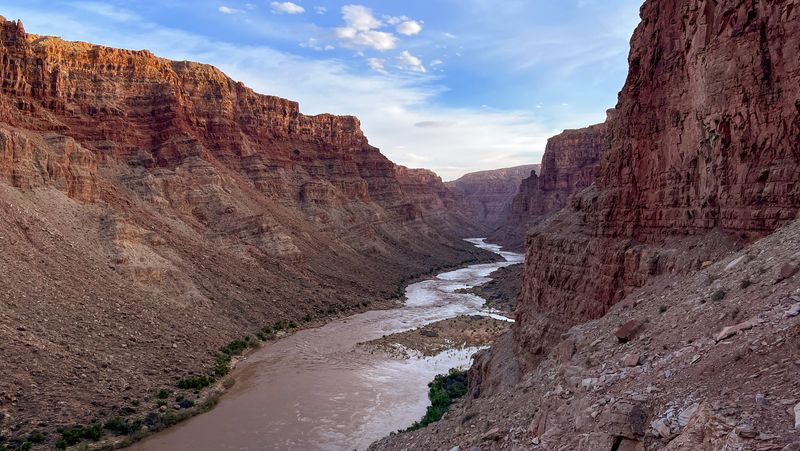
Utah Desert Rivers
Six river systems, dozens of sections, and one regional logic for choosing where to go.
Utah Desert Rivers in One Sentence
Utah holds the densest concentration of committed desert-river canyon country in North America — six river systems that cut through the Colorado Plateau, most of them permit-regulated, and all of them asking something different of the boaters who show up.
This is the Desert Maritime regional guide. It compares the six main systems, maps the relationships between them, and offers decision logic for picking a river that matches your crew, your calendar, and your skill level.
The Six Systems
| System | Sections in Utah | Character | Permit |
|---|---|---|---|
| Colorado River | Westwater, Cataract, Grand Canyon | Whitewater through ancient walls | Required |
| Green River | Lodore, Desolation/Gray, Labyrinth, Stillwater, Split Mountain | Full spectrum: flatwater to Class IV | Required (most sections) |
| San Juan River | Upper, Lower, Clay Hills | Archaeology, flatwater with Class II–III | Required |
| Yampa River | Yampa Canyon (in Dinosaur NM) | The last undammed Colorado tributary | Required (lottery) |
| Dolores River | Snaggletooth, Slickrock | Snowmelt-only; variable release | Required |
| Escalante / Dirty Devil | Packraft-scale | Snowmelt flashpoint canyons | Varies |
Deep dives: Colorado River · Green River · San Juan River · Yampa River
The Colorado River in Utah
The Colorado enters Utah from Colorado, runs through canyon country around Moab, and eventually backs into Lake Powell. Three indexable sections define the Utah rafting experience:
- Westwater Canyon — 17 miles, Class III–IV, 1–2 days. Near the Colorado border. Black Vishnu Schist walls, Skull Rapid. BLM permit through recreation.gov, first-come (not a lottery).
- Cataract Canyon — ~100 miles, Class III–IV (Class V only at flood-stage flows above ~50,000 cfs), 5–7 days. Inside Canyonlands NP. The Big Drops sequence. NPS permit, seasonal release through recreation.gov (no lottery).
- Stillwater + Moab Daily + Professor Valley — connecting flatwater miles across Moab and Canyonlands. Day-floats and a few multi-days.
Deeper: Rafting Cataract Canyon — how to plan the whole trip · Westwater Canyon rafting
The Green River
The Green is the largest Colorado tributary and runs the longest continuously floatable corridor in the desert-river system — over 600 miles from Flaming Gorge Dam to the Confluence. Five Utah sections worth planning around:
- Lodore Canyon — 44 miles, Class III–IV, 3–4 days. Dinosaur NM. Red-walled cold-water whitewater. Lottery permit.
- Desolation / Gray Canyons — 84 miles, Class II–III, 5–7 days. The flagship Green River multi-day. BLM lottery permit.
- Labyrinth Canyon — 68 miles, flatwater, 4–5 days. The ideal first desert-river trip. Non-lottery BLM permit.
- Stillwater Canyon — 52 miles, flatwater, 3–4 days. Inside Canyonlands. Lottery permit.
- Split Mountain — 9 miles, Class III, 1 day. Dinosaur NM day-use.
Deeper: Floating the Green River — section-by-section guide · Green River Utah float trip · Packrafting the Green River
The San Juan River
Eighty-four miles from Mexican Hat to Clay Hills, dropping through the Goosenecks at the heart of the Four Corners. Class I–II with one Class III (Government Rapid) at low flow. Best known for density of Ancestral Puebloan rock art and ruins visible from the river.
- Upper San Juan — Sand Island to Mexican Hat. Rock art concentration.
- Lower San Juan — Mexican Hat to Clay Hills. Goosenecks.
- Clay Hills to Lake Powell — trailing backwater.
Permit via BLM Monticello; lottery-restricted on the most popular launch dates.
Deeper: San Juan River rafting guide
The Yampa River
The last major undammed tributary in the Colorado system. Forty-six miles through Yampa Canyon in Dinosaur NM with Warm Springs Rapid (Class III–IV) as the signature feature. Window is short — April through early July, synchronized with Rocky Mountain snowmelt. A late-season Yampa trip usually means portaging empty water.
Permit via Dinosaur NM lottery. One of the hardest permits to draw in the region, and one of the few rivers in the American West that still runs on the schedule the mountains set.
The Dolores River
A snowmelt-only river in a drought-stressed basin. The McPhee Dam controls releases and, in dry years, there isn’t much to release. In strong snowpack years, sections like Slickrock Canyon and the Dolores Triangle come alive for a few weeks. The Dolores is the definition of opportunistic river planning — watch the gauge and move fast when the window opens.
The Escalante and the Dirty Devil
Packraft-scale rivers that run during a narrow snowmelt window, typically mid-March through early May. The Escalante drops through its namesake canyon country — narrow slots, cottonwood bottoms, and short sections that require combined hiking-floating logistics. The Dirty Devil is more technical and less frequented.
Both are flash-flood canyons. Threat-level monitoring applies on these rivers when thunderstorms are in the forecast.
How to Pick a River
If you want a first desert-river trip → Labyrinth Canyon (Green).
- Simple permit, flatwater, long miles of canyon walls. Nothing complicated to get wrong.
If you want a first multi-day with rapids → Desolation/Gray (Green) or the San Juan.
- Class II–III in a permitted desert canyon with developed camp infrastructure.
If you want flagship big-water → Cataract Canyon in May–June (Colorado).
- Plan a year ahead. Build a crew with one Class IV pilot per boat.
If you want the most rare experience → Yampa in peak May runoff.
- Undammed. Snowmelt-driven. A river still negotiating with the mountains.
If you want solo / packraft terrain → Escalante (spring) or Labyrinth solo in a packraft.
If you want cold-water whitewater → Lodore Canyon (Green).
- Drysuits in spring. Class III–IV in red-walled cold tailwater.
If you want the Grand Canyon → It’s technically Arizona, but the Utah-to-Grand transit (Lees Ferry) is where most Utah boaters stage. Plan 12–25 days — that is the range NPS permits, not a suggestion. Permit via NPS lottery — expect multi-year lead time.
Regional Logic: How the Rivers Relate
The Colorado and Green are the spine. They meet at the Confluence inside Canyonlands — where Stillwater Canyon (Green) ends and Cataract Canyon (Colorado) begins. A full-system Green-to-Cataract trip traverses both, and is one of the great river expeditions in North America for crews that can hold two permits at once.
The San Juan joins the Colorado at the drowned confluence inside Lake Powell. The Yampa joins the Green in Echo Park inside Dinosaur NM — which is why Lodore ends and Whirlpool begins there.
The Dolores flows into the Colorado above Moab; most trips don’t include the tributary confluence because of access.
Seasonality Across the Region
| Month | Best trips |
|---|---|
| April | Early-season low-water Cataract, Westwater, San Juan |
| May | Peak runoff: Yampa, Lodore, Dolores, Cataract (rising) |
| June | Peak: Cataract, Desolation, Grand Canyon, Labyrinth |
| July | Hot, consistent: Desolation, Stillwater, San Juan |
| August | Hot, low: San Juan, Stillwater, Moab Daily |
| September | Shoulder: all sections, golden light |
| October | Low-water technical: Westwater, Cataract, Gray |
| November | Late-season: Moab Daily, Westwater (drysuit) |
| Dec–Mar | Winter Grand Canyon, Moab Daily on warm days |
Permits at a Glance
Most Utah desert rivers require a permit. The systems split across NPS, BLM, and state lines. Lottery windows open months ahead.
Go deeper: Utah river permits — by section and agency
Field Systems for All of These
The gear does not change much across rivers. The trips do.
- River packing system — modular approach to personal, kitchen, and camp loads.
- Big-water rafting gear — for Cataract, Lodore, Grand Canyon at peak.
- Desert river shade systems — every desert river trip needs this.
- Groover system guide — permit compliance plus sanity.
The Desert Maritime Field Position
Our take, after two decades across these systems:
- The Colorado and Green are the workhorses; everything else is a bonus.
- Labyrinth is the most underrated trip in the region. Repeat it.
- Cataract rewards the patient. Rush the approach and the Big Drops get the better of you.
- The Yampa is worth one lottery cycle of obsession to draw.
- The Escalante and Dirty Devil are for the attentive — thunderstorm logic, quick windows, packraft-scale expeditions.
- Grand Canyon is not a Utah river but it’s the Utah boater’s destination. Most of us treat it as the graduate trip.
Recommended Deeper Reads
- Rafting Cataract Canyon — how to plan the whole trip
- Floating the Green River — section guide
- San Juan River rafting
- Colorado River rafting in Utah: complete section guide
- Best packrafting rivers in Utah
- Utah rafting permits
What Next
- Pick a river that matches your crew and skill level using the guide above.
- Check the permit window and apply as early as possible.
- For first-time crews, start with Labyrinth. For first multi-day with rapids, Desolation/Gray.
- Build the kit around the trip, not around gear-list theory. See river packing system.
- Watch the gauges. Plan for flow, not for calendar.
See you on the water.
Frequently asked questions
Which Utah river should I float first?
What are the major desert rivers in Utah?
Do I need a permit for Utah rivers?
What is the best time of year to raft in Utah?
Which Utah river is best for beginners?
Evidence behind the claims on this page — agency rules, maps, gauges, books, and field notes.
Permits
Hydrology
Rapids
- book-excerpt Cataract Canyon (Webb / Belnap / Weisheit) — Selected Pages
- book RiverMaps Guide to the Colorado & Green Rivers in the Canyonlands of Utah & Colorado