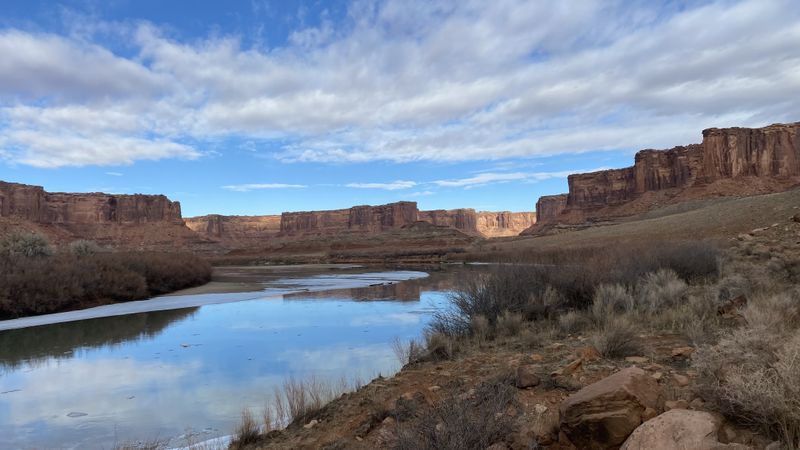
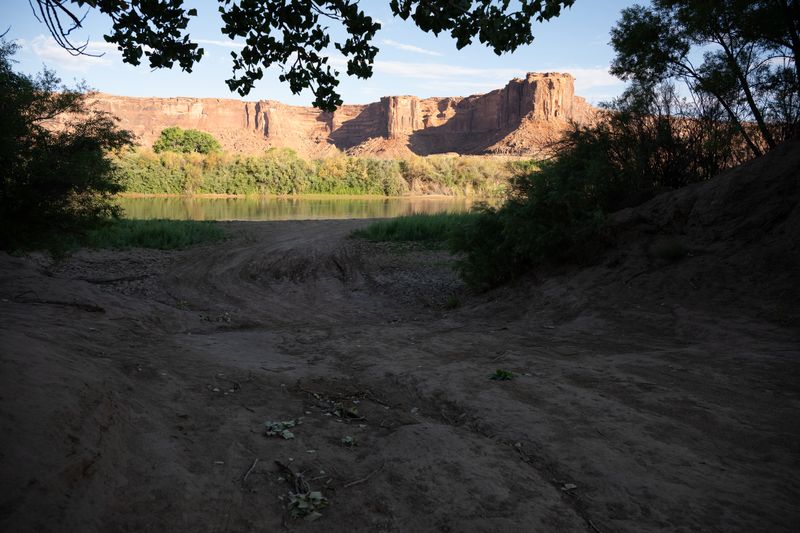
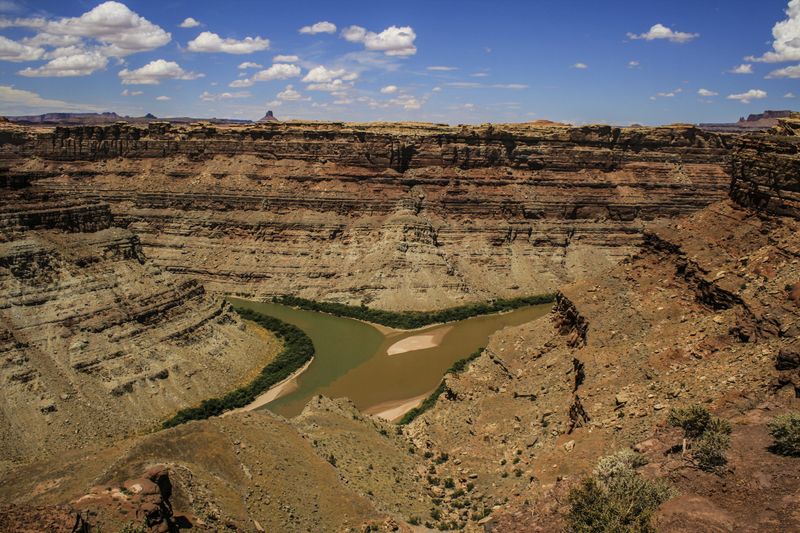
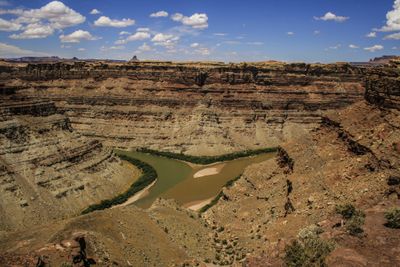
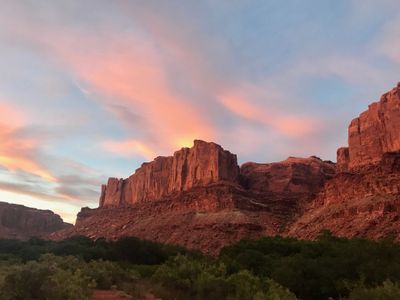
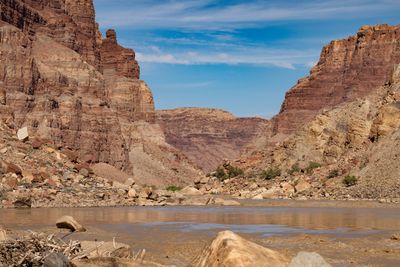
Stillwater Canyon is the Green River's most remote flatwater journey — 52 miles of deep, quiet water through Canyonlands' inner canyon, ending at the Confluence with the Colorado in one of the most isolated destinations in the desert West. The canyon has no rapids. It has something rarer: the sense that you are far from everything, moving through time as much as distance, toward a destination that has no road access and no way out except the river you came in on.
Stillwater Canyon carries the Green River through the heart of Canyonlands National Park — 52 miles of slow, deep water between Mineral Bottom and the Confluence with the Colorado River at Spanish Bottom, surrounded by soaring mesa walls and one of the most profound silences in the American West. No rapids, but everything else: remote camps, ancient granaries, towering canyon formations, and a growing sense of depth that culminates at the Confluence, where the two great rivers of the Colorado Plateau finally meet. Trips exit via jet boat tow upstream or continue into the whitewater of Cataract Canyon.