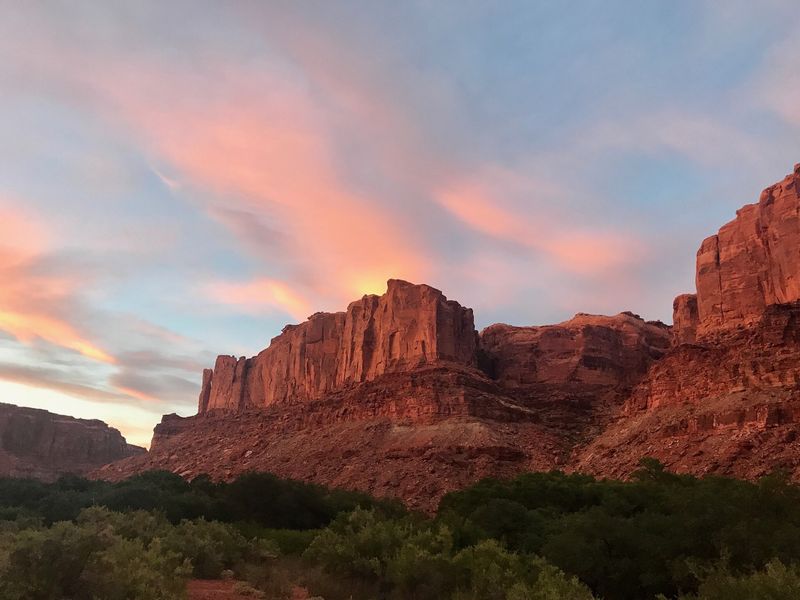
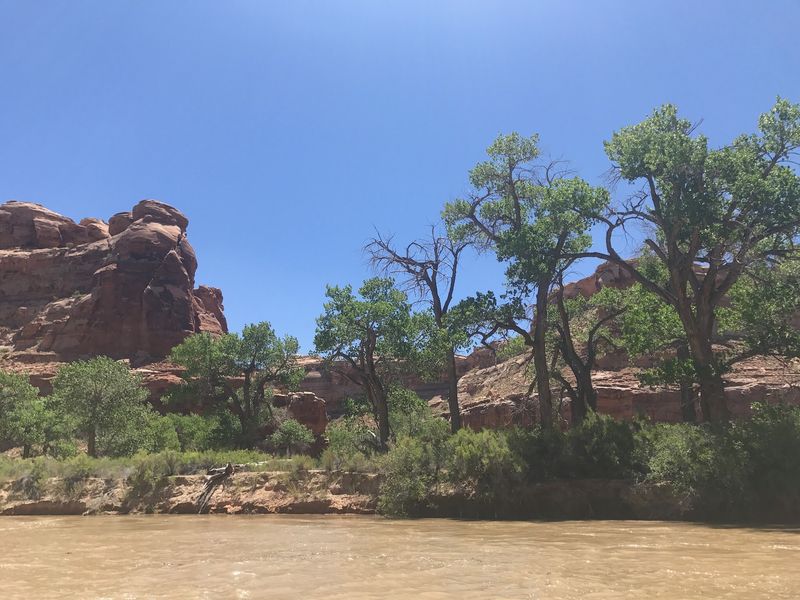
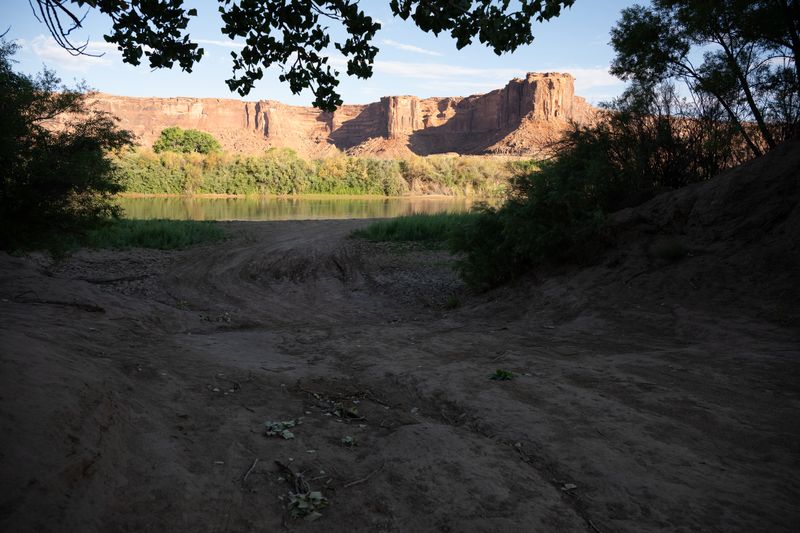
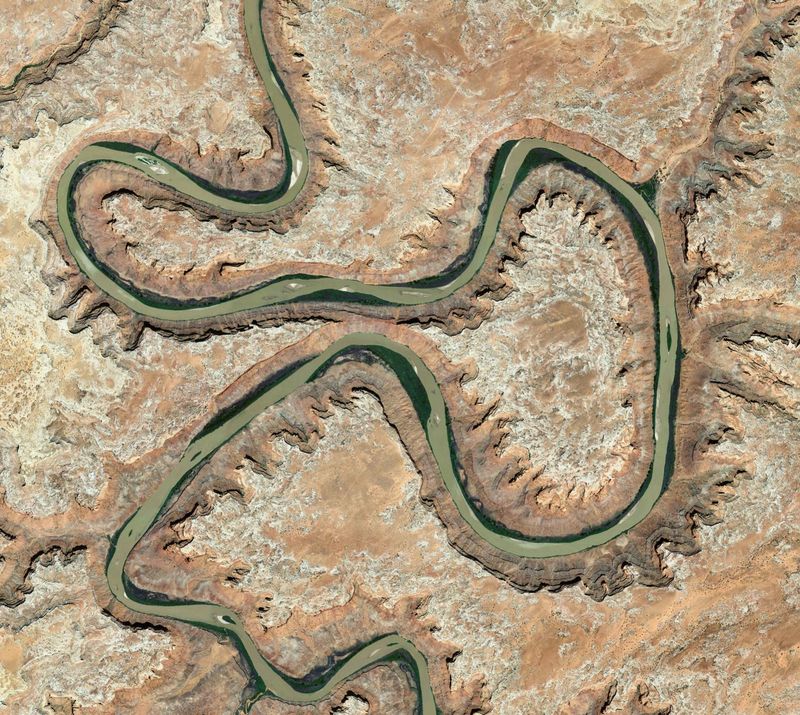
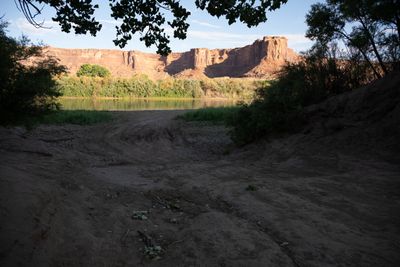
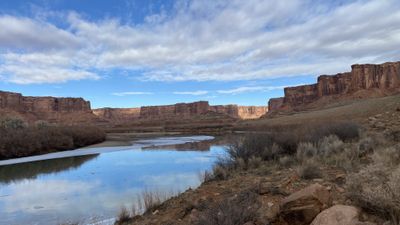
The canyon wren owns the acoustics. Its descending, cascading call — a chromatic scale dropping through the canyon's reverb chamber — is the defining sound of Labyrinth, more constant than the water, more evocative than any silence. Peregrine falcons nest on the upper Wingate faces and hunt the thermals above the meanders. Great blue herons fish the pools at bend apexes where the current slows. Mule deer appear on the benches at dawn and dusk. The riparian corridor is cottonwood and willow where the benches are wide enough, tamarisk where they're not — the tamarisk is established, invasive, and a fact of life on every Colorado Plateau river. Above the riparian zone, the benches support cryptobiotic soil crust — a living community of cyanobacteria, mosses, and lichens that stabilizes desert soil, fixes nitrogen, and takes decades to develop. A single footprint destroys years of growth. Stay on sand, rock, or established paths. The crust is the most important organism in the canyon that you'll never think about unless someone tells you.