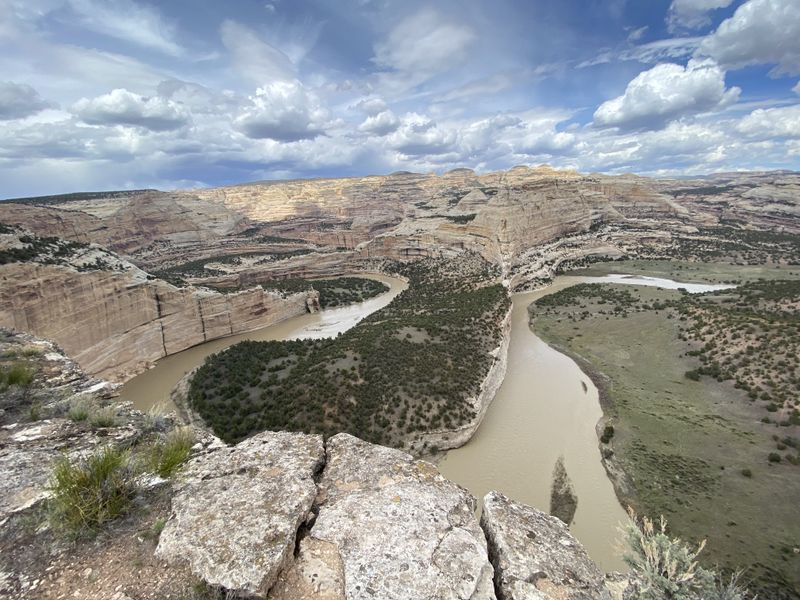
The Yampa River is one of the most significant wild rivers in the American West. It's the last major free-flowing tributary of the Colorado River system — undammed from its headwaters in the Colorado Rockies to its confluence with the Green River inside Dinosaur National Monument. No upstream dam moderates its flow, which means the Yampa runs on snowmelt alone, floods in spring, and slows to a trickle by midsummer. That window of time — roughly late April to late June — is one of the great river seasons in canyon country.
Yampa River Rafting at a Glance
| Route | Deerlodge Park, CO → Split Mountain, UT |
| Distance | ~71 miles (Yampa) + ~9 miles on the Green River |
| Difficulty | Class III–IV (Warm Springs is the Class IV crux) |
| Trip length | 5–7 days private; 4–5 days most guided trips |
| Season | Late April–late June, peaking in May |
| Ideal flow | ~2,500–12,000 CFS standard (Deerlodge gauge); 12,000–20,000 high water; 20,000+ flood |
| Private permit | recreation.gov lottery (#250014); applies Dec 1–Jan 31, results mid-Feb |
| Guided cost | ~$1,250–$1,550 per person (4–5 days), plus fees |
| Group size cap | 25 people per trip |
| Managing agency | NPS — Dinosaur National Monument River Office |
Two ways to run it: enter the competitive private permit lottery and self-guide, or book a guided commercial trip with a licensed outfitter who holds their own NPS allocation. Both are covered below.
The Route: Deerlodge to Split Mountain
Put-in: Deerlodge Park, Colorado — inside Dinosaur National Monument. Take-out: Split Mountain Campground, Utah — also inside Dinosaur National Monument. Distance: Approximately 71 miles (Yampa) plus 9 miles on the Green River after the confluence at Echo Park. Difficulty: Class III–IV overall; Class IV at Warm Springs Rapid. Trip length: 5–7 days.
The trip begins in the wide meadows of Deerlodge Park in Colorado and quickly descends into Yampa Canyon — pale, cross-bedded Weber sandstone walls rising 1,500 feet above the river. The canyon is intimate and dramatic, with almost no flat ground between the water and the cliff base. You'll float past towering walls for four to five days before reaching Echo Park.
Echo Park is the emotional heart of the trip — the confluence of the Yampa and Green Rivers, with Steamboat Rock rising 800 feet above the junction. This was the site of a proposed dam in the 1950s that the Sierra Club and David Brower successfully fought off. The canyon was saved. Echo Park is worth a full layover day.
Below Echo Park, you float 9 miles on the Green River through Whirlpool Canyon before reaching the Split Mountain take-out.
Canyon Highlights
Warm Springs Rapid (Class IV): Mile 18 from Deerlodge. This rapid was created by a catastrophic debris fan from a 1965 flash flood in Warm Springs Draw. It features a large, irregular hole at the bottom of the main drop that has flipped boats and recirculated swimmers. Always scout from river left. The rapid gets more serious as flows climb — check the gauge and recent trip reports, and make the call from the scout. The line at moderate flows runs river left through the main tongue.
Tiger Wall: A sheer canyon wall streaked with desert varnish that sweeps in tight against the river. The contrast between the tiger-striped wall and green water is one of the canyon's best photographs.
Harding Hole, Tepee, and Signature: Class III rapids scattered through the middle canyon. Each is readable and runnable with good current-reading skills.
Echo Park and Steamboat Rock: The Yampa–Green confluence. Camp here if at all possible. The light on Steamboat Rock at sunset is exceptional.
Permits (Private Trips)
Yampa River permits are among the most competitive in the canyon country permit system. Every private multiday trip requires a reserved permit from the National Park Service. The Dinosaur National Monument River Office manages it, and you book through recreation.gov (permit #250014).
- Mechanism: High-season multiday launches are allocated by a recreation.gov lottery; low-season launches go by advance reservation. Free day-use "play permits" are self-issued first-come at the Quarry Visitor Center / River Office.
- Application window: Lottery applications open December 1 and close January 31, with results in mid-February. Peak spring dates fill fast, so apply in that window and list multiple date preferences.
- Peak demand: Late April through late May launches are the most sought-after. Apply for multiple date windows to improve your odds.
- Group size: 25 people per trip, total.
- Permit fee: A permit fee applies. Confirm the current rate on recreation.gov at the time of booking.
- Alternate dates: Early-season and late-June launches are generally easier to obtain. Flows may be lower in late June but the river is usually still runnable — check the gauge before you commit, and verify the exact season dates on recreation.gov.
If you don't win the lottery, some cancellations are released through recreation.gov as the season approaches. Check frequently in the weeks before your launch window — cancellations for spring/summer trips typically surface in March and April, but the exact rhythm shifts year to year, so start watching a month or two out no matter when you're launching.
Guided Trips and Cost
Not everyone wins the lottery — and you don't have to. Licensed commercial outfitters hold their own NPS allocation, so a guided trip is the most reliable way to raft the Yampa without the private-permit gamble. The outfitter handles permits, boats, camp gear, meals, and licensed guides; you mostly show up with a personal bag.
Typical guided pricing: roughly $1,250–$1,550 per person for a 4–5 day trip, with many outfitters offering discounts for youth, seniors, military, and larger groups.
Budget for extras on top of the sticker price, which usually aren't included:
- Guide gratuity (commonly 10–15% of trip cost)
- Sleeping-kit / tent rental, if you don't bring your own
- Dinosaur National Monument entrance fee (or a National Parks pass) for each adult
- Online booking / reservation fees and applicable taxes
Private-trip cost is much lower — your main expenses are the permit fee, a vehicle shuttle (about $150–$250), and your own food and gear — but it requires winning the lottery, owning or renting a full rafting kit, and having the experience to run the river self-guided.
Rule of thumb: Book a guided trip if you want the surest path onto the river or you're newer to multiday whitewater. Go the private route if you have the crew, the gear, and the experience — and you're willing to play the lottery.
Is the Yampa Right for Beginners?
It depends on how you run it.
On a guided trip, yes. With licensed guides handling the oars and the line through Warm Springs, the Yampa is one of the better multiday rivers for first-timers and families. Most days mix calm floating, a few splashy Class II–III rapids, side-canyon hikes, and nights on sandy beaches — real whitewater without nonstop intensity.
Self-guided, no. A private Yampa trip is not a beginner objective. You should have solid multiday river experience, be confident reading and rowing Class III–IV water, and be comfortable scouting Warm Springs and committing to a clean line. If this would be your first self-supported multiday river, build experience on easier permitted runs first.
Yampa vs. Gates of Lodore: Which Dinosaur Trip?
Many people searching for the Yampa are also weighing the Gates of Lodore on the Green River, the other classic multiday trip in Dinosaur National Monument. The key difference is the dam.
| Yampa River | Gates of Lodore (Green River) | |
|---|---|---|
| Flow | Free-flowing, snowmelt-fed | Dam-controlled below Flaming Gorge |
| Season | Short: late April–late June | Long: May–September |
| Difficulty | Class III–IV (Warm Springs is the standout) | Class III+ |
| Distance | ~71 mi to Split Mountain | ~45 mi to Split Mountain |
| Best for | A true wild-river experience; the iconic Western whitewater season | First-timers wanting a reliable, flexible-date trip with steady flows |
| Reliability | Flows vary year to year with snowpack | Consistent, predictable dam-controlled flows |
In short: choose the Yampa for the last great undammed Western river and its peak-spring drama, and Gates of Lodore if you want a longer season, more date flexibility, and steady, dam-controlled water. Both finish at Split Mountain and both can be combined into a longer Green-and-Yampa itinerary with some outfitters.
Season and Flow
The Deerlodge Park gauge (USGS 09260050) reads the water actually running the canyon — it sits at the put-in below the Little Snake confluence, so it runs higher than the Maybell gauge (09251000) upstream. The river's flow rises with snowmelt from the Flat Tops and Sierra Madre ranges. Read the gauge before you commit — the snowmelt curve and the right level for your trip vary year to year and crew to crew.
As a rough guide to the numbers:
- Low (below ~2,500 CFS): Shallow and slow, with limited camping beaches and a rockier Warm Springs. Late-season flows trend this direction.
- Medium (~2,500–12,000 CFS): The standard range — good current, wide beaches, and Warm Springs powerful but with clear lines. The window most groups aim for.
- High (~12,000–20,000 CFS): Warm Springs becomes significantly more serious and some beaches flood. Best left to experienced paddlers, and worth a hard look at the gauge and recent trip reports before you launch.
- Flood (20,000+ CFS): Big water — the put-in itself begins to flood near 18,000 CFS. Expert groups only.
These ranges are general references, not guarantees — match the level to your crew's experience. Check waterdata.usgs.gov and the Dinosaur National Monument river conditions page before your trip.
What to Pack
Most guided trips provide group gear, dry bags, and a sleeping kit (sometimes for rent); a private trip means bringing all of it yourself. Either way, plan for warm days, cold nights, and the occasional spring storm:
- Clothing: quick-dry layers, fleece or puffy for cold mornings, a warm hat, sun shirt, and a waterproof rain shell and pants.
- Sleep system: warm sleeping bag (nights can drop near freezing in May), pad, and tent.
- Footwear: secure river sandals or wet shoes plus dry camp shoes.
- Sun and bugs: brimmed hat, high-SPF sunscreen, lip balm, sunglasses with a retainer, and insect repellent.
- Personal: reusable water bottle, headlamp, personal meds, and a small dry bag for valuables.
- Required group equipment (private trips): a groover or approved washable toilet system, a firepan, and adequate PFDs — confirm exact requirements on your permit.
Confirm the outfitter's included-vs-bring-your-own list, or the monument's current equipment requirements, before you launch.
Wildlife and Paleontology
Dinosaur National Monument earns its name — the quarry site near the monument headquarters holds hundreds of dinosaur fossils embedded in a tilted rock face. It's accessible by car or a short detour from the river take-out. The monument also has exceptional wildlife: peregrine falcons nest on canyon walls above the Yampa, river otters have been sighted near the confluence, and mule deer appear on nearly every shoreline camp.
Bighorn sheep inhabit the canyon walls and regularly appear on cliffs directly above the river. Evenings at camp are often accompanied by the sound of sheep hooves on rock ledges high above.
Logistics
Shuttle: Deerlodge Park and Split Mountain are about 40 miles apart by road. Commercial shuttles operate from Vernal, Utah, and Steamboat Springs, Colorado. Expect $150–250 depending on group size and vehicle type.
Camping: Campsites in the monument are beaches and bench areas designated on NPS maps. Confirm the current camp-assignment and reservation rules with the monument when you pick up your permit.
Human waste: Plan to pack out all solid human waste with a groover or approved washable system. Confirm the current carry-out and fire/firepan requirements on your permit or with the managing office before you launch.
Weather: May weather in Dinosaur is variable — warm days, cold nights, occasional thunderstorms. Pack a warm sleeping bag and a waterproof layer.
Last updated July 2026. Permit dates, fees, and outfitter prices change yearly — always confirm current details on recreation.gov and with your chosen outfitter before booking.