Cataract Canyon
An in-depth environmental and human history of Cataract Canyon and the rivers of Canyonlands, exploring Indigenous presence, exploration, dam impacts, river ecology, and the evolution of modern river running.
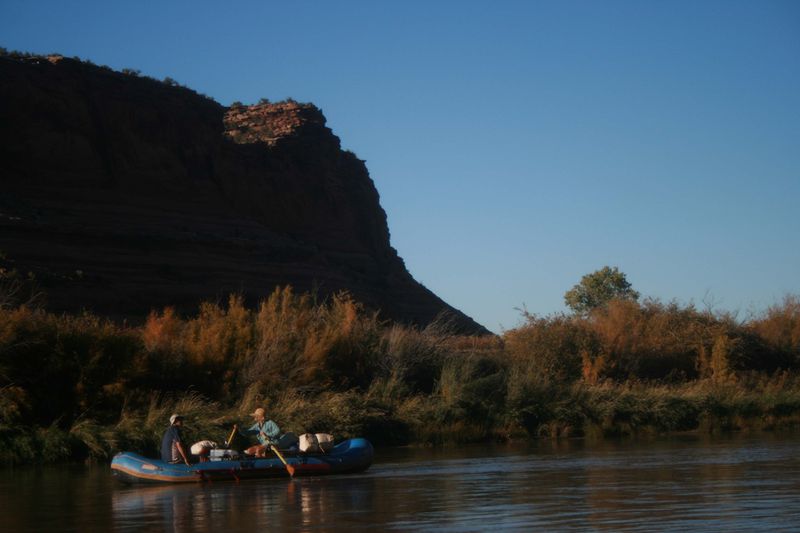
Ruby–Horsethief is the Colorado Plateau at its most generous — towering Wingate walls, petroglyph alcoves, and easy flatwater that rewards newcomers and reminds veterans why they started.
Ruby–Horsethief Canyon is the Colorado Plateau's most welcoming multi-day float — 25 miles of Wingate sandstone walls, Ancestral Puebloan petroglyph panels, and Class I–II water from Loma to the edge of Westwater's gorge. It's where first-timers learn what desert river travel is about, and where veterans decompress before committing to technical whitewater downstream.
Ruby–Horsethief Canyon is a 25-mile flatwater float through soaring Wingate sandstone walls on the Colorado–Utah border — one of the most accessible, visually spectacular river corridors in the desert Southwest. Class I–II water, cottonwood-canopied camps, Ancestral Puebloan petroglyphs at Mee Canyon, and desert bighorn on the canyon rims make this the ideal introduction to multi-day desert river travel. The section connects directly to Westwater Canyon and is frequently combined into a 3–4 day trip for groups wanting a mix of intimate canyon scenery and technical whitewater.
Class I–II — 1 named rapid, flatwater with minor riffles.
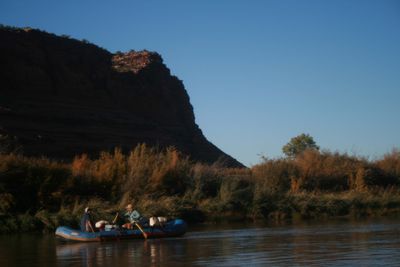
30 established camps. Dispersed camping on BLM land throughout the corridor. Self-issue overnight permit at Loma. No designated campsites — choose low-impact camping on durable surfaces or existing sand benches.
| Camp | Mile |
|---|---|
| Rattlesnake Camp | 148.9 |
| Beaver Tail 1 Camp | 148.5 |
| Beaver Tail 2 Camp | 148.4 |
| Bull Draw Camp | 148.3 |
| Banjo Camp | 146.4 |
| Cottonwood 1 Camp | 146.2 |
| Cottonwood 5 Camp | 145.9 |
| Salt Creek 1 Camp | 144.1 |
| Salt Creek 2 Camp | 144 |
| Ruby Camp | 143.5 |
| Fault Line 1 Camp | 141.6 |
| Fault Line 2 Camp | 141.3 |
| Mee Corner Camp | 139.4 |
| Mee 1 Camp | 138.9 |
| Mee 2 Camp | 138.8 |
| Mee 3 Camp | 138.7 |
| Mee 4 Camp | 138.6 |
| Mee Canyon Camp | 138.4 |
| Dog Island Camp | 137 |
| Split Rock Camp | 136.3 |
| Black Rocks 1 Camp | 136.1 |
| Black Rocks 2 Camp | 136 |
| Black Rocks 3 Camp | 135.9 |
| Black Rocks 4 Camp | 135.7 |
| Black Rocks 5 Camp | 135.6 |
| Black Rocks 6 Camp | 135.5 |
| Black Rocks 7 Camp | 135.4 |
| Black Rocks 8 Camp | 135.3 |
| Black Rocks 9 Camp | 135.2 |
| Knowles Canyon Camp | 134.2 |
The Cameo gauge upstream of Grand Junction is the reference station; the section floats comfortably at most levels above 1,500 cfs with a sweet spot between 2,000 and 6,000 cfs. Spring snowmelt pushes the river fast and cold — good current, no technical challenge, but hypothermia risk if anyone swims. Summer drops flow and raises water temperature; fall often offers the best conditions overall: low water, warm days, cool nights, quiet canyon.
Primary Colorado River gauge for Ruby-Horsethief planning and the upper Colorado River canyon system near Grand Junction. Readings here reflect Gunnison River contributions and upper Colorado snowmelt patterns.
USGS #09095500Below 1,500 cfs the river slows considerably — flatwater paddling with potential dragging over shallow gravel bars. Not dangerous, just slow.
2,000–6,000 cfs is the sweet spot — good downstream current, minor wave trains, easy navigation for beginners. Most riffles run cleanly.
Above 8,000 cfs the current becomes fast and pushy; flatwater character is maintained but maneuvering requires attentiveness and beginners benefit from experienced leadership. Wave trains at all riffles are pronounced.
Water temperatures range from 45–55°F in early spring (snowmelt) to 65–72°F in summer. Wetsuit or drysuit appropriate for spring trips.
Minimum comfortable flow. River slows considerably; potential dragging over shallow gravel bars.
Best conditions for most groups. Good downstream current, minor wave trains, easy navigation.
Elevated flows. Current becomes fast and pushy; flatwater character maintained but maneuvering requires attentiveness.
Fast current with pronounced wave trains at all riffles. Beginners benefit from experienced leadership.
Runnable at a wide range of flows — best above 2,000 cfs at Cameo gauge
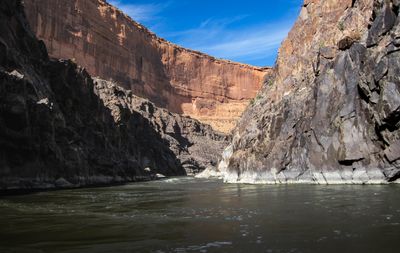
The canyon walls expose a classic Colorado Plateau stratigraphy of Triassic and Jurassic age — deep red Wingate sandstone cliffs (200–300 ft) capped by ledgy Kayenta Formation, with Chinle shales visible at river level in places. At Black Rocks, near the downstream end of the canyon, the river cuts down to the Precambrian crystalline basement of the Uncompahgre uplift — dark gneiss and granite roughly 1.7 billion years old, the oldest rock on the run and the same basement exposed just downstream in Westwater's inner gorge. The Triassic beds rest directly on its beveled surface across the Great Unconformity, a gap of roughly 1.5 billion years. The canyon walls are some of the most photogenic expressions of Wingate Formation anywhere on the plateau. That dark crystalline outcrop gives the Black Rocks camp cluster its name — a tight stack of benches on river left where the basement rock meets the water, the lowest of which (Black Rocks 4) goes under at about 30,000 cfs.
↑ Rim
↓ River level
Ruby-Horsethief is designated critical habitat for Colorado pikeminnow, razorback sucker, and bonytail chub — three of the rarest native fish in the American West. River otters, reintroduced decades ago, are increasingly visible. Bighorn sheep regularly appear on talus slopes and canyon rims. The riparian zone is a mix of native cottonwood and willow stands interrupted by established tamarisk — biocontrol efforts are ongoing.
The section name is a two-word history lesson. Horsethief Canyon was exactly that: the corridor used by livestock rustlers moving stolen animals between Colorado and Utah in the 1880s and 1890s. The Mee Canyon petroglyphs on river right are Ancestral Puebloan — a thousand years of human presence condensed into a single alcove panel. Uranium prospectors worked the side drainages in the mid-20th century. The river has been shaping this corridor for millions of years; the human chapter is just the most recent layer.
The section name encodes its outlaw geography: Ruby Canyon refers to a mining-era settlement, while Horsethief Canyon was literally the route used by cattle and horse rustlers moving stolen livestock between Colorado and Utah through the remote river corridor in the 1880s and 1890s. The Mee Canyon petroglyphs represent a much older human presence — the panels are attributed to Ancestral Puebloan peoples and document use of this corridor stretching back a thousand years or more. Early uranium exploration in the 20th century left some remnant features in side drainages. Mee Canyon is not the corridor's only record of Indigenous presence: a rock-art panel survives in McDonald Canyon on river right, lower in the section. Its exact location is left deliberately vague — visit lightly, touch nothing.
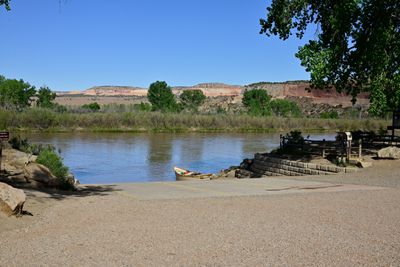
BLM self-issue overnight permit (no lottery, no fee), a clean paved put-in at the Loma boat ramp, and a 30-mile all-pavement shuttle make this one of the most logistically forgiving desert canyons on the Colorado. Groups combining Ruby-Horsethief with Westwater Canyon run both in 3–4 days — stage vehicles at Cisco Landing.
Loma Boat Ramp to Westwater Ranger Station Boat Ramp
Google used a car, their times do not account for towing a trailer, driving on washboard, pitted pavement, and dirt that goes to grease in the rain — our adjusted times help align to the reality of running real river shuttles.
Overnight camping permits are required year-round and must be reserved in advance; reservations open on a 60-day rolling window. Not a lottery. Day use requires no permit. Group size is capped at 25 "heartbeats" — adults, children and dogs combined — with a maximum of two dogs. May–September a fee applies to both the permit and the reservation; November–April only the reservation fee applies, and children 16 and under camp free. appliesTo: overnight (2026-09-02) — BLM requires the permit for overnight camping only; day use needs none. Before the axis existed this section carried required:false, which rendered NO permit at all on a reach that has been permitted year-round for years.
Ruby-Horsethief is one of the most forgiving gear contexts on the Colorado River system — flatwater, easy access, straightforward weather windows. That said: BLM regulations require a fire pan and groover for overnights. Sun protection is non-negotiable in all seasons. Spring trips require cold water kit (wetsuit or drysuit) even when air temperatures are warm. A canoe, inflatable kayak, or hardshell kayak all work well; inflatable SUPs are common. Motorized craft are permitted.
On a seven-day trip, you'll cook roughly 20 meals on a folding table in the sand. The constraint isn't ambition — it's ice management. Days one through three, you have real cooler capacity. Days four and five are the transition zone. Days six and seven are pantry cooking.
The best river cooks plan backward from the last night. If your final dinner is still good — not just edible, but genuinely good — the trip ends on a high.
Two coolers, segregated by access frequency. A well-managed deep cooler will hold usable ice through day 6 in 100°F air temps.
Folding table, two-burner propane stove, cast iron skillet, Dutch oven, and a large pot. The Dutch oven is the single most versatile piece.
Books that shape the science, history, and stories behind this place.
An in-depth environmental and human history of Cataract Canyon and the rivers of Canyonlands, exploring Indigenous presence, exploration, dam impacts, river ecology, and the evolution of modern river running.
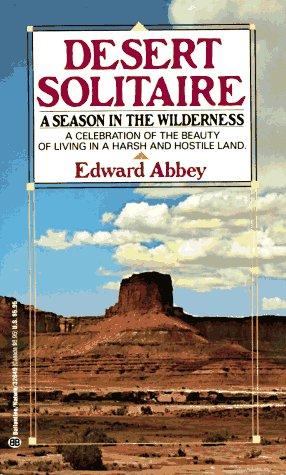
Edward Abbey's classic portrait of canyon country, solitude, and wilderness, influential to the identity and mythology of the Colorado Plateau.
A river-running memoir by Roy Webb capturing the spirit, humor, and culture of Western river expeditions and the people who chase moving water through canyon country.
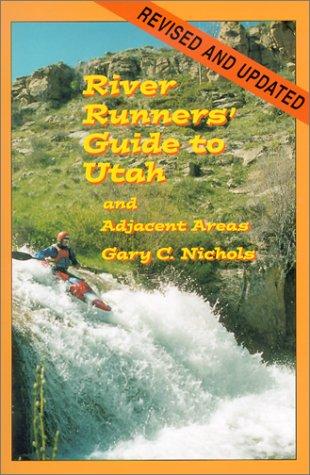
A comprehensive guidebook to whitewater rivers in Utah and neighboring regions, covering river access, rapids, flow considerations, trip logistics, and historical context for river runners.
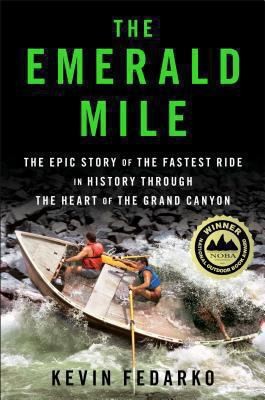
The thrilling story of the dory daredevils who set a speed record through the Grand Canyon at the height of the legendary flood of 1983 — and of the river that made it possible.
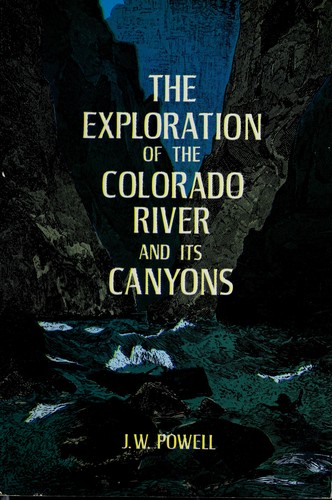
Powell's original account of the first scientific expedition through the Grand Canyon, documenting the geology, natural history, and challenges of navigating the unknown Colorado River.