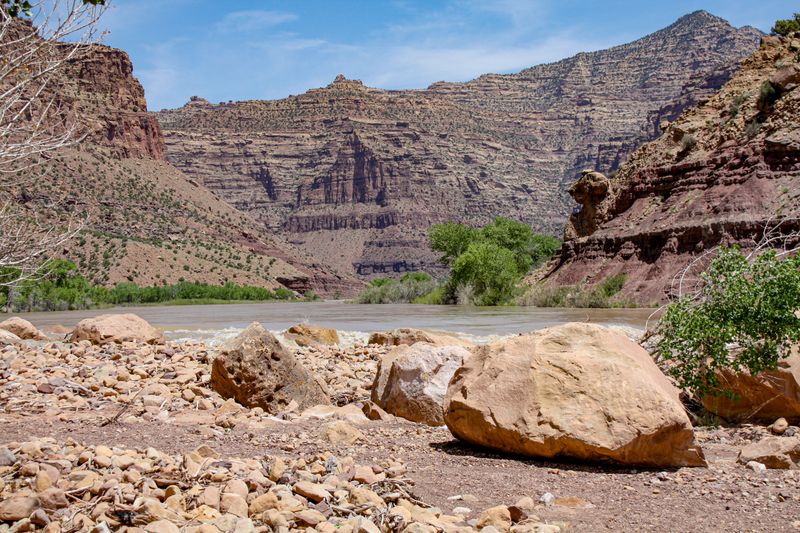
The stove hisses. The river is still. The canyon walls are dark — not the red they'll be in an hour, but the grey-blue of a desert dawn that hasn't committed to color yet. Your fingers are stiff on the metal buckle of the dry bag where you packed the coffee last night, and the cold is the kind that lives in the sand and rises through your sleeping pad and makes you understand why the first boatmen on these rivers wore wool.
This is the best part of the trip. Not the rapids — those come later, and they'll be fine, and you'll remember them because the adrenaline burns the memory in. But this moment, this twenty minutes between the first light on the rim and the first light on the water, is the part that changes you if you let it. The canyon wren starts its descending chromatic call from somewhere in the Wingate above camp, and the sound drops through the reverb chamber of the canyon walls like water down a pour-over.
The river doesn't care what you planned. It cares what you notice. Every guide who's spent a decade on the Green
Nobody is talking yet. The people who talk first on river mornings are the people who haven't learned what the silence is for. The silence is for watching the light move. It starts on the rim — a thin line of gold on the Navajo Sandstone caprock, six hundred feet up — and it descends. Not quickly. Not slowly. At the speed of the earth turning, which is the speed you're supposed to be moving at and which you've forgotten because you live in a place with electric lights and notification sounds.
The light hits the Wingate wall at about the level of the desert varnish — the dark manganese streaks that record ten thousand years of mineral-laden water seeping through the rock. For about three minutes, the varnish catches the low-angle light and the wall glows amber against the dark streaks, and the effect is so specific and so temporary that you couldn't photograph it if you tried. You can only see it if you're sitting in a camp chair with a metal cup of coffee that's still too hot to drink, looking up instead of at your phone.
Why the Morning Matters More Than the Rapid
A rapid lasts thirty seconds. A morning lasts an hour. The rapid tests your skill. The morning tests your attention. Most people who run Desolation Canyon remember Three Fords and Joe Hutch — the wave trains, the lateral moves, the moment when the raft drops into the trough and the world goes vertical. Those memories are real. But they're adrenaline memories, and adrenaline memories are reliable but narrow.
The morning memories are different. They're slower, wider, and harder to access later because they weren't encoded under stress. The heron standing in the shallows below camp. The beaver slap at the eddy line. The way the tamarisk on the lower bench catches the first horizontal light and glows a green that doesn't exist after 7 a.m. The sound of the river — not loud, not dramatic, just the constant baseline hum of moving water over cobble that you stop hearing after the first night and miss terribly on the first morning home.
You don't come to Desolation for the whitewater. You come because it's one of the last places where six days feels like enough time.
The Fremont people who carved the petroglyph panels at Flat Canyon and Rock Creek camped on these same benches. Not these exact beaches — the river reshapes its bars with every flood season — but this same corridor, these same walls, this same light. They saw the same canyon wren. They watched the same light descend. They had better patience than we do, because they didn't have anywhere else to be.
The Protocol
By the time the light reaches the water, the camp is stirring. Someone is at the groover — the portable toilet that BLM requires and that every river runner jokes about until they're on a trip where someone forgot to bring one. Someone is rigging. Someone is making the second pot of coffee because the first pot disappeared into the five people who were awake before anyone else.
The kitchen comes alive in a specific order that experienced trip leaders don't organize but don't have to, because river camps develop their own protocols after the second night. Breakfast. Dishes. Water filter. Groover breakdown. Tent strike. Dry bag pack. Frame check. Boat launch. By 10 a.m. you're on the water and the camp looks like no one was ever there, which is the point, and which is the ethic, and which is the only way to deserve the next camp downstream.
The rapids will come. Three Fords is six miles away. The light is different there — the canyon narrows and the walls are closer and the water speed picks up and the sound changes from hum to roar and your attention shifts from observation to reaction. That's fine. That's what you're here for, partly. But the morning — the cold metal cup, the canyon wren, the light on the varnish — that's what you're here for entirely. The rapid is the excuse. The morning is the reason.