The Colorado River through Utah offers dramatically different experiences by section — from flatwater floats through canyon country to serious Class IV whitewater. Permit requirements vary just as much. Understanding which sections require what permits, and how to get them, is the first step in planning any Colorado River trip.
Stillwater Canyon: Mineral Bottom to the Confluence (Green River)
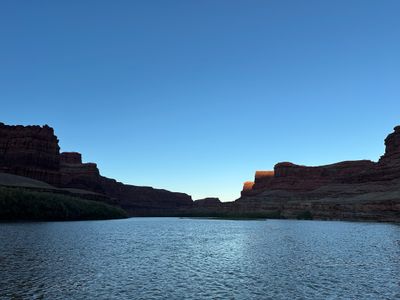
Stillwater Canyon is the Green River corridor that runs from Mineral Bottom downstream roughly 52 miles to the confluence of the Green and Colorado Rivers inside Canyonlands National Park. It's a flatwater canyon float through increasingly dramatic red rock country — no rapids, towering walls, and genuine solitude. The Colorado-side equivalent above the confluence is Meander Canyon, launched from Potash near Moab.
Permit status: Overnight trips through Stillwater require a Canyonlands National Park backcountry permit specifying your campsites. Day trips on the river corridor currently do not require a launch permit, though this can change. The permit is applied for through recreation.gov and is first-come, not a lottery.
Planning note: Most groups float Stillwater (or Meander, on the Colorado side) and continue through Cataract Canyon, which is a separate Canyonlands permit. If you're doing a full trip from launch through Cataract to Lake Powell, you'll need the Cataract permit for the whitewater section regardless of which approach corridor you take.
Westwater Canyon: Rapid Whitewater Near the Utah-Colorado Border
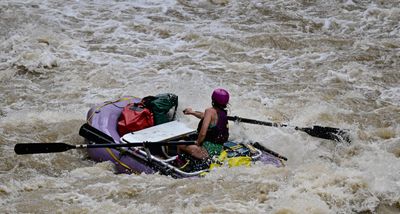
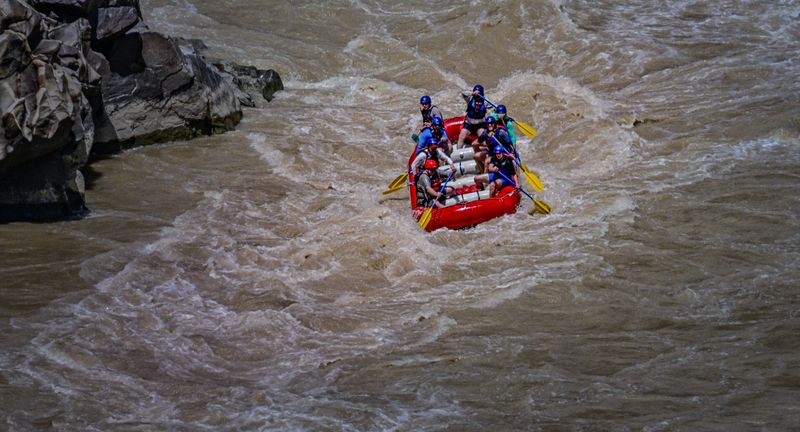
Westwater Canyon sits just inside Utah on the Colorado River. It's 17.2 miles of Class III–IV whitewater — one of the most accessible serious whitewater trips in the region. The canyon walls narrow to near-vertical black schist, and the river drops hard.
Permit requirement: BLM permit, managed by the Moab Field Office. Day use and overnight permits are both available. The system is an advance reservation through recreation.gov — not a lottery.
Booking window: Westwater launches are reserved through recreation.gov, administered by the BLM Moab Field Office. It is a rolling window rather than a single annual release: each morning at 8 a.m. MT, the date two months out becomes available, and it stays bookable until 11:59 a.m. on launch day if it goes unclaimed. There is no application date to miss — but there is a specific morning for any date you want. Spring weekends go within days of opening; weekday permits are more available but still worth taking early. Confirm the current window on the permit page before planning around it.
Fees: Launch fee plus a per-person day use fee. Current fees are listed at recreation.gov — confirm before booking as they update periodically.
Group size: Maximum 25 people. There's no minimum group size, but most trips run with at least two boats for safety redundancy on Class IV water.
Whitewater note: Westwater's Skull Rapid is Class IV at most flows. The Room of Doom — a deep eddy on river right below the rapid — is the major hazard; getting flushed into it can mean an extended retention. Skull is runnable on the standard line for crews with Class IV experience. Run it only with a trip leader who has prior experience on Westwater or comparable Class IV water.
Cataract Canyon: Big-Water Whitewater Below the Confluence
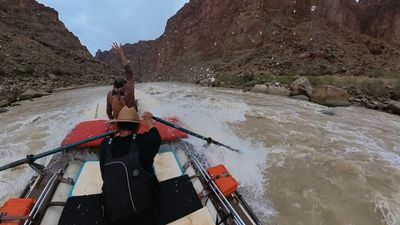
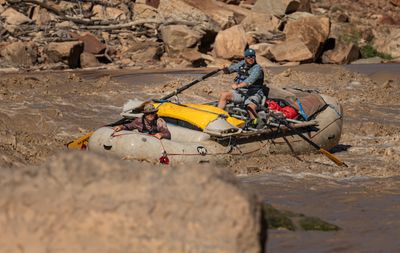
Cataract Canyon begins at the confluence of the Green and Colorado Rivers inside Canyonlands National Park and runs roughly 14 miles of whitewater followed by Narrow Canyon's slow run-out into Lake Powell. The Big Drop sequence is the crux: Class III–IV at moderate flows (10,000–20,000 cfs) and solid Class IV through high water. Above 50,000 cfs, Webb, Belnap and Weisheit warn, the canyon can be very dangerous and boats frequently flip. That water is spring runoff that occurs in rare big-snow years.
Permit requirement: Canyonlands National Park backcountry permit, applied through recreation.gov. This is an NPS permit, not BLM. Both a per-permit reservation fee and a per-person per-night fee apply; confirm current amounts at recreation.gov at time of booking.
Booking: No lottery. Watch recreation.gov for the next release date and book the moment it opens.
What the permit covers: The permit specifies your launch date, group size, and duration. You'll list your campsites when applying, choosing from designated sites on the river corridor map. Rangers may check your permit at put-in (near the Confluence) or on the river.
Trip leader requirements: NPS requires a designated trip leader who accepts responsibility for compliance. No specific certification is required, but the park expects trip leaders to have relevant whitewater experience for the Class IV conditions possible during peak runoff.
Applying and Cancellation Strategy
All three sections use recreation.gov for permit applications. Create your account before you need it — group member information, payment methods, and vehicle details can be saved in advance, which speeds up the booking process when a permit window opens.
For first-come permits: Check the specific permit's recreation.gov page for its exact release date and time and set an alert for it — lead times differ by permit, so don't assume a fixed number. Have your group roster and credit card ready so you can book the moment the window opens.
For cancellations: After a permit window opens, groups frequently cancel. The reason varies — life changes, conditions look bad, the group falls apart. Checking recreation.gov in the weeks before your target date, especially in the 60–30 day window, regularly turns up openings. The cancellation list on recreation.gov is visible in real time — refresh and check.
If you can't get a private permit: Commercial outfitters hold separate permit allocations for all three sections. A commercial trip costs more but guarantees access. Reputable outfitters operating Westwater and Cataract include Holiday River Expeditions, OARS, and Mild to Wild. Book commercial trips 3–6 months out for peak season.